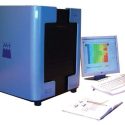
Fluorescence Lifetime: Finally picking up momentum! By Dr John Comley Fluorescence lifetime (FLT) largely failed to make a significant inroad as a screening technology when it was first introduced nearly a decade ago, despite the fact that intrinsically it has many benefits, particularly in dealing with assay interferences. Market studies… Read More
Overview of Companion Diagnostics in the Pharmaceutical Industry Part 2: Business models. By Dr Stephen Naylor and Toby Cole There is an emerging consensus that the development of Companion Diagnostics appears to offer a set of tools to address many of the current problems that pharmaceutical companies must overcome. This in… Read More
By Dr John Comley Laser scanning cytometers have matured over the past decade to meet the needs of end-users for higher throughput cell analysis, to access to previously difficult applications and to keep pace with the diversity of new fluorophores, validated high content screening (HCS) assay kits and reagents now… Read More
Design Of Experiments: Useful statistical tool in assay development or vendor disconnect By Dr John Comley The use of design of experiments (DOE) in assay development (AD) has the potential to speed up assay optimisation (ie reduce assay development bottlenecks) and to facilitate a more thorough evaluation of assay variables. Read More
Free Online Resources Enabling Crowd-Sourced Drug Discovery By Dr Antony J. Williams, Valery Tkachenko, Dr Chris Lipinski, Professor Alexander Tropsha and Dr Sean Ekins The availability of freely accessible online resources to enable and support drug discovery has blossomed in recent years. The PubChem platform is now accompanied by a… Read More
Predictive tests and personalised medicine By Dr Eddie Blair Acceptance of the personalised medicines paradigm is strictly dependent on this approach clearly benefiting patients with minimal effects on the actual delivery of healthcare. The use of molecular diagnostics to predict how an individual will respond to a particular medicine, in… Read More
Multiplexing for biological relevance in high throughput screening By William P. Downey, Dr Jennifer Hartigan and Cindy Liu The multiplexed assay is a technique used increasingly in high throughput screening (HTS) labs to study the complex environment of a target, according to HighTech Business Decisions’ (HTBD) industry report High Throughput… Read More
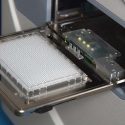
By Dr John Comley After nearly 15 years of challenging maturity 1536 plate adoption (particularly in primary screening), finally appears to have taken hold. There is now available a broad range of 1536 plate types; an ever expanding variety of tools that make most assays types and profiling approaches doable… Read More
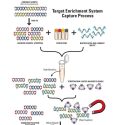
Bringing Cost and Process Efficiency to Next Generation Sequencing By Dr Fred P. Ernani, and Dr Emily M. LeProust While next-generation sequencing has revolutionised the way genomes are sequenced, this technology possesses a fundamental weakness - the inability to easily target specific regions of a genome. To address this, a… Read More
Automation Of Solid/Powder Dispensing: Much needed, but cautiously used! By Dr John Comley This article investigates solid/powder dispensing in pharma and biotech, examines where it is most used, whether there exists a need to apply automation and what is motivating its wider use today. It reveals how concerns over problematic… Read More
Recent Technology Advances Transforming Pharmaceutical Drug Discovery and Development By Dr Coiln Brenan, and Dr Bill LaMarr The last decade has seen rapid technological progress but with increasing demands for safe and efficacious drugs, technological solutions that reduce the barriers to clinical success will be of more interest than those… Read More
Early Validation: The difference between success and failure? By Mike Benevento and Victor Bornsztejn Validation is typically associated with drug production and manufacturing, and often considered not to impact drug discovery and development. In fact, this assumption is not true and despite the fact that early-stage research may not require… Read More
Restructuring Proteomics to Enable Personalised Cancer Care By Dr Henry Rodriguez The genomics community has made great strides in our understanding of the molecular basis of cancer and these advances are slowly beginning to change the way we diagnose and treat patients. But genomic studies alone cannot capture the complete… Read More
Generation II DNA Sequencing Technologies By Dr Stephen F. Kingsmore, Dr Jenny C. van Velkinburgh, Dr Joann Mudge, and Dr Gregory D. May Generation II DNA sequencing has been widely heralded as a disruptive technology, generating tens of millions of random short sequences at efficiencies up to 20,000-fold greater than… Read More
Letting the Target Determine your Compound Acquisition Strategy By Dr John Harris With compound libraries likely to remain the cornerstone of hit and lead discovery for the foreseeable future, this paper seeks to summarise current and future approaches to optimal library design and compound acquisition, using examples and experimental evidence… Read More
The Microplate Market Past, Present and Future By Dr Peter Banks Microplates and the peripheral markets of liquid handling and detection technologies exist within almost all laboratories performing assays. This article discusses what, if any, are their growth expectations and whether there are new technologies on the horizon that could… Read More