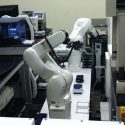
Laboratory Automation Advances High Throughput Bio-Inspired Research Into Personalised Medicine By Dr Joshua LaBaer The Biodesign Institute at Arizona State University plays an important role in addressing global healthcare challenges by developing bio-inspired solutions that can be translated into commercially viable products and clinical practices. With 11 different research centres,… Read More
Academic Ingenuity and Corporate Partnerships: New models in human health ventures bring value to all By Professor Paul Agris Many disapprove of science faculty at American universities procuring corporate ventures that support research, instead of primarily functioning as an instructor, mentor and basic researcher. This perception is most evident surrounding… Read More
Multi-Parameter Flow Cytometry Technology Advances for Rare Cell Analysis and Sorting By David Gebhard and Dr Diether Recktenwald The study of rare cell populations is important to advance medical diagnostics and therapeutics. For many clinical studies, rare cell counts promise to provide valuable alternate end points; examples are circulating tumour… Read More
Realising The Genome's Potential In The Context Of The Living Cell By Dr Amr Abid A decade ago, with the completion of the Human Genome Project (HGP), scientists had the long-awaited sequence of the human genome in hand. Once decoded, this invaluable source of data was anticipated to reveal the… Read More
Adoption Of High Content Screening At High Throughput Screening Laboratories By William Downey and Dr Jennifer Hartigan Over the past five years, a majority of HTS laboratories have adopted high content screening (HCS) in their operations. As HTS laboratories have sought more biologically-relevant assays, cell-based assays and high content screening… Read More
Chemical Space, High Throughput Screening and The World Of Blockbuster Drugs By Dr Hakim Djaballah We are constantly told that if a high throughput screen does not identify hit(s) then blame it on the compounds in your library. The community has accepted this notion and unleashed a chemical space exploration… Read More
By Dr John Comley The majority of life sciences labs are facing an unprecedented decline in capex budgets and their subsequent ability to purchase new laboratory instruments. The default option underpinning lab instrument and equipment sales to life sciences has historically been the outright purchase model. The economic slump has… Read More
DNA Sequencing: Latest Developments In Next-Generation Sequencing By Andrew Szopa-Comley Next-generation sequencing has expanded the frontiers of genomic research, opening up new avenues of enquiry and offering insights into diverse areas of biology. Rapid developments in this field are dramatically lowering costs and increasing speeds. With the arrival… Read More
By Dr Nikolai Schwabe and Katherine Catchpole T cells play a crucial role in building a specialised immune response and help adapt the immune response to different challenges, whether they are intracellular bacteria, viruses or cancer or extracellular organisms such as blood-borne bacteria and parasites. One of the most fundamental… Read More
Cell Migration: Probing Cell Movement With Smarter Tools By Dr John Comley Cell migration comprises the movement of cells from one location to another in response to events, biological signals or environmental cues. Cell migration plays a critical role in numerous normal biological processes and also in many diseases. Most… Read More
Transforming Data Into Better Healthcare By Dr Jens Hoefkens The healthcare industry is drowning in data for which it lacks established data analysis processes. This situation exists despite the fact that appropriate and efficient data analysis processes are keys to better decision-making and enhanced healthcare therapies, which can potentially result… Read More
Fragment Library Design - The Evolution Of Fragment Based Lead Discovery By Dr Edward Zartler, Dr Chris Swain and Simon Pearce With the growing need to streamline the drug discovery process, screening against fragment libraries rather than drug-like molecules has become increasingly adopted as an integral part of many drug… Read More
Nanobioscience & Nanotechnology: The Future Of Personalised Medicine By Abhishek Gottipati, Joseph M. Sanders and Dr Scott A. Tenenbaum Nanotechnology has been more than a buzz word in the business world for a long time now and has been striding ahead, living up to the hype. There is a general… Read More
Metabolomics: Analytic Methods Driving Exponential Understanding By Dr Ian D. Jardine Metabolomics is distinct from genomics and proteomics in several significant respects. Where genes and proteins are unique to specific organisms, metabolites are ubiquitous throughout the plant and animal kingdoms. Compared with proteomics and genomics, which quantify the building blocks… Read More
Targeting Tau For Alzheimer’s Disease and Related Neurodegenerative Disorders By Dr Eliot J. Davidowitz and Dr James G. Moe There is no effective treatment for Alzheimer’s disease (AD) even though the prevalence of this neurodegenerative disorder and its associated costs are growing along with an ageing population. This article discusses… Read More
Epigenetics: Are We Hitting The Mark? By Dr Andrew J. Pope and Dr Amy M. Quinn During the last few years, advances in the understanding of epigenetic processes have led to an explosion in interest in this area as a potential source of new targets for the discovery of medicines. Read More