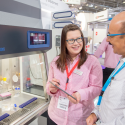
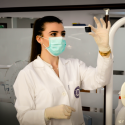
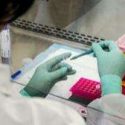
A total of 21,641 participants from 152 nations took part in this key trade fair for laboratory technology, analysis and biotechnology from October 19 to 23. For the first time it was entirely virtual. 268 exhibitors from 24 countries presented more than 700 products. The event boasted 200 exhibitor webinars… Read More
By Dr Jamie Freeman Base editing is a potentially transformative technology for engineering DNA in cells that has the potential to generate knockouts or correct certain errors or mutations in the DNA for applications such as cell or gene therapies. Compared with currently-available gene editing… Read More
By Dr Karin Bottcher High content screening (HCS) has played a significant role in infectious disease research and drug discovery to date and can be a strong tool in the age of COVID-19 and beyond. With a focus on viral diseases, this article… Read More
By Dr Ross Macdonald Cell-based therapies are being widely recognised for their potential to treat a variety of medical conditions, but they face major obstacles toward commercialisation. Traditionally, they have been difficult and expensive to make in large quantities. Read More
By Richard Gray The recent outbreak of COVID-19 has highlighted the need for fast and efficient development and production of vaccines for a whole gamut of pathogens, old and new. Microfluidics technologies can be used to accelerate the vaccine development process in a number of ways,… Read More
The CELL CULTURE innovations increasing drug discovery success By Helen Stewart-Miller and Abby George Volume 21 Issue 3 – Summer 2020 ‘Fail early, fail fast’ has been a mantra in the pharmaceutical industry for several years and directly impacts the overall strategy of many drug discovery and development… Read More
Collaborative Research Leads To New Understanding Of Biomarkers By Dr Max Ryadnov and Professor Jason Crain A new collaborative research paper sheds light on the way antibodies distinguish between different but closely related ‘biomarkers’ – in this case protein fragments which reveal information about the condition of the… Read More
Evonetix collaborates with imec to scale-up chip-based technology production for third generation DNA synthesis platform. EVONETIX LTD (‘Evonetix’), the synthetic biology company developing a desktop platform for scalable, high-fidelity and rapid gene synthesis, today announced it has partnered with imec, a world-leading research and innovation hub… Read More
Carterra closes financing round for continued growth of the LSA platform for next generation antibody dscovery. Carterra has closed a $6M round of financing led by Ballast Point Ventures with participation from current investor, Telegraph Hill Partners. The additional funding will support the continued adoption… Read More
A team of British and American scientists has discovered a way to slow the growth of breast cancer stem cells in the lab. The study led by Dr Bruno Simões and Professor Rob Clarke from The University of Manchester could eventually lead to combination drug therapies on previously… Read More
Image: Joshua Coleman According to the Department of Health and Social Care (DHSC), pharmaceutical companies should stockpile six weeks’ worth of goods “to help ensure the continuity of supply of medical goods into and out of the UK”. In a letter to the industry Steve Oldfield, Chief Commercial Officer,… Read More
Image: Ani Kolleshi The US Department of Defence (DOD) has awarded Evotec’s Seattle-based subsidiary, Just-Evotec Biologics a contract worth $18.2 million to develop monoclonal antibodies (mAbs) for treatment and/or prevention of COVID-19 Under the contract, Just–Evotec Biologics will design a manufacturing process for the production of Current Good… Read More
Some of the most promising advances in cancer treatment have centred on immunotherapies that rev up a patient’s immune system to attack cancer. However, immunotherapies don’t work in all patients, and researchers have been searching for ways to increase their effectiveness. Now, researchers at Washington University School of… Read More
British Patient Capital is committing $65m to SV Health Investors’ latest fund, SV7 Impact Medicine Fund (IMF), to turn scientific breakthroughs into biotech companies producing high impact precision medicine drugs for poorly treated diseases. The commitment increases British Patient Capital’s exposure to life sciences and health technology, building… Read More
27 July 2020 Image: CDC GlaxoSmithKline and CureVac are collaborating for the research, development, manufacturing and commercialisation of up to five mRNA-based vaccines and monoclonal antibodies (mAbs) targeting infectious disease pathogens. The collaboration complements GSK’s existing mRNA capabilities with CureVac’s integrated mRNA platform. mRNA (messenger RNA) technology is… Read More
The UK’s capability to manufacture vaccines has received a substantial boost, as the UK government has announced an additional £100 million to ensure that any successful COVID-19 vaccine can be produced at scale in the UK. The investment will fund a Cell and Gene Therapy Catapult Manufacturing Innovation… Read More