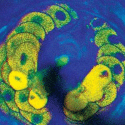
Livening up HCS Imaging By Dr John Comley With the aid of recent end-user feedback, this article investigates interest in and use of live cell and kinetic HCS imaging; most wanted application areas: advantages of live cell HCS imaging; live cell HCS assays of greatest interest; what's limiting live cell… Read More
qPCR Assays - End user practices and latest vendor offerings By Dr John Comley This review provides an insight into real-time quantitative PCR (qPCR) assays today. Using end-user feedback it investigates interest in the targets for qPCR applications; primary application areas for qPCR analyses; the importance of emerging applications; how… Read More
By Dr Anil Vasudevan Since the original publications on the benefits of conducting organic reactions in a microwave by Gedye (1) and Majetich (2) in the mid-80s, the uptake of this technique was sluggish at best for the next 12-14 years. However, the past few years have witnessed an explosion… Read More
Next Generation Immunoassay Systems and the Revival of Protein Biomarkers By Dr John Todd and Dr Sara J. Agee Proteins are the machinery that drive most biological processes; however, measuring their concentrations at low levels has been historically impeded by a lack of appropriately sensitive technology. Advances in immunoassay technology,… Read More
Growing Interest in Outsourcing Ion Channel Services By Dr John Comley Summer 2008 Significant demand now exists in Pharma and Biotech to access ion channel testing services and this is reflected by the number and the variety of service offerings. In the highly competitive area of cardiac safety hERG testing… Read More
Progress in the Implementation of Label-Free Detection - Cell-based assays By Dr John Comley Progress made in the use of impedance and optical grating technologies for label-free detection of cell-based assays where examined in HTStec's recent Cell-Based Label-Free Detection Trends report. Uniquely all of these label-free offerings are plate-based and… Read More
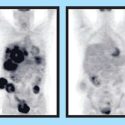
The Potential of Molecular Imaging for Drug Discovery & Development By Dr Ken Rubenstein By combining cutting-edge biomedical research with the time-proven ability to visualise the unseen, the rapidly emerging field of molecular imaging promises to open new vistas for a wide range of individuals, from basic researchers to scientists… Read More
Dispense and Imaging Assays - Moving towards a more balanced use of both fluorescence and flash luminescent readouts By Dr John Comley Progress towards the uptake and adoption of flash luminescence readouts in screening were the subject of HTStec's recent Dispense & Imaging (D&I) Trends 2007 report. The report suggests… Read More
Lean Six Sigma - Its application to drug discovery By Clare Hammond and Charles J O'Donnell In an increasingly competitive world, the race between pharmas to get high quality candidate drugs to market is on. Contributing to this success is the discovery phase of lead optimisation. The application of Lean… Read More
Needs and challenges in High Throughput Screening By William Downey, Dr Helen Nicely and Dr Lynne Sopchak High throughput screening (HTS) groups face similar challenges as the pharmaceutical and biotechnology industry as a whole faces. HTS groups are looking for ways to improve effectiveness in lead discovery, increase their productivity… Read More
Microplate Mixing - Bioassay panacea or of unproven distraction? By Dr John Comley Despite general awareness of the significance of microplate mixing, it is still a relatively low priority in most laboratories. Microplate mixing has largely been ignored as a serious problem, although potentially it could undermine the generation of… Read More
William Downey and Dr Shauna Farr-Jones GPCRs are the most studied drug target class and have a proven record as valuable drug targets, with 40-50% of marketed drugs being modulators of GPCR function. Despite the intense effort focused on these targets by the pharmaceutical industry over many years, numerous challenges… Read More
How Non-invasive Visible Light Imaging Can Change Drug Discovery Dr Peter Lassota and Dr Anjani Shah In the past decade, non-invasive visible light imaging gained acceptance not only as a valuable research tool, but also as a means of evaluating new compounds for efficacy and pharmacodynamic properties in drug discovery. Read More
Monochromator vs Filter-based Plate Readers By Dr John Comley This article is based around feedback obtained in HTStec's recent Multi-Mode Microplate Reader Trends 2007 Report. It highlights findings on what influences reader choice, current use of different plate reader detection modalities, main target types/classes investigated using plate readers, sources of… Read More
Automated Biobanking - The next big step for biorespositories By Dr John Comley As a significant proportion of the many newly established national, regional and disease-specific biobanks or biorespositories contemplate how they will enable enhanced sample integrity, tracking and audit trail, there has never been a more opportune time to… Read More
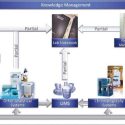
Enabling Collaborative Science via the Integration of Analytical Data into Organisational Systems By Mark Bayliss The storage of data drawn from the analytical process has for years been the stumbling block in the overall ‘knowledge management’ of the discovery process. This article argues that current scientific data management packages offer… Read More