Digital PCR (dPCR) and Real-Time PCR (qPCR): A time and place for each By Dr George Karlin-Neumann and Dr Rachel Scott When it comes to DNA research, scientists often find themselves weighing digital PCR (dPCR) against the more established quantitative real-time PCR (qPCR). Which technique is better to use? The… Read More
By Dr John Comley 3D cell culture has the potential to deliver higher quality culture information that is more representative of tissue morphology and predictive of drug responses in vivo. Three years ago we concluded in DDW that 3D cell culture was still open to major improvements, so what has… Read More
Large-Scale Expansion of Stem Cells For Therapy and Screening By Dr Y. John Shyu, Dr Katherine E. Strathearn and Dr Richard M. Eglen Recently, pre-clinical and clinical studies of stem cells in regenerative medicine have demonstrated great promise as treatments for various diseases. Their ability to self-renew and differentiate makes… Read More
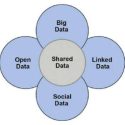
Informatics & Data: Revolutionising the R&D Arena By Glyn Williams and Dr Paul Denny-Gouldson Today’s information technologies profoundly affect the way we conduct research and development (R&D), and the last 20 years have seen great advances in information technology across both our work and home lives. From representing complex material… Read More
Biomarker Discovery: The Need For New Generation Peptide-Protein Microarrays By Dr Nikolai Schwabe and Katherine Catchpole The progression from health to disease is marked by significant biological changes within an individual (1). Clinically presenting symptoms, however, can be non-specific and variable enough to hinder diagnosis, and may appear only after… Read More
Healthcare and Life Sciences undergoing disruptive change by linked data and semantic technologies By Hans Constandt From early days the sharing of knowledge has been one of the main forces driving science and innovation. Yet latterly, the pharmaceutical industry with its fear of loss of intellectual property has stalled the… Read More
Gene Editing: Re-writing Genomes With Targetable Nucleases By Dr Dana Carroll We are in the midst of a revolution in genome engineering, based on reagents that can be designed to cut chromosomal DNA at arbitrary sites. These targetable nucleases allow creation of new mutations at specific sites, introduction of designed… Read More
Automated Compound Management Evolves To Meet The Drug Discovery Demands Of The Future By Dr Caroline Engeloch and Dr Daniel Baeschlin The development of new drugs involves testing hundreds of thousands of compounds, from high throughput screening through to subsequent lead optimization. Recognizing the importance of a compound bank in… Read More
The Great Neuro-Pipeline Brain Drain - Why Big Pharma Hasn't Given Up On CNS Disorders By Julia Skripka-Serry Central Nervous System (CNS) disorders bear an economic burden of more than $2 trillion in the US and EU and rake in upwards of $80 billion a year for the pharmaceutical industry. Read More
Fluorescence Lifetime Assays By Dr Graham Cotton, Dr Wayne Bowen, Dr Robert Grundy and Dr Ulrich Hassiepen The benefits of fluorescence lifetime-based technologies (FLT) have been highlighted for more than a decade but thus far they have failed to gain widespread acceptance. Significant improvements in assay reagents and availability of… Read More
By Dr Alejandra Solache, Robert Brockett, Trinette Chuang, Dr Robin Clark, Rey Dimagiba, Dr April Fisher, Dr Wayne Speckmann and Dr Chun Yang Antibodies have become a vital tool among researchers in the life sciences and are routinely being used in a number of diverse immunoassay applications, including Western blotting… Read More
Outsourced Kinase Profiling Services: Adding Value To In-House Kinase Programmes Dr John Comley Biochemical kinase profiling using a large panel of kinases with a broad coverage of the human kinome has become the de facto norm within the Pharma industry. The importance of this activity is demonstrated by the large… Read More
Unrevealing Biological Secrets By Single Cell Expression Profiling By Dr Mikael Kubista and Dr Anders Ståhlberg During the last 30 years exceedingly sensitive and accurate technologies have been developed to measure and quantify amounts of nucleic acids and proteins. With techniques such as quantitative real-time PCR (qPCR) and nextgeneration sequencing… Read More
A Decade of RNAi Screening: Too much hay and very few needles By Bhavneet Bhinder and Dr Hakim Djaballah RNAi screening is arguably the fastest growing field with the premise to better understand gene function at the genome level. It has been hailed as the second genomics wave, and in… Read More
Stem Cells Rapidly Gaining Traction in Research and Drug Discovery By Dr John Comley A recent market survey on stem cells in research and drug discovery showed that despite a significant amount of hype and hope around stem cells, most drug discovery-related efforts today still fall into the category of… Read More
Are Laboratories Truly Ready For Mobile Working? By Sarah Westall It is not too long ago that mobile technology was limited to a certain few, but these days devices such as smartphones and tablets play an important part in many people’s working and personal lives. In the majority of research… Read More