Fine-tuning the technology strategies for lead finding By Sandra Fox, Dr Shauna Farr-Jones, Dr Lynne Sopchak and Dr Helen Wang HTS has become the workhorse of pharmaceutical and biotechnology companies' drug discovery efforts, with expanding responsibilities and increasing pressures to screen more targets with better compound libraries to find high-quality… Read More
Monoclonal Antibodies - Magic bullets or a shot in the dark By Dr Fiona Adair It has been 16 years since the first monoclonal antibody was approved for therapy in acute transplant rejection. Now, with a further nine therapeutic monoclonal antibodies approved for use and some 16 in phase III… Read More
Nanolitre Dispensing - On the point of delivery By Dr John Comley Precise low-volume liquid handling methodologies are still sought after by those interested in enabling miniaturised HTS. This article reviews the need for nanolitre dispensing and provides a current perspective on those emerging technologies that have the potential to… Read More
Lead Generation and Lead Optimisation: the value of linking HT co-structure analysis and HT chemistry By Dr David U Prichard The coupling of High Throughput co-structure analysis with focused library generation is not only proving a powerful general tool in lead optimisation but also increasing the probability of successful discovery… Read More
By Dr Mark L. Nelson Less than a hundred years ago, if you developed a microbial infection your immune system couldnt handle, you died. Then came the wonder drugs, antibiotics capable of fighting the infections for you. But times have changed. Now, because of antibiotics, their use and misuse, the… Read More
The Future of Cardiovascular Gene Therapy By Christopher J. Reinhard Advances in regenerative medicine go hand in hand with new perspectives and insights into potential treatments for heart disease. After a decade of pre-clinical and early Phase 1 and 2 clinical studies, gene therapy is now emerging as a genuine… Read More
Chemical microarrays - The drug discovery superhighway By Elaine Seeskin While producing targets was once the bottleneck in the drug discovery process, in the post-genomic era this has been superseded by the requirement for high-quality lead structures. As a result of the pool of genomic data and countless unvalidated targets… Read More
Obesity - The 21st century disease By Diane L. McBay and Dr Colin T. Dourish Obesity will be the leading cause of death and disability in the 21st century. This epidemic is largely attributable to increasingly sedentary lifestyles and the abundance of tasty, high-fat foods. Obesity increases the risk of… Read More
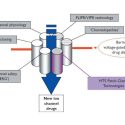
Channelling Drug Discovery - Current trends in ion channel drug discovery research By Dr David Owen and Andrew Silverthorne Ion channels are proteins that span cell membranes thus forming conduits or 'channels' through which charged ions such as sodium and potassium can pass across a normally impermeant barrier such as… Read More
Metabolism Provides Alternative Door to Stroke Therapy By Dr Keith F. Martin and Tony Dolan Even in the age of genomics and gene hunters, a holistic view of cell metabolism can result in revolutionary new drugs. You know that feeling you get the day after an exaggerated attempt at physical… Read More
Proteomics In Drug Target Discovery - High-throughput meets high-efficiency By Dr Terence E. Ryan and Dr Scott D. Patterson Biochemistry is enjoying a renaissance under the guise of 'proteomics' due to the availability of sequenced genomes, advances in mass spectrometry and associated data analysis. Its application to drug discovery and… Read More
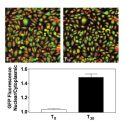
Cell Based Assays - Seeing the light By Dr Nick Thomas High-context cell assays have the potential to take the pivotal role in the drug discovery process. So what are the features of today's leading edge cell based assay technologies and where does the future lie? We live in interesting… Read More
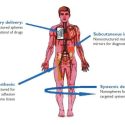
Silicon Technology and Pharmaceutics by Professor Leigh T. Canham, Dr Roghieh S. Saffie, Stephen E. Connor and Dr Roger Aston The recent discovery that, following nanostructuring, silicon can be rendered biocompatible and biodegradable has far reaching and profound long-term implications for the pharmaceutical industry and, indeed, medicine as a whole. Read More
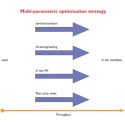
Hit to lead and lead to candidate optimisation using multi-parametric principles By Dr Anthony D. Baxter and Dr Peter M. Lockey As the numbers of potential target proteins become available for pharmaceutical companies of all sizes, the drive towards more cost-effective drug discovery assumes greater significance. It is a truism… Read More
Surrogate Endpoints In Cancer Trials By Professor Karol Sikora Over the next 20 years systematic programmes of cancer risk assessment will be established and cancer-preventive drugs will be developed. The ability to prevent cancer will dramatically increase the number of people who will need to regularly attend clinics. This article… Read More
Protein Arrays - New technology for the proteomics era By Dr Jeffrey P. Kiplinger The study of the human proteome will drive drug discovery in coming years; although how, when, and in what direction are a little uncertain at present. To build understanding of the role of the human protein… Read More