Opportunities for the pharmaceutical industry: key biotransformation technologies of the future By Praveen Kaul, Anirban Banerjee and Professor UC Banerjee Biotransformation is a broad and growing field of biotechnology and encompasses both enzymatic and microbial biocatalysis. Progress has been made in research on the key drivers of biotransformations, including the… Read More
Growing Market for High Content Analysis Tools By Dr. John Comley and Sandra Fox Two market surveys and a recent major scientific meeting have all highlighted the growing interest in High Content Screening (HCS) and point to the momentum which now surrounds the implementation of high content analysis tools. Despite… Read More
Functional cell-based high throughput drug screening By Professor Daniel T. Chiu and Professor Owe Orwar Cell-based assays are poised to assume an increasingly important role in drug screening and discovery. It is becoming apparent that simple binding assays and in vitro experiments are grossly insufficient for extrapolating the efficacy and… Read More
Gene Expression: Analysis and Drug R&D By Dr Ralph Sinibaldi It is clear that gene expression profiling systems have a role to play in many facets of drug discovery and development, but several questions remain. We take a look at the use of DNA microarray for gene expression or expression… Read More
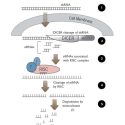
Using RNAi to identify and validate novel drug targets: targeting human kinases with an siRNA library By Andrea Kroenke, Anne Grabner, Dr Michael Hannus, Dr Christoph Sachse, Dr David Dorris and Dr Christophe Echeverri Libraries of siRNAs directed against predefined subsets of genes now offer the capacity to greatly accelerate… Read More
Role of image informatics in accelerating drug discovery and development By Robert Dunkle There is a new category of informatics that is proving itself essential to the acceleration of drug discovery and development. Image informatics is the systematic use of image data as a means to help interpret experiments and… Read More
Protease Inhibitor Therapeutics for Respiratory Disease By Dr Philip J. Barr Disruption of the natural equilibria between proteases and their cognate inhibitors is a common feature of inflammatory disease. When this occurs in the lung, the effects can lead to irreversible impairment of pulmonary function. Although protease inhibition has been… Read More
New Flash Imagers: Facilitating higher throughput functional GPCR assays By Dr John Comley The recent availability of tailored automation solutions that combine liquid handling at the reading position with the latest innovations in low light imaging technology are providing screeners with new tools for the measurement of high throughput flash… Read More
Accommodating cells in HTS By Sandra Fox High Throughput Screening has become an important and integrated part of drug discovery at most pharmaceutical and many biotechnology companies worldwide, and is now entrenched in the drug discovery process. To produce high quality leads, centralised HTS laboratories are expanding their overall role… Read More
By Tim Ward Cell culture is and has historically been an essential component of the drug discovery toolbox. Cell culture provides the proteins, membrane preparations and other raw materials required for biological research. In recent years, with the emergence of high-throughput screening technology and binding and live, cell-based functional assays,… Read More
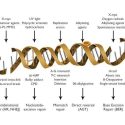
DNA repair inhibition to treat cancer and other serious illnesses By Professor Stephen P. Jackson and Cheryl L. Bishop The stability of an organism's genome is essential for healthy functioning and survival. The information content and integrity of the genome are so important that a range of maintenance and repair… Read More
PATCHERS vs SCREENERS: divergent opinion on high throughput electro-physiology By Dr John Comley The prospect of enabling higher throughput electro-physiology (patch-clamping) has created much expectation from scientists within the ion channel community. Yet there are opposing views among traditional electro-physiologists and screeners as to the needed specification and the preferred… Read More
Urinary troubles for more than the ageing By Dr Anthony PDW Ford The needs of younger incontinence sufferers coupled with the ageing of the baby-boomer population portend a big boost in demand for effective and well tolerated new medicines for lower urinary-tract dysfunction. This market is under-served today, presenting a… Read More
By Dr Steven Bodovitz and Dr Scott D. Patterson The potential for parallel protein-based analyses to define a new era in diagnostics and drug development is generating considerable excitement in the field of proteomics. However, the discovery of differentially expressed proteins that correlate with a disease state or a drug… Read More
The Industrial Evolution of Screening Infrastructure By Chris Molloy Industrialisation of screening depends upon the use of a stable,mature infrastructure. According to a recent Boston Consulting Group report, a pharmaceutical company needs to spend 900 million ($810 million) on R&D to bring a product to market. This is almost three… Read More
High Throughput Screening using G-protein coupled receptors as the target plate-based and biochromatographic technologies By Professor Irving W.Wainer, Dr Farideh Beigi and Dr Ruin Moaddel The G-protein coupled receptor (GPCR) family constitutes the largest class of cell surface receptors and GPCRs are the targets for more than 50% of the… Read More