Mouse models

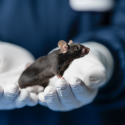
Lab mouse
#Immunology #Mouse models #T-Cells

Whitepaper: The benefits of a mouse platform humanised with PBMCs

Mouse models with human immune cell engraftment provide platforms to evaluate compounds to treat a variety of human diseases. Humanised PBMC (hu-PBMC) mice feature quick engraftment of adult peripheral blood mononuclear cells and enable short-term studies requiring mature human T cells. Hu-PBMC mice are used as in vivo models to… Read More
#News

#Immunology #In vivo #Mouse models #T-Cells

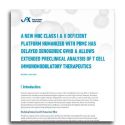
The latest MHC class I & II deficient in vivo platform humanised with PBMCs

This whitepaper, brought to you by The Jackson Laboratory will teach: The benefits of the JAX NSGTM-MHC I/II KO mouse platform humanised with pre-characterised PBMCs How this platform can support a wide range of immunological studies, especially those containing T cells responses The versatility of this platform to various research disciplines… Read More

#Intelligence #Resources

#Alzheimer's #Biotechnology #Mouse models #Neurodegenerative disorders

Novel drug effective in a mouse model of Alzheimer’s disease

Neuro-Bio, a biotechnology company developing a first-in-class treatment for neurodegenerative disease, has found its new drug candidate effectively treats the signs of neurodegeneration in a mouse model of Alzheimer’s disease. Publishing their work in Alzheimer’s & Dementia: Translational Research & Clinical Interventions (TRCI)… Read More

#News

#Mouse models #Stem cells

Lonza expands to enable efficient humanised mouse model development

Lonza has expanded its human stem cell offerings to provide human cord blood CD34+ haematopoietic stem cells (CB-CD34+ HSCs) in large batch sizes, meeting a rapidly expanding market need.  CB-CD34+ HSCs are the preferred cell choice for creating humanised mouse models, which are critical for preclinical… Read More

#News

#Collaboration #Covid-19 #Mouse models #Research

Agreement paves the way for better mouse models to study Covid-19 

Scientists at La Jolla Institute for Immunology (LJI) and Charles River Laboratories International are launching a new project to uncover how different cells in the human immune system respond to SARS-CoV-2, the virus that causes Covid-19.   The research  This new mouse model has been engineered… Read More

#Covid-19 #News

#CRISPR #Gene editing #Genetic modification #Mouse models

With so many technologies for genetically modifying models, it pays to choose wisely

Listen to this article on the DDW Podcast: By Caroline Horizny, Taconic Biosciences When a pharmaceutical company, biotech firm, or academic institution embarks on a preclinical research project, one of the most critical early-stage decisions is which animal model will best support the project’s objective. Mouse models remain a go-to resource… Read More

#Exclusive Content

#CRISPR #Mouse models

CRISPR/Cas9 genetically engineered models: IP and licensing considerations

This paid-for advertorial by Taconic Biosciences appeared in DDW Volume 22, Issue 1 – Winter 2020/21 In the following article, Dr. Caroline Horizny from Taconic Biosciences discusses the intellectual property landscape of CRISPR/Cas9-generated mouse models. The growing complexity of preclinical research for drug development has yielded an increase in the… Read More

#Regulatory

#Immuno-oncology #Immunotherapy #Mouse models

Taconic Biosciences expands immuno-oncology animal model portfolio

Taconic Biosciences, global provider of drug discovery animal model solutions, has expanded its immuno-oncology portfolio. Immuno-oncology is a leading research priority because it uses the body’s own immune system to effectively treat some types of cancer. Syngeneic tumour animal models play a critical role because they use standard inbred mice… Read More

#Cancer Research #News

#Mouse models #Oncology

Syngeneic mouse models for preclinical immuno-oncology

The advent of immuno-oncology has necessitated changes in the types of animal models used in oncology drug discovery. Syngeneic models — inbred mice bearing an engrafted tumour derived from a genetically identical mouse strain — are invaluable preclinical research tools that enable tumour studies in the context of a complete… Read More

#Cancer Research #News

#Immuno-oncology #Mouse models #Oncology

Syngeneic mouse models for preclinical immuno-oncology

The advent of immuno-oncology has necessitated changes in the types of animal models used in oncology drug discovery. Syngeneic models—inbred mice bearing an engrafted tumour derived from a genetically identical mouse strain—are invaluable preclinical research tools that enable tumor studies in the context of a complete and functional immune system. Read More

#Resources