Drug screening

#Assays #Drug screening #In vivo #Promega

Five questions to answer before you move your assays from 2D to 3D 

This paid-for advertorial by Promega appeared in DDW Volume 27 – Issue 3, Summer 2026.   The shift from 2D monolayers to 3D cell culture models like spheroids, organoids, and complex tissue constructs, is gaining momentum in the drug discovery space. And for good reason: 3D models better recapitulate in vivo biology, improving the… Read More

#Exclusive Content

#Drug discovery #Drug screening #Merck #Promega

Merck and Promega to co-develop drug discovery technologies 

Merck has entered a partnership with global life science service Promega Corporation to co-develop technologies advancing drug screening and discovery.  The agreement will bring together Merck’s expertise in organoids and synthetic chemistry with Promega’s assay and reporter technologies. The companies aim to develop assays… Read More

#Business & Investment #News

#Drug development #Drug discovery #Drug safety #Drug screening #Mitochondria #Toxicology

App Note: Measure mitochondrial toxicity using primary hepatocytes

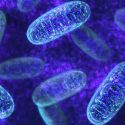
Mitochondrial dysfunction is known to play a central role in drug-induced hepatotoxicity, and thus early detection of mitochondrial toxicity is a critical component of initial drug development efforts. While immortalised cell lines are widely used for in vitro assessment of hepatotoxicity, cryopreserved primary human hepatocytes are a preferred model for drug… Read More

#News

#Drug development #Drug discovery #Drug safety #Drug screening #Mitochondria #Toxicology

Measurement of mitochondrial toxicity using primary hepatocytes

Mitochondrial dysfunction is known to play a central role in drug-induced hepatotoxicity, and thus early detection of mitochondrial toxicity is a critical component of initial drug development efforts. While immortalised cell lines are widely used for in vitro assessment of hepatotoxicity, cryopreserved primary human hepatocytes are a preferred model for drug… Read More

#Resources

Human heart model
#Adverse event #Cardiovascular disease #Drug safety #Drug screening #iPSC #Organ-on-a-chip

Miniature human heart has potential to reshape drug testing

A tiny human heart model could potentially transform cardiovascular research and enable animal-free drug testing. A team of researchers, led by the Hebrew University of Jerusalem (HU), has developed a self-paced, multi-chambered human heart model, approximately half the size of a rice grain. “Integrating… Read More

#Editor's Choice #News

Organ on a chip
#CN Bio #Drug development #Drug screening #In vivo #Organ-on-a-chip #Organoids #SLAS

Organ-on-a-chip models in drug development

This paid-for advertorial by CN Bio appeared in DDW Volume 24 – Issue 2, Spring 2023 Despite advancements, the drug development process remains inefficient. Even with rigorous optimisation and validation, we face a 90% failure rate by the clinical phase1. Existing in vivo and in vitro models aren’t up to… Read More

#Exclusive Content

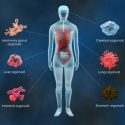
Organoids
#Drug development #Drug discovery #Drug screening #Gene editing #In vitro #In vivo #Organoids #Personalised medicine

Gene editing in organoids: accounting for complexity in drug discovery

Oksana Sirenko looks at the advantages and limitations of using organoids from human cell sources in drug development and drug screening.  The genome is the blueprint for life, consisting of genes made up of thousands of pairs of DNA bases. Altering one base pair can drastically… Read More

#Exclusive Content

Using C. elegans to screen compounds
#C elegans #Drug screening #Drug toxicity #Financing #Investment #Research services

Anti-ageing research company secures investment

Magnitude Biosciences has closed a fourth round of investment to accelerate the scaling of its business providing C. elegans research services.   A total investment of £500,000 will be made by longstanding investors the North East (ERDF) Innovation Fund Limited Partnership, supported by the European Regional Development Fund… Read More

#Business & Investment #News

#Automation / robotics #Cell and gene therapy #Drug Discovery 2022 #Drug screening #ELRIG #Preclinical investigations #Sustainability

The trends driving ELRIG Drug Discovery 2022

DDW Editor Reece Armstrong explores some of the trends that will be featured in sessions throughout ELRIG Drug Discovery 2022 and the news behind them. Taking place at the ExCel in London from 4-5 October, ELRIG Drug Discovery 2022 is set to provide visitors with access to the… Read More

#Exclusive Content

#Automation / robotics #Biotechnology #Drug discovery #Drug screening #ELRIG #Events #Life sciences

Comment: Join the science revolution at Drug Discovery 2022 

ELRIG CEO Sanj Kumar tells readers how they can access the most exciting research and find the latest technologies to propel their projects forward at this year’s Drug Discovery 2022  At ELRIG, our purpose is to support researchers in the life sciences and drug discovery communities to learn, share,… Read More

#Exclusive Content #Opinion

#Antibodies #Drug discovery #Drug screening

Carterra joins TetraScience Network to boost antibody services  

Life sciences company Carterra has joined data cloud company TetraScience’s network of partners to help generate insights into the potential of antibodies as drug candidates.  The Tetra Partner Network (TPN) is an ecosystem of partners which connects R&D data for pharmaceutical and biopharmaceutical customers.   Carterra… Read More

#News

#Drug discovery #Drug screening #Lead optimisation

One stop for GPCR Drug Discovery Needs

This paid-for advertorial by Eurofins Discovery appeared in Volume 23 – Issue 3, Summer 2022. In the following article, Luke Oostdyk, Lakshmi Anantharaman and Nicole Servant from Eurofins Discovery discuss how G-Protein Coupled Receptor screening and profiling can advance drug discovery programs.  The sheer number of understudied and orphan receptors in… Read More

#Exclusive Content #Intelligence

#Drug screening #Funding #Innovate UK #Microfluidics

Orbit Discovery awarded grant to advance screening platform  

Biopharmaceutical company Orbit Discovery has been awarded almost £500,000 in a grant to help it expand its microfluidics screening capabilities.   The £472,000 Smart grant was awarded by Innovate UK and will facilitate the implementation of droplet-based microfluidics for cell-based functional screening and expand the capabilities and throughput… Read More

#News

#AAV #Drug discovery #Drug screening #NanoTemper Technologies

NanoTemper Technologies updates AAV/drug discovery portfolio  

NanoTemper Technologies has launched a number of updates to its portfolio of instruments to help researchers working in drug discovery and adeno-associated virus (AAV) therapies.  NanoTemper Technologies has launched its Spectral Shift technology to remove the roadblocks experienced by scientists dealing with really complex molecular interactions often… Read More

#News

#CAR-T #Cell therapy #Drug screening #Drug targets #Flow Cytometry #Tumour

How to assess the safety profile of potential CAR targets 

CAR T cell technology provides the foundation for established immunotherapies against certain types of blood cancer and holds great promise for the fight against many solid tumours too. One major drawback of conventional CAR T cell technology, which relies on a single target antigen, is the lack of tumour-associated antigens (TAAs) that… Read More

#News #Trending News

#Biomarkers #Drug delivery #Drug discovery #Drug screening #High throughput screening #Webinar

Webinar: Enabling biomarker discovery and screening

Multiplex assays allow researchers to measure multiple biomarkers simultaneously, offering the advantage of harvesting more insightful data to inform better decision-making, accelerate research, and increase the probability of discovery. Enabling biomarker discovery and screening with FirePlex Multiplexed Assays features the expertise of Dr Paul Wylie. In this webinar with… Read More

#News