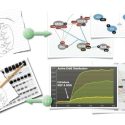
The Benefits of Biological Modelling By Gordon Webster The enormous challenge posed by the complexity of biological systems represents a potential intellectual impasse to researchers and threatens to stall future progress in basic biology and healthcare. In recent years, increasing reliance on correlative approaches to biology has failed to resolve… Read More
Stem Cell Applications and Opportunities in Drug Discovery By Dr Mark A. Thiede The high attrition rate of late stage drug candidates has led the pharmaceutical and biotech industries to a reassess the in vitro models used to select and validate drug targets and subsequent lead molecules. Traditional cell lines… Read More
Predicting Transporter-mediated Drug-drug Interactions Based on in Vitro Cell Permeability Assays By Dr Chris Bode Drugs may fail in clinical development or post-marketing for a variety of reasons: they may simply not be as effective as anticipated; poor pharmacokinetic properties may prevent them from reaching their intended target in therapeutic… Read More
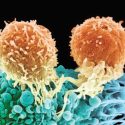
The Potential of High-resolution Human Immune Cell Assays to Aid the Pre-clinical to Clinical Transition of Drug Development Projects By Dr Catherine A. Brady The effort to develop drugs that interact with the human immune system (whether by accident or design) has been dogged by a mismatch between the data… Read More
A Bronchoscopically Administered Therapeutic Approach to Advanced Emphysema By Dr Edward E. Berger Emphysema is a progressive, debilitating disease that affects approximately 4.1 million people in the United States or roughly 1% of the US population. The disease is characterised by destruction of lung tissue as a result of inflammation… Read More
Next Generation Immunoassay Systems and the Revival of Protein Biomarkers By Dr John Todd and Dr Sara J. Agee Proteins are the machinery that drive most biological processes; however, measuring their concentrations at low levels has been historically impeded by a lack of appropriately sensitive technology. Advances in immunoassay technology,… Read More
The Potential of Molecular Imaging for Drug Discovery & Development By Dr Ken Rubenstein By combining cutting-edge biomedical research with the time-proven ability to visualise the unseen, the rapidly emerging field of molecular imaging promises to open new vistas for a wide range of individuals, from basic researchers to scientists… Read More
Advances in Antibody Therapy - A promising new approach to how we treat cancer By Dr Patrick A Baeuerle Antibodies available today for cancer treatment, while effective, are typically used in combination with standard therapies because their activity as monotherapy is limited. Currently, four conventional antibody products dominate the oncology… Read More
Trends in the microRNA Marketplace By Kathy Gray and Dr Enal Razvi In this article, a recent market analysis is discussed aimed at understanding the market landscape, trends and opportunity in the rapidly-expanding microRNA marketplace. These market analyses are presented in detail in a recently published MicroRNA 2008 market report. Read More
Needs and challenges in High Throughput Screening By William Downey, Dr Helen Nicely and Dr Lynne Sopchak High throughput screening (HTS) groups face similar challenges as the pharmaceutical and biotechnology industry as a whole faces. HTS groups are looking for ways to improve effectiveness in lead discovery, increase their productivity… Read More
Human ES Cell Derived Functional Cells as Tools in Drug Discovery By Dr Petter Bjorquist, Dr Peter Sartipy, Dr Raimund Strehl and Dr Johan Hyllner The drug discovery process is extremely-time consuming and expensive. Consequently, novel approaches for these processes and for reducing late-stage attrition are of great value for… Read More
Perspectives for ADMET Integration in the Discovery Process By Dr Constance Hofer ADMET (ADME/Tox), is a relatively new symbiotic acronym for the investigation of basic compound behaviour in terms of absorption, distribution, metabolism and excretion, combined with assessments of toxicity. The emergence of ADMET instead of ADME reflects the growing… Read More
Opportunities in Gastroenterology By Dirk Reyn Despite being one of the world's largest therapeutic areas and presenting huge burdens to healthcare and economies globally, many of the diseases of the gastrointestinal (GI) tract are not well understood and less than optimally treated. This article discusses that, given the large public… Read More
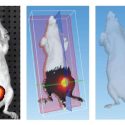
How Non-invasive Visible Light Imaging Can Change Drug Discovery Dr Peter Lassota and Dr Anjani Shah In the past decade, non-invasive visible light imaging gained acceptance not only as a valuable research tool, but also as a means of evaluating new compounds for efficacy and pharmacodynamic properties in drug discovery. Read More
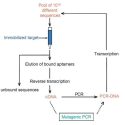
The Power of APTAMERS in the Drug Discovery Process Professor Michael Famulok Methods of combinatorial biochemistry allow the identification of nucleic acid sequences, or aptamers, which can bind their target molecules with high affinity and specificity and are able to efficiently inhibit their biological function. Macugen, the first aptamer-based drug… Read More
Reshaping the Landscape of Cancer Drug Discovery and Development By Dr Paolo Paoletti The landscape of cancer drug discovery and development is shifting, adjusting and reshaping itself in response to the huge rush of scientific knowledge which has come to the fore over the past few decades. In collaboration with… Read More