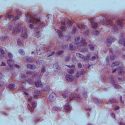
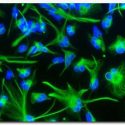
3D Cell Culture Developments to Improve In Vitro Analyses By Prof Stefan Przyborski Improved in vitro models are required to aid the identification and assessment of candidate molecules for pharmaceutical development. Conventional cell culture models involve the growth of cells on two-dimensional (2D) substrates. Cells adapt to this synthetic 2D… Read More
Enabling the Promise of Stem Cells By Robert Shaw and Dr Jeff Till The remarkable potential of stem cells to generate several hundred differentiated cell types is driving their use for regenerative medicine and for supporting the traditional drug discovery and development process (Figure 1). However, sustained progress in these… Read More
The Post Genomic Era: What Does It All Mean? By Dr Chris Torrance Information may no longer be a bottleneck to understanding and tackling complex genetic diseases such as cancer. For those who cut their research teeth not so very long ago, before PCR was thought of by Kary Mullis,… Read More
By Michael Werner, Morrie Ruffin and Elizabeth West The regenerative medicine market offers phenomenal opportunities for growth in the next few decades. However, there are still major issues to be addressed to enable this nascent industry to truly flourish, especially with regard to investment and the attitudes of regulatory agencies… Read More
The Benefits Of Drug Repositioning By Dr Aris Persidis Drugs in development, on the market, or those that are shelved because of lack of efficacy, are excellent starting points for further development. Finding new indications for such drugs will benefit patients who will see a potential new therapy sooner, will… Read More
Protein Biomarker Immunoassays: Opportunities and Challenges By Dr M. Walid Qoronfleh and Dr Klaus Lindpaintner With the biopharma industry under heavy pressure, transforming the scientific interchange between the laboratory and the clinic is exceedingly critical. Realising the costly toll of drug attrition in late-stage development, many companies are turning to… Read More
Induced Pluripotent Stem Cells: A model for transforming drug discovery By Dr Dwight Morrow and Dr Julie Holder Induced pluripotent stem (iPS) cells have the potential to transform drug discovery by providing physiologically relevant cells for toxic compound identification, target validation, compound screening, and tool discovery. The technology for generating… Read More
New Ways to Optimise Therapeutic and Diagnostic Antibodies By Dr Markus Enzelberger Monoclonal antibodies are the fastest-growing category of research within the biotech and pharmaceutical industries. Several monoclonal antibodies are listed in the top 10 selling blockbusters, and the market forecast predicts that the number of monoclonal antibodies within the… Read More
New Mechanisms and Expanded Indications for Biologic Therapies: a perspective on immunology research and development By Dr Susan B. Dillon Over the past decade, the introduction of biologic therapies has had a profound impact for millions of patients with immune-mediated arthritides, inflammatory bowel diseases and plaque psoriasis. Today, five anti-Tumor… Read More
Biomarkers Make Their Mark on Current Research and Drug Development Trends By Stephane Parent and Dr Gregory Cosentino Biomarkers continue to become increasingly relevant in research and healthcare applications, as evidenced by the global market for products involved in their identification, validation, and use estimated at $8.3 billion in 2007… Read More
3D Cell Culture: Easier said than done By Dr John Comley The transition from cell culture on the flat surface of a conventional two-dimensional (2D) culture vessel to a three-dimensional (3D) environment, matrix or scaffold with 3D architecture has begun, and is providing much needed support for emerging applications in… Read More
By Dr John Comley Laser scanning cytometers have matured over the past decade to meet the needs of end-users for higher throughput cell analysis, to access to previously difficult applications and to keep pace with the diversity of new fluorophores, validated high content screening (HCS) assay kits and reagents now… Read More
Free Online Resources Enabling Crowd-Sourced Drug Discovery By Dr Antony J. Williams, Valery Tkachenko, Dr Chris Lipinski, Professor Alexander Tropsha and Dr Sean Ekins The availability of freely accessible online resources to enable and support drug discovery has blossomed in recent years. The PubChem platform is now accompanied by a… Read More
Current and Emerging Trends in Cell-Based Assays - Roundtable In 2009 Drug Discovery World hosted a collegial-style roundtable discussion on the present and emerging developments in this exciting and now, fundamental area of drug discovery. The participants are recognised to be thought leaders in this field and represent the pharma,… Read More
By Dr Susanta K. Sarkar The current challenges facing drug discovery and development in terms of attrition are well documented. This article discusses how molecular imaging approaches from bench to bedside can not only streamline drug development, but also open up new opportunities in the treatment management of targeted therapies. Read More
LIMS vs ELNs - Arch enemies or best of friends? By David Morris Since the first appearance of laboratory information management systems (LIMS) in the late 1960s, this technology has become commonplace in many, if not most, research and commercial laboratories. This considerable development in LIMS is in response to… Read More