Author Archives: Megan Thomas

#Cancer research #Drug development #Drug repositioning #Research

Can common drugs boost immunotherapy cancer treatments?

Widely-used anti-inflammatory drugs make tumours more responsive to treatments which boost the anti-cancer function of the immune system, according to early research by the University of Manchester, funded by Cancer Research UK. The proof-of-concept study on the combination of immunotherapy with anti-inflammatory drugs – used to manage pain and reduce… Read More


#Cancer Research #Editor's Choice #News

#Biologics #Clinical trials #Crohn's disease

Study of biologic therapies for moderate to severe Crohn’s Disease

The Janssen Pharmaceutical Companies of Johnson & Johnson has released efficacy and safety data for STELARA (ustekinumab) in Crohn’s disease (CD) and ulcerative colitis (UC), including data from the SEAVUE study, the first study of biologic therapies in patients with CD, presented in a Clinical Science Late-Breaking Abstract Plenary session. Read More

#News

#ASCO #Events

ASCO 2021 reveals expert industry line-up

The upcoming 2021 American Society of Clinical Oncology (ASCO) Annual Meeting will be a digital event from June 4-8, featuring 48 educational and scientific sessions and showcasing what is possible when the cancer care community comes together to advance cancer research, treatment, and patient care. The event will allow real-time… Read More

#News

#Data #Drug discovery #Drug screening #Screening #Whitepaper

Expertise on analysis of targeted protein degrader compounds

Small molecule drug discovery is expanding beyond traditional strategies focused on identifying compounds that inhibit or block the activity of proteins that cause disease, says Promega. A newer approach to small molecule drug discovery is to selectively target proteins for removal from the cell using degrader compounds, focussing on identifying… Read More

#News

#AstraZeneca #Clinical trials #Covid-19 #Moderna #Pfizer #Research

Behind the UK Cov-Boost trial

The UK government has begun the Cov-Boost clinical trials for a booster coronavirus vaccine in a bid to test its effectiveness against the new variants of the virus. As part of the trial, seven vaccines ordered by the UK government will be tested on thousands of volunteers at random… Read More

#Covid-19 #Exclusive Content #News

#Covid-19 #Drug delivery #Drug development

EMA issues positive scientific opinion on early treatment of Covid-19

GlaxoSmithKline (GSK) and Vir Biotechnology have announced that the European Medicines Agency’s (EMA) Committee for Human Medicinal Products (CHMP) has issued a positive scientific opinion following the referral of sotrovimab to the CHMP under Article 5(3) of Regulation 726/2004. This relates to the use of sotrovimab for the treatment of… Read More

#Covid-19 #News

#Biotherapeutics #Drug development #Nanomedicine / nanotechnology #Research

New platform uses nanothechnolgy to deliver therapeutics

The Infection Innovation Consortium (iiCON) has launched The Nanotherapeutics Hub, based at the University of Liverpool in the UK, part of Liverpool’s Centre of Excellence for Long-acting Therapeutics (CELT). The agreement will see The Nanotherapeutics Hub work with iiCON to support companies looking to develop nanotherapeutics to combat infectious diseases… Read More

#Editor's Choice #News

#3D modelling #Biopharmaceuticals #Biotechnology #Drug screening #Drug targets

Optibrium and BioPharmics computational drug design partnership

The first outcome of the Optibrium and BioPharmics collaboration will be a new module for StarDrop, Optibrium’s small molecule design, optimisation and analysis software,. The new Surflex eSim 3D module, planned for the third quarter of 2021, will leverage BioPharmics’ three-dimensional (3D) ligand-based design approaches, offering exceptional virtual screening and… Read More

#News

#Biotherapeutics #Cell therapy #FDA #Tumour biology

What FDA Clearance means for GammaDelta cell cancer therapy

GammaDelta Therapeutics’ Investigational New Drug (IND) application has been cleared by the US Food and Drug Administration (FDA) for its allogeneic variable delta 1 (Vδ1) gamma-delta (γδ) T cell therapy, GDX012, to be investigated as a treatment for haematological malignancies. The FDA also granted orphan drug designation to allogeneic Vδ1… Read More

#News

Doctor administering a vaccine to patient
#Drug delivery #Drug development #Gene therapy #In vivo

Collaboration expands reach in next generation vaccines

Gamma Biosciences has agreed to make a controlling investment in Mirus Bio for nucleic acid delivery based in Madison, Wisconsin. The transaction will support Mirus’ plans to expand good manufacturing practice (GMP) production and commercialisation of its flagship product TransIT VirusGEN for large scale manufacturing of AAV and LV-based viral… Read More

#News

#AI #AI / data analytics / healthtech / informatics #Drug candidates #Drug design #Drug discovery #Research

AI accelerates discovery of small molecule drug candidates

Exscientia has entered into a collaboration agreement with Bristol-Myers Squibb Company. The collaboration will use AI to accelerate the discovery of small molecule therapeutic drug candidates in multiple therapeutic areas, including oncology and immunology. This expanded collaboration builds upon Exscientia’s existing collaboration with Bristol Myers Squibb that was initiated in… Read More

#News

#Bioscience #Cell and gene therapy #Gene therapy

Cell & Gene Collective to advocate for adoption of next generation medicine

The Cell & Gene Collective has been launched by companies Astellas, bluebird bio, Bristol Myers Squibb, Kite (a Gilead company) and Novartis with the aim of raising awareness of the promise and challenges of the next generation of medicines – cell and gene therapies. To date, the UK has… Read More

#News

#Biotherapeutics #Cardiovascular disease #Clinical trials #mRNA #Therapeutics

Positive data from study of siRNA in iron-loading anaemia conditions

Silence Therapeutics and Nasdaq have announced positive topline data from the GEMINI Phase I study of its wholly owned product candidate, SLN124, in healthy volunteers. SLN124, an siRNA which targets TMPRSS6, is in development for the treatment of iron-loading anaemia conditions, thalassemia and myelodysplastic syndrome (MDS). The GEMINI Phase I,… Read More

#News

#Aspergillosis #Nanomedicine / nanotechnology #Research

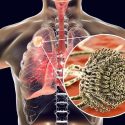
How nanoparticle drug inhalation helps fungal lung infections

Treatment for fungal lung infections could be more efficient when medication is inhaled using nanoparticle technology, according to research from the University of Central Lancashire (UCLan). The early findings of the study published in Springer Nature: Journal of Nanobiotechnology are of particular significance as many people with lung diseases that… Read More

#News