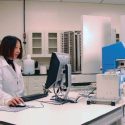
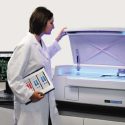
High Throughput Screening Systems: Impact of Reliability on Downtime and Drug Discovery By Dr John Comley This article reports the results of a survey on the reliability of automated HTS assay systems and the effect of reliability on output. Evidence supporting the view that high throughput screening (HTS)… Read More
Protein Biomarker Immunoassays: Opportunities and Challenges By Dr M. Walid Qoronfleh and Dr Klaus Lindpaintner With the biopharma industry under heavy pressure, transforming the scientific interchange between the laboratory and the clinic is exceedingly critical. Realising the costly toll of drug attrition in late-stage development, many companies… Read More
Induced Pluripotent Stem Cells: A model for transforming drug discovery By Dr Dwight Morrow and Dr Julie Holder Induced pluripotent stem (iPS) cells have the potential to transform drug discovery by providing physiologically relevant cells for toxic compound identification, target validation, compound screening, and tool discovery. The technology… Read More
Moving Forward With Label-Free Technology By Dr Jennifer Hartigan, Cindy Liu and William Downey Label-free technology is gaining acceptance and opening doors for new drug discovery. Relatively new in the well-established world of high throughput screening (HTS), label-free technology provides opportunities for probing biomolecular interactions without spatial-interference, auto-fluorescent… Read More
New Ways to Optimise Therapeutic and Diagnostic Antibodies By Dr Markus Enzelberger Monoclonal antibodies are the fastest-growing category of research within the biotech and pharmaceutical industries. Several monoclonal antibodies are listed in the top 10 selling blockbusters, and the market forecast predicts that the number of monoclonal antibodies… Read More
Current Trends in Label-Free Drug Discovery Technologies By Philip Rawlins Drug Discovery Label-free technologies have been used throughout drug discovery for the detection and characterisation of molecular interactions. The implementation of automated systems, increased sensitivity and the development of new technologies have recently broadened the use of… Read More
Mass Spectrometry is a mature technology predicated on a premise demonstrated almost a century ago. It is widely used in most scientific disciplines involving basic research or industrial endeavours, that require accurate and precise measurement of elemental and molecular components. More recently it… Read More
Bulk Reagent Dispensers: Ubiquitous liquid handling tool for microplate filling By Dr John Comley The initial success of the bulk reagent dispenser (BRD) as an automated liquidhandling product can be attributed to its simplicity and low cost. Its current role as an essential dispensing tool in those… Read More
Overcoming Bottlenecks in Drug Discovery By Dr Trevor Perrior Developing a new drug is an expensive and time-consuming process. The best current estimate puts the cost of developing a single new drug at close to $1 billion. After a drug candidate has entered… Read More
Is the Pharmaceutical Industry Open For Innovation? By Dr Jackie Hunter CBE Open innovation is the hot topic in many industries and this approach has the potential to make a radical difference to the costs of drug discovery and development in the pharmaceutical industry. But there are… Read More
High Throughput Flow Cytometry for Discovery at UNMCMD and the NIH Molecular Libraries Initiative By Dr Larry A. Sklar and Dr Bruce S. Edwards Commercial flow cytometers became widely established in research and clinical laboratories in the 1980s. Once the domain of immunologists and hematologists for cell… Read More
Biomarkers Make Their Mark on Current Research and Drug Development Trends By Stephane Parent and Dr Gregory Cosentino Biomarkers continue to become increasingly relevant in research and healthcare applications, as evidenced by the global market for products involved in their identification, validation, and use estimated at $8.3 billion… Read More
3D Cell Culture: Easier said than done By Dr John Comley The transition from cell culture on the flat surface of a conventional two-dimensional (2D) culture vessel to a three-dimensional (3D) environment, matrix or scaffold with 3D architecture has begun, and is providing much needed support for… Read More
Tracking HTS Assay Development Time: Opportunity for improving drug discovery By Dr Jennifer Hartigan, Cindy Liu and William Downey High throughput screening (HTS) assays are developed more quickly now due to advances in technology, improved liquid handling and sensitive detection, as well as increased communication between scientists in… Read More
Fluorescence Lifetime: Finally picking up momentum! By Dr John Comley Fluorescence lifetime (FLT) largely failed to make a significant inroad as a screening technology when it was first introduced nearly a decade ago, despite the fact that intrinsically it has many benefits, particularly in dealing with assay… Read More
Overview of Companion Diagnostics in the Pharmaceutical Industry Part 2: Business models. By Dr Stephen Naylor and Toby Cole There is an emerging consensus that the development of Companion Diagnostics appears to offer a set of tools to address many… Read More