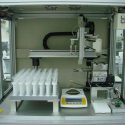
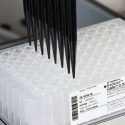
Automation Of Solid/Powder Dispensing: Much needed, but cautiously used! By Dr John Comley This article investigates solid/powder dispensing in pharma and biotech, examines where it is most used, whether there exists a need to apply automation and what is motivating its wider use today. It reveals how concerns… Read More
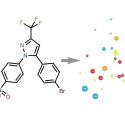
Overcoming the Limitations of Chemical Structure By Dr Andy Vinter, Dr Steve Gardner and Dr Sally Rose The pharmaceutical business has been profoundly hampered by a ubiquitous and unexpected obstacles; the way it draws its chemical compounds. Scientists, patent agents and business decision makers from R&D, safety,… Read More
Modular Automation for Screening: A cost/benefit analysis By Dr Jonathan Wingfield Cost is now a key driver for pharmaceutical companies and in many respects shapes the capital, revenue and resource decisions that have to be made during the drug discovery process. Where companies are resource rich, the need… Read More
Recent Technology Advances Transforming Pharmaceutical Drug Discovery and Development By Dr Coiln Brenan, and Dr Bill LaMarr The last decade has seen rapid technological progress but with increasing demands for safe and efficacious drugs, technological solutions that reduce the barriers to clinical success will be of more… Read More
Early Validation: The difference between success and failure? By Mike Benevento and Victor Bornsztejn Validation is typically associated with drug production and manufacturing, and often considered not to impact drug discovery and development. In fact, this assumption is not true and despite the fact that early-stage research may… Read More
The Benefits of Biological Modelling By Gordon Webster The enormous challenge posed by the complexity of biological systems represents a potential intellectual impasse to researchers and threatens to stall future progress in basic biology and healthcare. In recent years, increasing reliance on correlative approaches… Read More
Stem Cell Applications and Opportunities in Drug Discovery By Dr Mark A. Thiede The high attrition rate of late stage drug candidates has led the pharmaceutical and biotech industries to a reassess the in vitro models used to select and validate drug targets and subsequent lead molecules. Read More
Letting the Target Determine your Compound Acquisition Strategy By Dr John Harris With compound libraries likely to remain the cornerstone of hit and lead discovery for the foreseeable future, this paper seeks to summarise current and future approaches to optimal library design and compound acquisition, using examples… Read More
The Microplate Market Past, Present and Future By Dr Peter Banks Microplates and the peripheral markets of liquid handling and detection technologies exist within almost all laboratories performing assays. This article discusses what, if any, are their growth expectations and whether there are new technologies on the… Read More
High Throughput Screening, High Content Screening, Primary and Stem Cells By Dr Richard M. Eglen Over the past decade, the use of cell-based assays has accelerated in modern drug discovery. Indeed, the majority of assays in either target validation or lead identification/optimisation all now employ cell-based technologies. Read More
Predicting Transporter-mediated Drug-drug Interactions Based on in Vitro Cell Permeability Assays By Dr Chris Bode Drugs may fail in clinical development or post-marketing for a variety of reasons: they may simply not be as effective as anticipated; poor pharmacokinetic properties may prevent them from reaching their intended target… Read More
Livening up HCS Imaging By Dr John Comley With the aid of recent end-user feedback, this article investigates interest in and use of live cell and kinetic HCS imaging; most wanted application areas: advantages of live cell HCS imaging; live cell HCS assays of greatest interest; what’s… Read More
Building a Robust Portfolio of New Medicines to Combat Malaria By Dr Timothy N.C. Wells Malaria is one of the biggest killers of our time. Current estimates from the World Health Organisation (WHO) suggest that more than 250 million people are at risk worldwide. More significantly, almost… Read More
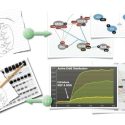
High Content Screening – The next challenge: effective data mining and exploration By Dr Kurt Zingler and Dr Stephan Heyse The use of high content screening within HTS is growing and with many past hurdles now overcome, the need for effective tools for data analysis is becoming paramount. Read More
The Potential of High-resolution Human Immune Cell Assays to Aid the Pre-clinical to Clinical Transition of Drug Development Projects By Dr Catherine A. Brady The effort to develop drugs that interact with the human immune system (whether by accident or design) has been dogged by a mismatch… Read More
By Dr Anil Vasudevan Since the original publications on the benefits of conducting organic reactions in a microwave by Gedye (1) and Majetich (2) in the mid-80s, the uptake of this technique was sluggish at best for the next 12-14 years. Read More