Predictive tests and personalised medicine By Dr Eddie Blair Acceptance of the personalised medicines paradigm is strictly dependent on this approach clearly benefiting patients with minimal effects on the actual delivery of healthcare. The use of molecular diagnostics to predict how an individual will respond to a particular medicine, in… Read More
Multiplexing for biological relevance in high throughput screening By William P. Downey, Dr Jennifer Hartigan and Cindy Liu The multiplexed assay is a technique used increasingly in high throughput screening (HTS) labs to study the complex environment of a target, according to HighTech Business Decisions’ (HTBD) industry report High Throughput… Read More
By Dr John Comley After nearly 15 years of challenging maturity 1536 plate adoption (particularly in primary screening), finally appears to have taken hold. There is now available a broad range of 1536 plate types; an ever expanding variety of tools that make most assays types and profiling approaches doable… Read More
Structure-Based Drug Design - Will crystallisation 'chaperones' make all proteins crystallisable? By Dr Chun-wa Chung Macromolecular x-ray crystallography is usually an integral part of small molecule drug discovery for soluble targets. Recent advances in the crystallography of membrane proteins, such as ion channels and G-protein-coupled receptors, have opened up the… Read More
By Dr Susanta K. Sarkar The current challenges facing drug discovery and development in terms of attrition are well documented. This article discusses how molecular imaging approaches from bench to bedside can not only streamline drug development, but also open up new opportunities in the treatment management of targeted therapies. Read More
Modular Automation for Screening: A cost/benefit analysis By Dr Jonathan Wingfield Cost is now a key driver for pharmaceutical companies and in many respects shapes the capital, revenue and resource decisions that have to be made during the drug discovery process. Where companies are resource rich, the need for fully… Read More
Recent Technology Advances Transforming Pharmaceutical Drug Discovery and Development By Dr Coiln Brenan, and Dr Bill LaMarr The last decade has seen rapid technological progress but with increasing demands for safe and efficacious drugs, technological solutions that reduce the barriers to clinical success will be of more interest than those… Read More
Generation II DNA Sequencing Technologies By Dr Stephen F. Kingsmore, Dr Jenny C. van Velkinburgh, Dr Joann Mudge, and Dr Gregory D. May Generation II DNA sequencing has been widely heralded as a disruptive technology, generating tens of millions of random short sequences at efficiencies up to 20,000-fold greater than… Read More
Stem Cell Applications and Opportunities in Drug Discovery By Dr Mark A. Thiede The high attrition rate of late stage drug candidates has led the pharmaceutical and biotech industries to a reassess the in vitro models used to select and validate drug targets and subsequent lead molecules. Traditional cell lines… Read More
Letting the Target Determine your Compound Acquisition Strategy By Dr John Harris With compound libraries likely to remain the cornerstone of hit and lead discovery for the foreseeable future, this paper seeks to summarise current and future approaches to optimal library design and compound acquisition, using examples and experimental evidence… Read More
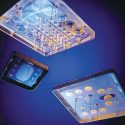
The Microplate Market Past, Present and Future By Dr Peter Banks Microplates and the peripheral markets of liquid handling and detection technologies exist within almost all laboratories performing assays. This article discusses what, if any, are their growth expectations and whether there are new technologies on the horizon that could… Read More
High Throughput Screening, High Content Screening, Primary and Stem Cells By Dr Richard M. Eglen Over the past decade, the use of cell-based assays has accelerated in modern drug discovery. Indeed, the majority of assays in either target validation or lead identification/optimisation all now employ cell-based technologies. Furthermore, a wide… Read More
Livening up HCS Imaging By Dr John Comley With the aid of recent end-user feedback, this article investigates interest in and use of live cell and kinetic HCS imaging; most wanted application areas: advantages of live cell HCS imaging; live cell HCS assays of greatest interest; what's limiting live cell… Read More
High Content Screening - The next challenge: effective data mining and exploration By Dr Kurt Zingler and Dr Stephan Heyse The use of high content screening within HTS is growing and with many past hurdles now overcome, the need for effective tools for data analysis is becoming paramount. Over the… Read More
qPCR Assays - End user practices and latest vendor offerings By Dr John Comley This review provides an insight into real-time quantitative PCR (qPCR) assays today. Using end-user feedback it investigates interest in the targets for qPCR applications; primary application areas for qPCR analyses; the importance of emerging applications; how… Read More
Treating Rheumatoid Arthritis with Disease-Modifying Antirheumatic Drugs (DMARDs) and Biologics By Dr William E. Fogler Successful treatment paradigms for newly diagnosed rheumatoid arthritis (RA) now rely on aggressive pharmacotherapy approaches with disease-modifying antirheumatic drugs (DMARDs). Despite risks of toxicity and adverse effects, combination strategies with DMARDs are finding greater clinical… Read More