Growing Interest in Outsourcing Ion Channel Services By Dr John Comley Summer 2008 Significant demand now exists in Pharma and Biotech to access ion channel testing services and this is reflected by the number and the variety of service offerings. In the highly competitive… Read More
Progress in the Implementation of Label-Free Detection – Cell-based assays By Dr John Comley Progress made in the use of impedance and optical grating technologies for label-free detection of cell-based assays where examined in HTStec’s recent Cell-Based Label-Free Detection Trends report. Uniquely all… Read More
Emerging Real-time PCR Applications Dr Mikael Kubista Since its introduction on the commercial market little more than 10 years ago, real-time PCR has become the main technical platform for nucleic acid detection in research and development, as well as in routine diagnostics. In 2007… Read More
Integrating HTS and Fragment-based Drug Discovery By Dr John Barker, Dr Thomas Hesterkamp and Dr Mark Whittaker High-Throughput Screening and Fragment Based Drug Discovery have been considered as alternative approaches to drug discovery for enzyme targets. HTS tends to be a rather quick way… Read More
Screening the Human Kinome – Expectations Met or Promises Pending? By Dr Richard M. Eglen Protein kinases are important targets in drug discovery programmes aimed at treating cancer, autoimmune disorders, diabetes and neurological disorders. Novel information on kinase biology is opening up other… Read More
The Potential of Molecular Imaging for Drug Discovery & Development By Dr Ken Rubenstein By combining cutting-edge biomedical research with the time-proven ability to visualise the unseen, the rapidly emerging field of molecular imaging promises to open new vistas for a wide range of individuals, from basic researchers… Read More
Dispense and Imaging Assays – Moving towards a more balanced use of both fluorescence and flash luminescent readouts By Dr John Comley Progress towards the uptake and adoption of flash luminescence readouts in screening were the subject of HTStec’s recent Dispense & Imaging (D&I) Trends 2007 report. The… Read More
The Importance of Liquid Handling Quality Assurance in Drug Discovery By Dr Nathaniel G Hentz The tug-of-war between quality and productivity is an issue facing all drug discovery companies, competing in a fierce race to bring breakthrough drugs to market before the competition. … Read More
Trends in the microRNA Marketplace By Kathy Gray and Dr Enal Razvi In this article, a recent market analysis is discussed aimed at understanding the market landscape, trends and opportunity in the rapidly-expanding microRNA marketplace. These market analyses are presented in detail in a recently published MicroRNA… Read More
Lean Six Sigma – Its application to drug discovery By Clare Hammond and Charles J O’Donnell In an increasingly competitive world, the race between pharmas to get high quality candidate drugs to market is on. Contributing to this success is the discovery phase of lead optimisation. The application… Read More
Needs and challenges in High Throughput Screening By William Downey, Dr Helen Nicely and Dr Lynne Sopchak High throughput screening (HTS) groups face similar challenges as the pharmaceutical and biotechnology industry as a whole faces. HTS groups are looking for ways to improve effectiveness in lead discovery,… Read More
Microplate Mixing – Bioassay panacea or of unproven distraction? By Dr John Comley Despite general awareness of the significance of microplate mixing, it is still a relatively low priority in most laboratories. Microplate mixing has largely been ignored as a serious problem, although potentially it could undermine… Read More
Human ES Cell Derived Functional Cells as Tools in Drug Discovery By Dr Petter Bjorquist, Dr Peter Sartipy, Dr Raimund Strehl and Dr Johan Hyllner The drug discovery process is extremely-time consuming and expensive. Consequently, novel approaches for these processes and for reducing late-stage attrition are of great… Read More
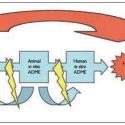
Perspectives for ADMET Integration in the Discovery Process By Dr Constance Hofer ADMET (ADME/Tox), is a relatively new symbiotic acronym for the investigation of basic compound behaviour in terms of absorption, distribution, metabolism and excretion, combined with assessments of toxicity. The emergence of… Read More
Compound Storage Evolution: Unlocking the right combination By Husam Fayez, Dr John Morin and Dr Jeff Paslay Delivering the correct compound, at the right concentration, to the correct place, at the expected time across different facilities, should be the aim of all liquid sample management teams. This… Read More
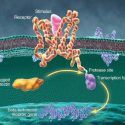
William Downey and Dr Shauna Farr-Jones GPCRs are the most studied drug target class and have a proven record as valuable drug targets, with 40-50% of marketed drugs being modulators of GPCR function. Despite the intense effort focused on these targets by the pharmaceutical industry over… Read More