By Dr Mikael Kubista Quantitative real-time PCR is becoming mature technology for the quantification of nucleic acids. It is spreading wide outside its original use in the research laboratories, becoming preferred technology for a range of applications, many that require specialised so lutions and adaptations. Integration with pre-analytical steps and… Read More
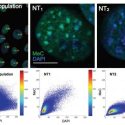
Utilising 3D nuclear DNA methylation patterns in cell-based assays for epigenetic drug screening By Professor Jian Tajbakhsh, Professor Arkadiusz Gertych and Professor Daniel L Farkas Since epigenetic changes are thought to underlie a wide range of complex diseases, the scope of epigenetic drug therapy is likely to… Read More
The Healthcare Industry’s Evolving Role in Translational Research an Opportunity for Competitive Advantage By Gregory Venters During the 20th century, medical research has observed enormous advances in basic science discovery, highlighted by the sequencing of the human genome. However, we have not witnessed a… Read More
Design Of Experiments: Useful statistical tool in assay development or vendor disconnect By Dr John Comley The use of design of experiments (DOE) in assay development (AD) has the potential to speed up assay optimisation (ie reduce assay development bottlenecks) and to facilitate a more thorough evaluation of… Read More
Free Online Resources Enabling Crowd-Sourced Drug Discovery By Dr Antony J. Williams, Valery Tkachenko, Dr Chris Lipinski, Professor Alexander Tropsha and Dr Sean Ekins The availability of freely accessible online resources to enable and support drug discovery has blossomed in recent years. The PubChem platform is now accompanied… Read More
Current and Emerging Trends in Cell-Based Assays – Roundtable In 2009 Drug Discovery World hosted a collegial-style roundtable discussion on the present and emerging developments in this exciting and now, fundamental area of drug discovery. The participants are recognised to be thought leaders… Read More
Innovations In Drug Discovery Technology By Dr Al Kolb Technology has been a major driver of advances in drug discovery. Automation, nanofluidics, imaging, software and assay technologies have played a major role in getting better data, faster. Is drug discovery at such an advanced… Read More
Leveraging Research Informatics to Accelerate Drug Discovery By Dr Anirban Ghosh and Siddharth Sawhney Research informatics has a vital array of tools which can advance the speed and success rate of drug discovery. This article discusses that if pharma companies want to benefit from these tools and are… Read More
Maximising the impact of technologies on drug discovery through portfolio management By Charles S. Dormer, Dr Mark Beggs, Dr Lynn Brennan and Roanna London The opportunities to invest in new technologies in drug discovery are broad and extensive. Knowing where to place your investment and ensuring return… Read More
Predictive tests and personalised medicine By Dr Eddie Blair Acceptance of the personalised medicines paradigm is strictly dependent on this approach clearly benefiting patients with minimal effects on the actual delivery of healthcare. The use of molecular diagnostics to predict how an individual will respond to… Read More
Multiplexing for biological relevance in high throughput screening By William P. Downey, Dr Jennifer Hartigan and Cindy Liu The multiplexed assay is a technique used increasingly in high throughput screening (HTS) labs to study the complex environment of a target, according to HighTech Business Decisions’ (HTBD) industry… Read More
By Dr John Comley After nearly 15 years of challenging maturity 1536 plate adoption (particularly in primary screening), finally appears to have taken hold. There is now available a broad range of 1536 plate types; an ever expanding variety of tools that make… Read More
Himarnessing fragment-based drug discovery at CRT By Dr Andrew P Turnbull and Dr Martin E Swarbrick In the past decade, fragment-based drug discovery (FBDD) has gained increasing popularity in the pharmaceutical industry as a powerful alternative and complement to traditional high-throughput screening (HTS) as a source of preliminary… Read More
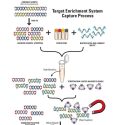
Bringing Cost and Process Efficiency to Next Generation Sequencing By Dr Fred P. Ernani, and Dr Emily M. LeProust While next-generation sequencing has revolutionised the way genomes are sequenced, this technology possesses a fundamental weakness – the inability to easily target specific regions of a genome. To… Read More
Automation Of Solid/Powder Dispensing: Much needed, but cautiously used! By Dr John Comley This article investigates solid/powder dispensing in pharma and biotech, examines where it is most used, whether there exists a need to apply automation and what is motivating its wider use today. It reveals how concerns… Read More
Overcoming the Limitations of Chemical Structure By Dr Andy Vinter, Dr Steve Gardner and Dr Sally Rose The pharmaceutical business has been profoundly hampered by a ubiquitous and unexpected obstacles; the way it draws its chemical compounds. Scientists, patent agents and business decision makers from R&D, safety,… Read More