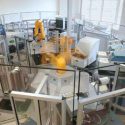
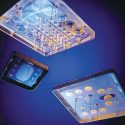
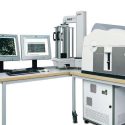
Modular Automation for Screening: A cost/benefit analysis By Dr Jonathan Wingfield Cost is now a key driver for pharmaceutical companies and in many respects shapes the capital, revenue and resource decisions that have to be made during the drug discovery process. Where companies are resource rich, the need… Read More
Recent Technology Advances Transforming Pharmaceutical Drug Discovery and Development By Dr Coiln Brenan, and Dr Bill LaMarr The last decade has seen rapid technological progress but with increasing demands for safe and efficacious drugs, technological solutions that reduce the barriers to clinical success will be of more… Read More
Restructuring Proteomics to Enable Personalised Cancer Care By Dr Henry Rodriguez The genomics community has made great strides in our understanding of the molecular basis of cancer and these advances are slowly beginning to change the way we diagnose and treat patients. But genomic studies alone cannot… Read More
Generation II DNA Sequencing Technologies By Dr Stephen F. Kingsmore, Dr Jenny C. van Velkinburgh, Dr Joann Mudge, and Dr Gregory D. May Generation II DNA sequencing has been widely heralded as a disruptive technology, generating tens of millions of random short sequences at efficiencies up to 20,000-fold… Read More
Stem Cell Applications and Opportunities in Drug Discovery By Dr Mark A. Thiede The high attrition rate of late stage drug candidates has led the pharmaceutical and biotech industries to a reassess the in vitro models used to select and validate drug targets and subsequent lead molecules. Read More
Letting the Target Determine your Compound Acquisition Strategy By Dr John Harris With compound libraries likely to remain the cornerstone of hit and lead discovery for the foreseeable future, this paper seeks to summarise current and future approaches to optimal library design and compound acquisition, using examples… Read More
The Microplate Market Past, Present and Future By Dr Peter Banks Microplates and the peripheral markets of liquid handling and detection technologies exist within almost all laboratories performing assays. This article discusses what, if any, are their growth expectations and whether there are new technologies on the… Read More
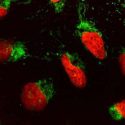
High Throughput Screening, High Content Screening, Primary and Stem Cells By Dr Richard M. Eglen Over the past decade, the use of cell-based assays has accelerated in modern drug discovery. Indeed, the majority of assays in either target validation or lead identification/optimisation all now employ cell-based technologies. Read More
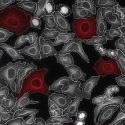
Livening up HCS Imaging By Dr John Comley With the aid of recent end-user feedback, this article investigates interest in and use of live cell and kinetic HCS imaging; most wanted application areas: advantages of live cell HCS imaging; live cell HCS assays of greatest interest; what’s… Read More
Building a Robust Portfolio of New Medicines to Combat Malaria By Dr Timothy N.C. Wells Malaria is one of the biggest killers of our time. Current estimates from the World Health Organisation (WHO) suggest that more than 250 million people are at risk worldwide. More significantly, almost… Read More
High Content Screening – The next challenge: effective data mining and exploration By Dr Kurt Zingler and Dr Stephan Heyse The use of high content screening within HTS is growing and with many past hurdles now overcome, the need for effective tools for data analysis is becoming paramount. Read More
qPCR Assays – End user practices and latest vendor offerings By Dr John Comley This review provides an insight into real-time quantitative PCR (qPCR) assays today. Using end-user feedback it investigates interest in the targets for qPCR applications; primary application areas for qPCR… Read More
By Dr Anil Vasudevan Since the original publications on the benefits of conducting organic reactions in a microwave by Gedye (1) and Majetich (2) in the mid-80s, the uptake of this technique was sluggish at best for the next 12-14 years. Read More
High Throughput Screening in Academia – Drug discovery initiatives at the University of Kansas By Dr P McDonald, Dr Roy, Byron Taylor, Ashleigh Price, Dr Sittampalam, Dr Scott Weir, Dr Chaguturu Academia has historically been involved in exploring the fundamental aspects of the disease targets and in… Read More
Next Generation Immunoassay Systems and the Revival of Protein Biomarkers By Dr John Todd and Dr Sara J. Agee Proteins are the machinery that drive most biological processes; however, measuring their concentrations at low levels has been historically impeded by a lack of appropriately sensitive technology. Read More
Challenges in Transferring Bioanalytical Methods By Dr Chris Beaver Drug development is arduous and expensive with any delay to market resulting in significant financial impact. Delays at any stage of the process cause challenges to programmes, however, some are easier to predict and plan for than others. Read More