Advances in laboratory automation for drug discovery By Charanya Ramachandran Laboratory automation has metamorphosed the realm of drug discovery over the years through two of major influential factors – cost benefit and error reduction. Automation has reframed the traditional drug discovery process by making feasible the identification of many targets… Read More
PLAYING WITH TIME – Digital imaging comes of age By Dr Pam Pickering Seeing dynamic intra- and extra-cellular events as they happen is central to revealing the mechanisms of disease, identifying key targets for drug intervention and assessing the impact of drug treatment on living cells. Interpreting these events through… Read More
TR-FRET Based Assays - Getting better with age By Dr John Comley Despite having been available for nearly 15 years, TR-FRET based assays are still the preferred fluorescent assay format for many screeners. A recent survey ranked Cisbio’s TR-FRET product (HTRF) as the most frequently used generic assay technology. GPCR… Read More
Share Share Tweet Email Understanding the strategic importance of BIOMARKERS for the discovery and early development phases Understanding the strategic importance of BIOMARKERS for the discovery and early development phases By Dr Orest Hurko Biomarkers have become an increasingly hot topic in the pharmaceutical industry. How much of this is… Read More
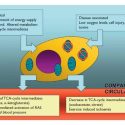
By Dr George G. Harrigan The potential of metabolomics, a systems approach to biochemical pathway analysis, to yield scientific and commercial benefits to healthcare and biotechnology enterprises is increasingly recognised. This article discusses current applications and future developments and places an emphasis on incorporation of metabolomics within all aspects of… Read More
High Throughput Screening: meeting the challenges of more cell-based assays and HCS By Sandra Fox, MBA The use of high content screening and cell-based assays within high throughput screening (HTS) laboratories is on the increase but there are still many challenges to overcome. Each year, HTS laboratories perform slightly more… Read More
The Role of the Medicinal Chemist in the Drug Discovery Process: current status and future prospects By Dr Stevan W Djuric The need for the pharmaceutical industry to produce a constant stream of new NCEs has never been more paramount but with constantly changing R&D paradigms what is the role… Read More
Personalised Medicine: What's in it for big pharma? By Dr Stephen Little There is nothing more difficult to take in hand, more perilous to conduct, or more uncertain in its success, than to take the lead in the introduction of a new order of things. Because the innovator has far… Read More
Building a uHTS laboratory communications from the frontier By Dr Peter Hodder Through sheer commercial need to conduct HTS reliably, rapidly and economically, science and technology have partnered to move laboratories from semi-automated craft guilds to industrialised uHTS research operations. To the benefit of both the pharmaceutical and HTS technology… Read More
Share Share Tweet Email Automated Patch Clamping: Setting a new standard for early hERG Automated Patch Clamping: Setting a new standard for early hERG By Dr John Comley Ion channel targets remain a top priority for many Pharma and Biotechs with most looking to increase their screening efforts in 2006. Read More
Immunomodulation: emerging from obscurity into a major therapeutic class By David Gee While not initially apparent, immunomodulation is high on the pharma agenda if recent deal making is a valid indicator. This article discusses the potential of immunomodulation to rise from the relative obscurity of adjuvants in vaccines to mainstream… Read More
Advances in the imaging of biomolecules: the label-free intrinsic imaging approach By Dr Stuart Hassard, Dr Anthony D. Baxter and Dr John Hassard Many stages in the process of drug discovery require the separation, identification and analysis of biomolecules such as proteins, peptides and nucleic acids. Such analyses have traditionally… Read More
New Options for Cell-Based Assay Automation By Dr John Comley The findings of a recent survey on cell-based assay automation revealed that no single factor stands out as the predominant reason productivity is limited in current cell-based automation. However, improving the quality of assay results and enhancing throughput were seen… Read More
The market for RNA purification products and services By Dr Cynthia Beam Purified RNA is crucial for use in a range of downstream applications performed by life scientists, most notably reverse transcription PCR (RT-PCR), quantitative real-time PCR (qPCR) and cDNA synthesis. RNA purification is an area of particular salience for… Read More
The future of the CRO industry By Gilbert Godin The pressures on Pharma/Biotech to control R&D costs while improving the yield of new, approvable drugs indicate an even greater reliance on outsourcing. So what will the next five years bring for the CRO industry? Five years ago, as we approached… Read More
Applying the semantic web to drug discovery and development By Dr Eric Neumann There is much happening in drug development these days: new target classes, increasing costs, new forms of high throughput screening, and the promise of personalised medicine. But of all the issues, the one that now takes centre… Read More