High Content Screening - Emerging importance of novel reagents/probes and pathway analysis By Dr John Comley The number of high content screens will increase by 50% over the coming year; signal pathway analysis was seen as the most relevant high content screening (HCS) application; with greatest interest in applying HCS… Read More
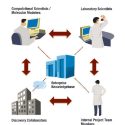
Redefining Drug Discovery Informatics By Bryan S. Koontz As the pharmaceutical industry changes in response to unprecedented challenges, information technology supporting the drug discovery process must evolve and be redefined in order to improve research productivity and success rates. Improvements to traditional computational chemistry applications will continue to provide incremental… Read More
Computer-aided design: progress towards more rational drug discovery By Dr Wolfgang H.B. Sauer Drug discovery is a science, a craft and an art, and often it requires a fair amount of serendipity or plain luck to succeed. Success is rare and costly, as evidenced by numerous reports and reviews (1,2). Read More
By Dr Y. Douglas Dolginow The art and science of prediction is a risky and humiliating exercise. As bad as we are at it, predicting things remains one of the fundamental human instincts, undoubtedly linked to a Darwinian selective advantage for our species. So no matter that the umbrella was… Read More
Nanotechnology approaches to solving the problems of poorly water-soluble drugs By Dr Roghieh Saffie-Siebert, Dr Jill Ogden and Dr Mark Parry-Billings Traditionally, almost half of new molecular entities identified by pharmaceutical industry screening programmes have failed to be developed because of poor water-solubility, which makes their formulation difficult or even… Read More
Creating a productive R&D culture By Janet White Increasing R&D productivity is the current mantra of pharmaceutical industry executives. The promise of new technologies and process improvements has been extensively discussed. However, fundamental culture change within research organisations remains the final unexplored frontier to increased productivity. This article introduces the… Read More
Ontologies - Semantic networks of pharmaceutical knowledge By Dr Stephen P. Gardner In the current climate making information more transparent to internal R&D staff and to external audiences such as regulators and consumers is crucial to business effectiveness. A new generation of semantic technologies capable of generating a consistent view… Read More
How a new compliance agenda is changing the face of the drug discovery industry By Dr Doug Dean and Frances Bruttin Safe and effective drug products for the 21st century can be developed if, and only if, firms understand the mechanism of action of their products, and they are able… Read More
Cryo Electron Microscopy and Electron Tomography By Dr Jack Elands and Dr Ulf Skoglund Cryo electron microscopy and electron tomography will play a crucial role in the future of drug development. The completion of the human genome project has focused tremendous interest in determining the structure and function of the… Read More
Exposure response modelling a safe and profitable way to speed drugs to market By Dr Gregory Fisher and Dr Arthur L. Craigmill The applicability of physiologically-based pharmacokinetic modelling (PBPK) far exceeds that of classical PK in predictive pharmacokinetics, tissue dosimetry, drug efficacy, and drug safety. This in silico technique, in… Read More
The search for validated biomarkers in the face of biosystems complexity By Professor Ian Humphery-Smith and Will Dracup As the pharmaceutical industry is all too well aware, the genomics and postgenomic sciences have delivered an excessive number of drug targets few of which have been well validated. Indeed, apart from… Read More
Compound Management - In pursuit of sample integrity By Dr John Comley In December 2004 HTStec published its report on Compound Management Trends. This market report summarises the results of a global benchmarking study on pharmaceutical compound management (CM), documenting current practices, issues and future trends in CM, with a… Read More
The Impact of RNAi on Drug Discovery By Dr Christopher P. Miller RNAi (RNA interference) is an important target validation tool that has risen to prominence since 2001. For a number of reasons, it has supplanted other pre-existing target validation tools and is now the method of choice for target… Read More
Overview of biomarkers in disease, drug discovery and development By Professor Stephen Naylor The pharmaceutical industry and the healthcare sector are both confronted with expensive technological innovation, escalating costs and pointed questions about productivity and efficiency. The parallels between the problems of producing new therapeutic agents and treating patients afflicted… Read More
Patent Pools as a Solution to the licensing problems of diagnostic genetics - United States and European perspectives By Dr Jorge A. Goldstein, Dr Ted J. Ebersole, Marvin C. Guthrie, Annette A. Hirschfeld and Bart J. van den Broek Advances in diagnostic genetic testing have resulted in the ability to… Read More
COX-2 Inhibitor Toxicity - Warning shot over pharma's bow By Dr Mark Schena and Dr William Greene Human beings are complex gene machines that rely on the intricate interplay of ~25,000 genes to impart biological function. Genomic function is affected by genetic variability and environmental factors, giving rise to considerable… Read More