Featured

#Artificial intelligence (AI) #Automation #Benchling #Drug discovery #Webinar

North America Session – From reaction to result: Connecting chemistry and biology for smarter drug discovery

A molecule passes through many hands in drug discovery. Medicinal chemists design and synthesise it, analytical scientists characterise it, and biology teams evaluate its activity. Yet the scientific knowledge generated along the way often remains fragmented across disconnected systems, making it difficult to connect what was made, how it was… Read More

Webinar date:
Supported by Benchling
#Featured Webinars #Webinars

#Artificial intelligence (AI) #Automation #Benchling #Drug discovery #Webinar

Europe Session – From reaction to result: Connecting chemistry and biology for smarter drug discovery

A molecule passes through many hands in drug discovery. Medicinal chemists design and synthesise it, analytical scientists characterise it, and biology teams evaluate its activity. Yet the scientific knowledge generated along the way often remains fragmented across disconnected systems, making it difficult to connect what was made, how it was… Read More

Webinar date:
Supported by Benchling
#Featured Webinars #Webinars

#Biomarkers #Drug discovery #Evotec #Immunoassays #Webinar

Measuring what matters: Applying ultrasensitive immunoassays for clinical biomarkers

When biomarkers are present at very low concentrations, conventional immunoassays may not provide the sensitivity needed to generate reliable, meaningful data. This can limit the ability to assess target engagement, monitor pharmacodynamic responses and track biomarker changes during treatment. Ultrasensitive immunoassays offer new opportunities to address these challenges. In this… Read More

Webinar date:
Supported by Evotec
#Featured Webinars #Webinars

#Crown Bioscience #Drug discovery #PDX models #Webinar

Beyond the model: Exploring warm PDX benefits and onsite expertise

Patient-derived xenograft (PDX) models are a valuable tool in oncology research, helping researchers evaluate therapeutic efficacy in preclinical settings using models that retain key characteristics of human tumours. In this webinar, Crown Bioscience will highlight the capabilities of its PDX model portfolio, with a particular focus on the benefits of… Read More

Webinar date:
Supported by Crown Bioscience
#Featured Webinars #Webinars

#Biomarkers #Drug discovery #Evotec #Webinar

From PK/PD and Biomarkers to decision-making: How modeling shapes clinical strategy

Clinical trials continue to experience high attrition rates, with lack of efficacy being one of the leading causes of failure. However, in many cases, these failures do not reflect a lack of drug efficacy, but rather limitations in translational biomarker strategies and selection of disease-relevant pharmacodynamic (PD) biomarkers, suboptimal dose… Read More

Webinar date:
Supported by Evotec
#Featured Webinars #Webinars

Cell and gene therapy
#Cell and gene therapy #Cell therapy #Drug development #Drug discovery #Gene therapy

Advances and challenges in cell and gene therapies

Hosted by Drug Discovery World and supported by Bio-Techne, this webinar explores the advances and challenges taking place within the cell and gene therapy field. Hear from Hans Schambye CEO at BOOST Pharma, Lucas Arruda, CSO at CuraCell, and Brandon Cieniewicz, Director, Research & Development at CERo Therapeutics. Throughout the… Read More

Webinar date:
Sponsored by Bio-Techne
#Featured Webinars

Webinars

AI in action: examples of AI across drug discovery

Drug discovery and development is a challenging multiparameter optimisation problem. Harnessing the power of artificial intelligence (AI) can help accurately predict the behaviour and properties of small molecules. In this on-demand webinar from X-Chem you will see: How AI and DNA-encoded library (DEL) screening are transforming early phase drug… Read More

Webinar date:
Brought to you by X-Chem
#Webinars

Generating and validating critical antibody reagents

Antibodies are critical reagents applied in multiple biological areas, such as scientific research, therapeutics, and diagnosis. High-quality and reliable antibody reagents are the foundation of good assay performance. To learn more generating and validating critical antibody reagents view this free event hosted by DDW and supported by Sino Biological. The… Read More

Webinar date:
Brought to you by Sino Biological
#Webinars

CRISPR-Cas9 screening: a powerful approach to drug discovery

View this webinar by DDW and supported by Horizon Discovery which examines CRISPR-Cas9 screening and how it offers a powerful approach to advancing drug discovery and the understanding of genetic disease. The event took  place on 9 June 2022. View the webinar here. Joanna Gawden-Bone, Manager, Cell Based Screening, Horizon… Read More

Webinar date:
Brought to you by Horizon Discovery
#Webinars

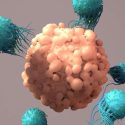
Accelerating cellular therapy discovery with the next generation BioELN

Cellular therapeutics like CAR-T have revolutionised cancer treatment and hold immense promise in other areas of unmet medical need. Developing a new therapeutic cell line is no small task and requires the design and tracking of molecular tools, viral vectors, pluripotent stem cells and more. With projects spanning weeks and… Read More

Webinar date:
Brought to you by PerkinElmer Informatics
#Webinars

Kill the tumour, spare the healthy tissue. Ultra high-content imaging enables target discovery for CAR T cell therapy

In this free webinar, Dr. Christoph Herbel presents a newly developed workflow which combines flow cytometry–based screenings with high-parameter imaging to identify and validate new tumour markers in an unbiased approach.   The event, Kill the tumour, spare the healthy tissue. Ultra high-content imaging enables target discovery for CAR T cell therapy, was hosted by DDW and supported by Miltenyi Biotec.  It… Read More

Webinar date:
Brought to you by Miltenyi Biotec
#Webinars

Sensitive signature peptide quantification using accurate mass spectrometry

Emerging advancements in protein biotherapeutics are driving the need for more sensitive and accurate bioanalytical methods for their quantification. Serving as an orthogonal technology to the traditional ligand binding assays (LBAs), LC-MS has been routinely adopted for quantitative measurement of protein levels in bioanalytical laboratories. While various MS approaches have… Read More

Webinar date:
Brought to you by SCIEX
#Webinars

Deriving context from immunological data with advanced flow cytometry

Advances in treatments for human diseases, including cancer, rely on the ability to gain detailed information into the function, modulation, and variation of the immune system in response to stimuli or immunological challenge. Insights derived from these data have, for example, revolutionized cancer treatment by enabling the development of adoptive… Read More

Webinar date:
Brought to you by Sartorius
#Webinars

Challenges and opportunities in protein degradation

Many small molecule inhibitors have been approved as cancer therapeutics, but they can confer mutation-based drug resistance and many potential cancer targets remain “undruggable”. One emerging cancer therapeutic strategy that shows promise for drug development is the use of targeted protein degradation (TPD). This approach has many advantages, including the… Read More

Webinar date:
Brought to you by Cell Signaling Technology
#Webinars

Using an automated CE-SDS platform in efficient biosimilar comparability studies

This event provided expert insight from Dr. Richard L. Easton, Technical Director of Structural Analysis at BioPharmaSpec. He provides data from studies with monoclonal antibodies, heavily glycosylated species and PEGylated species showing how the Maurice platform can be used to provide reliable insights into the structure of different types of… Read More

Webinar date:
Brought to you by Bio-Techne
#Webinars

Covid targets in the crosshairs: Quality and speed from Arctoris’ Ulysses platform

Covid-19 has highlighted the current operational vulnerabilities in pharmaceutical research and in the drug discovery pipeline. Bringing new drugs to the market is still a slow and expensive process, with far too high costs, failure rates and cycle times. With low reproducibility and inefficient processes delaying the path to approval,… Read More

Webinar date:
Brought to you by BMG Labtech
#Webinars

Enhancing the predictability of preclinical development

Effective preclinical assessment of drug safety and efficacy is essential to help reduce the risk of drug-induced toxicity and late-stage drug attrition. Current preclinical tests for safety depend on in vivo testing in higher-order species to achieve translational accuracy; however, animal models are expensive and do not adequately recapitulate human… Read More

Webinar date:
Brought to you by PerkinElmer
#Webinars

Evaluation of checkpoint inhibitor therapies using an MLR assay

Immune checkpoints are signalling molecules that control the synapse between T cells and antigen presenting cells (APCs). Checkpoint inhibitor therapies target and inhibit the signals that ‘switch off’ T cells, leading to an upregulation of T cell activation and tumour cell killing.  The mixed lymphocyte reaction (MLR) mimics the T… Read More

Webinar date:
Brought to you by Sartorius
#Webinars

#Assay development & optimisation #Drug discovery

Putting the dynamics into compound profiling: using kinetic assays to shape early stage drug discovery

In vitro early stage compound profiling often focusses on single timepoint measurements of drug action, for example the affinity of the drug for its target at equilibrium, or the endpoint response in a signalling assay. However, in vivo, drug action occurs within a highly dynamic system. Drug and competing messenger… Read More

Webinar date:
Brought to you by SPT Labtech
#Webinars

#CAR-T #T-Cells

Quantifying T cell exhaustion: An insight into BiTE antibodies and CAR-T cells

This webinar looks at T cell exhaustion. This is recognised as a major challenge in the development of immuno-oncology therapies. Used to describe the loss of effector function due to chronic antigen exposure, it commonly occurs within the tumour microenvironment. This impairs the T cells’ ability to effectively eradicate cancerous… Read More

Webinar date:
Brought to you by Sartorius
#Webinars