Data Overflow Progress in Automating and Streamlining Data By Peer Staehler The genomic world moves faster and faster. The pool of data has exploded exponentially in the past few years due to the growing knowledge about the relevance of genomic findings for medicine and the environment. Like all other developing… Read More
Transcending Proteasome Inhibition for the Treatment of Cancer By Dr Mark Rolfe Healthy cellular function requires a carefully controlled balance between protein synthesis and protein degradation, a process known as protein homeostasis. The major intracellular pathway for controlling protein degradation is the ubiquitin proteasome system (UPS). Specific pharmacological inhibition of… Read More
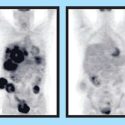
The Potential of Molecular Imaging for Drug Discovery & Development By Dr Ken Rubenstein By combining cutting-edge biomedical research with the time-proven ability to visualise the unseen, the rapidly emerging field of molecular imaging promises to open new vistas for a wide range of individuals, from basic researchers to scientists… Read More
Dispense and Imaging Assays - Moving towards a more balanced use of both fluorescence and flash luminescent readouts By Dr John Comley Progress towards the uptake and adoption of flash luminescence readouts in screening were the subject of HTStec's recent Dispense & Imaging (D&I) Trends 2007 report. The report suggests… Read More
Advances in Antibody Therapy - A promising new approach to how we treat cancer By Dr Patrick A Baeuerle Antibodies available today for cancer treatment, while effective, are typically used in combination with standard therapies because their activity as monotherapy is limited. Currently, four conventional antibody products dominate the oncology… Read More
Trends in the microRNA Marketplace By Kathy Gray and Dr Enal Razvi In this article, a recent market analysis is discussed aimed at understanding the market landscape, trends and opportunity in the rapidly-expanding microRNA marketplace. These market analyses are presented in detail in a recently published MicroRNA 2008 market report. Read More
Progress in Systems-Based Analysis of Cellular Signalling By Dr Jeffrey A. Radding Drug discovery currently focuses on targeted approaches, relying on validation of the target as a disease driver. However, the underlying biological complexity of disease often frustrates these attempts at therapeutic intervention, resulting in high failure rates due to… Read More
Needs and challenges in High Throughput Screening By William Downey, Dr Helen Nicely and Dr Lynne Sopchak High throughput screening (HTS) groups face similar challenges as the pharmaceutical and biotechnology industry as a whole faces. HTS groups are looking for ways to improve effectiveness in lead discovery, increase their productivity… Read More
Perspectives for ADMET Integration in the Discovery Process By Dr Constance Hofer ADMET (ADME/Tox), is a relatively new symbiotic acronym for the investigation of basic compound behaviour in terms of absorption, distribution, metabolism and excretion, combined with assessments of toxicity. The emergence of ADMET instead of ADME reflects the growing… Read More
Compound Storage Evolution: Unlocking the right combination By Husam Fayez, Dr John Morin and Dr Jeff Paslay Delivering the correct compound, at the right concentration, to the correct place, at the expected time across different facilities, should be the aim of all liquid sample management teams. This article discusses how… Read More
Next Generation DNA Sequencing Technologies By Dr Bruce E. Taillon and Brendon Hill Human genetics is the foundation of disease as well as the response to pharmaceutical agents. Today, promising drugs are abandoned due to the lack of significant efficacy in broad patient populations. Recently, blockbuster drugs have been removed… Read More
21st Century Vaccines - A Development Renaissance By Dr Jeff Stoddard, Charles Drucker and Dr Nigel Brown Human beings have benefited from vaccines for more than two centuries. From eradicating some of the deadliest diseases to nearly eliminating a host of others, including polio, measles, mumps and tetanus - vaccines… Read More
William Downey and Dr Shauna Farr-Jones GPCRs are the most studied drug target class and have a proven record as valuable drug targets, with 40-50% of marketed drugs being modulators of GPCR function. Despite the intense effort focused on these targets by the pharmaceutical industry over many years, numerous challenges… Read More
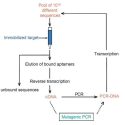
The Power of APTAMERS in the Drug Discovery Process Professor Michael Famulok Methods of combinatorial biochemistry allow the identification of nucleic acid sequences, or aptamers, which can bind their target molecules with high affinity and specificity and are able to efficiently inhibit their biological function. Macugen, the first aptamer-based drug… Read More
The Deming Approach to Quality In Pharmaceutical Research By John H. Van Drie We explore the relevance to pharmaceutical research of the ideas of W. Edwards Deming, the statistician whose ideas on quality transformed the manufacturing sector of post-war Japan. To enhance productivity in pharmaceutical research, we have tended to… Read More
Technology, Bane or Bonanza for the Pharmaceutical industry? By Dr Stephen Naylor, Adam W. Culbertson and Dr Stephen J. Valentine Productivity in the pharmaceutical industry has long held well-documented concerns. While the adoption of new technologies into the drug discovery and development process has often been seen as a… Read More