New Mechanisms and Expanded Indications for Biologic Therapies: a perspective on immunology research and development By Dr Susan B. Dillon Over the past decade, the introduction of biologic therapies has had a profound impact for millions of patients with immune-mediated arthritides, inflammatory bowel diseases and plaque psoriasis. Today, five anti-Tumor… Read More
Current Trends in Label-Free Drug Discovery Technologies By Philip Rawlins Drug Discovery Label-free technologies have been used throughout drug discovery for the detection and characterisation of molecular interactions. The implementation of automated systems, increased sensitivity and the development of new technologies have recently broadened the use of label-free methods from… Read More
Bulk Reagent Dispensers: Ubiquitous liquid handling tool for microplate filling By Dr John Comley The initial success of the bulk reagent dispenser (BRD) as an automated liquidhandling product can be attributed to its simplicity and low cost. Its current role as an essential dispensing tool in those labs requiring microplate… Read More
Overcoming Bottlenecks in Drug Discovery By Dr Trevor Perrior Developing a new drug is an expensive and time-consuming process. The best current estimate puts the cost of developing a single new drug at close to $1 billion. After a drug candidate has entered the clinical trial process it takes, on… Read More
High Throughput Flow Cytometry for Discovery at UNMCMD and the NIH Molecular Libraries Initiative By Dr Larry A. Sklar and Dr Bruce S. Edwards Commercial flow cytometers became widely established in research and clinical laboratories in the 1980s. Once the domain of immunologists and hematologists for cell sorting and analysis,… Read More
Biomarkers Make Their Mark on Current Research and Drug Development Trends By Stephane Parent and Dr Gregory Cosentino Biomarkers continue to become increasingly relevant in research and healthcare applications, as evidenced by the global market for products involved in their identification, validation, and use estimated at $8.3 billion in 2007… Read More
New Trends and Therapeutic Approaches for the Management of Diabetic Retinopathy By Dr Didier Pruneau Diabetes mellitus is a growing epidemic that has become a global public health problem. The long-term complications of diabetes include retinopathy, the leading cause of blindness and visual impairment in adults. Diabetic retinopathy correlates with… Read More
3D Cell Culture: Easier said than done By Dr John Comley The transition from cell culture on the flat surface of a conventional two-dimensional (2D) culture vessel to a three-dimensional (3D) environment, matrix or scaffold with 3D architecture has begun, and is providing much needed support for emerging applications in… Read More
Tracking HTS Assay Development Time: Opportunity for improving drug discovery By Dr Jennifer Hartigan, Cindy Liu and William Downey High throughput screening (HTS) assays are developed more quickly now due to advances in technology, improved liquid handling and sensitive detection, as well as increased communication between scientists in high throughput… Read More
Fluorescence Lifetime: Finally picking up momentum! By Dr John Comley Fluorescence lifetime (FLT) largely failed to make a significant inroad as a screening technology when it was first introduced nearly a decade ago, despite the fact that intrinsically it has many benefits, particularly in dealing with assay interferences. Market studies… Read More
Stem Cells for Cellular Therapy Space By Dr Enal S. Razvi and Dr Gary M. Oosta This article explores the emerging market landscape vis--vis the use of stem cells as cellular therapeutics. For more than 40 years, hematopoietic stem cells have been utilised as cellular therapeutics in a number of… Read More
By Dr John Comley Laser scanning cytometers have matured over the past decade to meet the needs of end-users for higher throughput cell analysis, to access to previously difficult applications and to keep pace with the diversity of new fluorophores, validated high content screening (HCS) assay kits and reagents now… Read More
By Dr Mikael Kubista Quantitative real-time PCR is becoming mature technology for the quantification of nucleic acids. It is spreading wide outside its original use in the research laboratories, becoming preferred technology for a range of applications, many that require specialised so lutions and adaptations. Integration with pre-analytical steps and… Read More
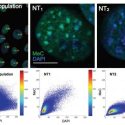
Utilising 3D nuclear DNA methylation patterns in cell-based assays for epigenetic drug screening By Professor Jian Tajbakhsh, Professor Arkadiusz Gertych and Professor Daniel L Farkas Since epigenetic changes are thought to underlie a wide range of complex diseases, the scope of epigenetic drug therapy is likely to expand, as epigenetic… Read More
Current and Emerging Trends in Cell-Based Assays - Roundtable In 2009 Drug Discovery World hosted a collegial-style roundtable discussion on the present and emerging developments in this exciting and now, fundamental area of drug discovery. The participants are recognised to be thought leaders in this field and represent the pharma,… Read More
Maximising the impact of technologies on drug discovery through portfolio management By Charles S. Dormer, Dr Mark Beggs, Dr Lynn Brennan and Roanna London The opportunities to invest in new technologies in drug discovery are broad and extensive. Knowing where to place your investment and ensuring return on these investments… Read More