High throughput genomics and drug discovery – parallel universes or a continuum? By Dr Mark Beggs and Audrey Long HTS has been in place for approximately 10-12 years and has achieved a threeorder of magnitude scale up. Genomics has been in a ‘high throughput’ mode for approximately four… Read More
Lead Generation and Lead Optimisation: the value of linking HT co-structure analysis and HT chemistry By Dr David U Prichard The coupling of High Throughput co-structure analysis with focused library generation is not only proving a powerful general tool in lead optimisation but also increasing the probability of… Read More
By Dr Mark L. Nelson Less than a hundred years ago, if you developed a microbial infection your immune system couldnt handle, you died. Then came the wonder drugs, antibiotics capable of fighting the infections for you. But times have changed. Read More
Chemical microarrays – The drug discovery superhighway By Elaine Seeskin While producing targets was once the bottleneck in the drug discovery process, in the post-genomic era this has been superseded by the requirement for high-quality lead structures. As a result of the pool… Read More
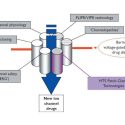
Channelling Drug Discovery – Current trends in ion channel drug discovery research By Dr David Owen and Andrew Silverthorne Ion channels are proteins that span cell membranes thus forming conduits or ‘channels’ through which charged ions such as sodium and potassium can pass across a normally impermeant… Read More
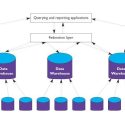
From raw data in the laboratory to information availability in the enterprise By Dieter Kreusel If pharmaceutical or biotechnology companies could measure their success merely on the volume of raw data accumulated from screening assays and pre-clinical testing, they would be basking in the glow of unprecedented success. Read More
By Dr Patrick J. Vojta, Vincent P. Kazmer and Dr Larry D. Kier Adverse drug responses are an important post-marketing public health issue, occurring many times in subsets of treatment populations. Promising new approaches to predicting physiological responses to drugs are focused on genomic responses… Read More
Proteomics In Drug Target Discovery – High-throughput meets high-efficiency By Dr Terence E. Ryan and Dr Scott D. Patterson Biochemistry is enjoying a renaissance under the guise of ‘proteomics’ due to the availability of sequenced genomes, advances in mass spectrometry and associated data analysis. Its application to… Read More
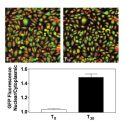
Cell Based Assays – Seeing the light By Dr Nick Thomas High-context cell assays have the potential to take the pivotal role in the drug discovery process. So what are the features of today’s leading edge cell based assay technologies and where does the future lie?… Read More
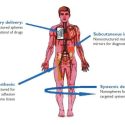
Silicon Technology and Pharmaceutics by Professor Leigh T. Canham, Dr Roghieh S. Saffie, Stephen E. Connor and Dr Roger Aston The recent discovery that, following nanostructuring, silicon can be rendered biocompatible and biodegradable has far reaching and profound long-term implications for the pharmaceutical industry and, indeed, medicine as… Read More
The genomics revolution is poised to sweep aside the old economics of pharmaceutical R&D. The biotechnology and pharmaceutical industries; and perhaps healthcare delivery in general; are on the brink of transformation, and companies that embrace the revolution in the right way stand to reap enormous benefits. Read More
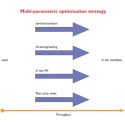
Hit to lead and lead to candidate optimisation using multi-parametric principles By Dr Anthony D. Baxter and Dr Peter M. Lockey As the numbers of potential target proteins become available for pharmaceutical companies of all sizes, the drive towards more cost-effective drug discovery assumes greater significance. Read More
Data Mining in the pharmaceutical industry By Dr Robert D. Small and Herbert A. Edelstein A research-based pharmaceutical company is a data accumulating wonder. More than in any other industry, success is predicated on the collection, processing and exploitation of that data. This is not always recognised and… Read More
Evaluating future drug candidates and their manufacture together By Professor Peter Dunnill Classically, evaluating a candidate drug has preceded evaluation of the process for making it. The late rush to process development worked reasonably well with simple chemical pharmaceuticals. With complex biopharmaceuticals, a… Read More
Chemogenomics – A gene family approach to parallel drug discovery By Dr Paul R. Caron, Dr Michael D. Mullican, Dr Robert D. Mashal, Dr Keith P. Wilson, Dr Michael S. Su and Dr Mark A. Murcko Currently available drugs only target around 500 different proteins (4). Recent… Read More
The lab on a chip and its impact on drug discovery by Dr Simon Cowen and Dr Coulton Legge Few technology developments have had as profound an effect on society as the invention of the microchip integrated circuit in the 1960s. Since then, the power of electronic circuits… Read More