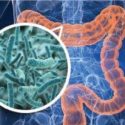
The Human Microbiome - A new frontier in drug discovery By Lee Jones There is a new phenomenon sweeping the globe (or at least sweeping the imagination of people around the globe). It is the human gut microbiome and the role it may play in the future of human health. Read More
Ion Channels - Increasingly Enticing Targets For Drug Discovery by Dr Douglas Krafte and Deborah Erickson Drug discovery focused on ion-channel proteins began generating great value for pharmaceutical R&D programmes more than 30 years ago, giving rise to medicines still important in the pharmacopeia for treating human disease. Pfizer Inc’s… Read More
By Dr A Roy, Prof B Patwardhan and Dr R Chaguturu Modern drug discovery approaches take too long, are too expensive, have too many clinical failures and uncertain outcomes. There are many reasons for this unsustainable business model, but primarily, the approaches are not comprehensively holistic. Secondly, none of the… Read More
Epigenetic Modulators of Histone Methylation By Dr Michael Thomenius and William P. Janzen Drug Discovery Epigenetics is a term that refers to the durable and context-specific regulation of transcription processes. The majority of epigenetics involves a complex system of enzymes, binding proteins and accessory proteins that control access to the… Read More
Metabolomics - A Playbook for Functional Genomics By Dr David Ferrick If we have learned anything from scientific research in the last 20 years, it is that finding cures to complex diseases is difficult. Despite the promise of the genomic revolution, disease progression and patient outcomes are still not easily… Read More
By Dr John Comley High-content screening (HCS) is a well-established approach for the multiparametric analysis of cellular events. Since its first introduction more than a decade ago, high content imaging systems have continually evolved with many improvements enabled to meet user demands of greater flexibility and the growing requirements of… Read More
With Synthetic Biology, Drug Discovery Is Going Virtual by Christopher Voigt Christopher Voigt is a professor of biological engineering at the Massachusetts Institute of Technology, where his lab focuses on synthetic biology. Two major areas of interest for him are developing a genetic programming language for cells and applying synthetic… Read More
Microtissues For In Vitro Toxicity Assessment: Cost effective and in vivo relevant toxicology tools By Dr Stephanie Ravenscroft, Dr Caroline Bauch, Dr Laura Hinton and Dr Paul Walker Conventional two-dimensional (2D) cell models (adherent cells grown on cell culture plates or cells in suspension) are limited in their abilities to… Read More
Synthetic Lethality and Anti Cancer Drug Discovery By Jonathan D Moore Classically-activated oncogene targets have been a mainstay of cancer drug discovery for the past 15 years, but the druggable targets in this category have been largely mined out. Future efforts to drug the cancer genome must take synthetic lethal… Read More
by Dr John Comley The case for using more physiologically-relevant cells for modelling disease pathophysiology, for understanding a drug’s mechanism of action, in toxicology/safety testing and in phenotypic drug screening assays is now well accepted. Human induced pluripotent stem cells (iPSCs) are seen as a resource from which to… Read More
The Role Of Immunodeficient Animal Models In Advancing Immuno-Oncology Research By Dr Michael Seiler From inbred wild-type to more advanced genetically-engineered strains, mouse models enable researchers to gain important insights into the complex biological underpinnings of human cancer. Among those, spontaneous and genetically engineered immunodeficient strains can be administered in… Read More
Drug Discovery in a Multi-Omics World By Mike Furness Collectively rare diseases affect millions of people worldwide, but the number of people with any one condition is very small. Finding a cure is difficult as the market is not large enough to justify a big investment in drug development. This… Read More
Phenotypic Drug Discovery: Striving towards the highest level of biological relevance By Dr John Comley Phenotypic drug discovery (PDD) implies screening where the molecular mechanism of action is not assumed and does not require knowledge of the molecular target. As such phenotypic drug discovery is comparable to empirical screening, which… Read More
How Neutron Science Has Enabled Innovation in Drug Design and Delivery By Dr Giovanna Fragneto Meeting global health challenges, from cancer to viral infections, requires a profound understanding of living processes – not just at the level of cells but right down at the molecular level. And designing the most… Read More
The California Institute for Regenerative Medicines Human iPSC Initiative By Dr Thomas J. Novak This article discusses large-scale generation of patient-derived induced pluripotent stem cells (iPSCs) to accelerate the understanding of disease biology and drug discovery. In 2012, the California Institute for Regenerative Medicine (CIRM) announced its Human iPSC Initiative,… Read More
The Increasing Impact of Precision Research Models on Drug Discovery and Development Dr Amar Thyagarajan Animal models are the standard by which we gain insight into the complex biological processes that underlie normal human physiology and disease states. Rodent models such as rats and mice have been used to understand… Read More