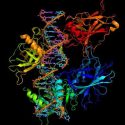
Dr Sofia Ferreira, Director of Applications at Refeyn, discusses how various technologies can address the main challenges in membrane protein characterisation, describing how novel technologies, such as mass photometry, can streamline and support analytical processes. Dissecting the structure of membrane proteins Membrane proteins play a crucial role in cellular functions,… Read More
Listen to this article on the DDW Podcast: DDW Editor Reece Armstrong speaks to Nautilus Co-Founder and Chief Scientist Parag Mallick, about the company’s recent collaboration which aims to uncover the proteins that could be behind a rare and fatal childhood cancer. At the beginning of 2023, proteomics company Nautilus Biotechnology… Read More
X-Chem and Kymera Therapeutics have expanded their collaboration, which will now comprise 12 targets and grants Kymera exclusive rights to compounds discovered within the collaboration. With the expanded agreement, X-Chem will serve as the primary provider of DNA-encoded library (DEL)-based screening services to Kymera – using its DEL platform to… Read More
This is the latest episode of the free narrated DDW podcast, “CROs and targeted protein degradation offer an exciting future”. It covers two articles written for Volume 23, Issue 1 – Winter 2021/22 of DDW. They are called “CROs: Drug discovery expertise on hand” and “Why the emergence… Read More
Scientists from Tokyo University of Science have shed light on how various molecules are recruited in endocytosis, a cellular process of bringing in different types of materials from the outside. The results suggest key regulatory functions of the yeast Eps15-like protein Pan1p. The findings provide important insights into the process,… Read More
R&D cloud platform provider Benchling has launched a new artificial intelligence (AI) programme to help scientists predict 3D structures of novel proteins. The company has launched a beta version of its AlphaFold programme – an AI platform developed by DeepMind that can predict the 3D structure… Read More
Listen to this article on the DDW Podcast: Last year a new translational research centre was established to bolster the University of Dundee’s drug discovery position. The Centre for Targeted Protein Degradation (CeTPD) would allow Professor Alessio Ciulli and colleagues to expand their pioneering work in an area that has… Read More
Researchers from the University of Dundee and Promega Corporation have shown how a “three-headed hydra” significantly improves efficacy in targeted protein degradation. The research is published in Nature Chemical Biology. Targeted protein degradation is an area of chemical biology that is said to be revolutionising drug discovery. It involves… Read More
In this video, Dr Gary Allenby, CEO Aurelia Bioscience, describes a scientific poster on ‘Protein-protein Interactions Using NanoBRET Technology’. Historically, only solution-based assays were used to screen compounds in PPI, but a more physiological approach is to examine the interaction in living cells. However, there are very few… Read More
The Olink Proteomics Olink Explore 1536 platform, using Next Generation Sequencing (NGS) as read-out, will be used in a project to measure plasma protein concentration in 53,000 individuals from the UK Biobank, one of the world’s largest genetic resources. The project is funded by a consortium of ten biopharmaceutical companies. Read More
By Dr Jamie Freeman Base editing is a potentially transformative technology for engineering DNA in cells that has the potential to generate knockouts or correct certain errors or mutations in the DNA for applications such as cell or gene therapies. Compared with currently-available gene editing methodologies such as CRISPR/Cas9, which… Read More
By Dr Karin Bottcher High content screening (HCS) has played a significant role in infectious disease research and drug discovery to date and can be a strong tool in the age of COVID-19 and beyond. With a focus on viral diseases, this article will describe how HCS has been used… Read More
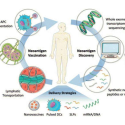
Honing in on perfect targeting By Dr Samantha Zaroff Volume 21 Issue 3 - Summer 2020 The pros and cons of different delivery modalities for personalised cancer vaccines. Introducing neoantigens directly into a patient in order to elicit an anti-tumour killing immune response is known as personalised cancer vaccine therapy. Read More
By Richard Gray The recent outbreak of COVID-19 has highlighted the need for fast and efficient development and production of vaccines for a whole gamut of pathogens, old and new. Microfluidics technologies can be used to accelerate the vaccine development process in a number of ways, not least in the… Read More
Collaborative Research Leads To New Understanding Of Biomarkers By Dr Max Ryadnov and Professor Jason Crain A new collaborative research paper sheds light on the way antibodies distinguish between different but closely related ‘biomarkers’ – in this case protein fragments which reveal information about the condition of the human body. Read More
Stem Cell Differentiation By Dr Lilian Hook Stem cells are extraordinary cells, capable of both self-renewal and differentiation to mature somatic cells in vivo and in vitro (1,2). They have many features and advantages which could revolutionise drug development and healthcare applications. Stem cells offer a limitless, consistent supply of… Read More