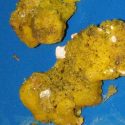
Organic chemists at the University of California, Los Angeles (UCLA) have created the first synthetic version of a molecule recently discovered in a sea sponge that may have therapeutic benefits for Parkinson’s disease and similar disorders. The molecule, known as lissodendoric acid A, appears to… Read More
The COVID-19 antiviral race: we're all in this together By Uduak Grace Thomas In response to the COVID-19 pandemic, international scientists from academia and industry have pooled their expertise and resources to identify candidate compounds that inhibit the activity of the SARS-CoV-2 main protease, in order to develop a clinically… Read More
By Andrii Lozoniuk Volume 21 Issue 2 - Spring 2020 Gathering compound solubility data is a key step during drug discovery that helps ensure cost-effective screening, yet it is a long process and is often underestimated in terms of difficulty. Global sharing of such data can help pharmaceutical companies minimise… Read More
2030 Life Sciences and Health in the Digital Age (Part 1) By Dr Steve Arlington and John Wise One of the key ways in which The Pistoia Alliance works with its members is to help them not just deal with the problems of today, but also to look ahead, to… Read More
Automating Automation - How close are we to Artificial Intelligence impact? By Dr Michael A. Tarselli, Dr Yohann Potier and Dr Alan E. Fletcher In terms of consistency, repeatability, known errors and sheer volume, there exists perhaps no better collection of data for computer learning than that emerging from automated… Read More
Mining Plant Genomes - A modern approach to herbal healing By Michelle Vierra Plants are stationary soldiers. Rooted to one spot, they are not able to chase nutrients or flee from herbivores and pathogens. So in addition to the basic metabolites they synthesise for their survival, they produce a diverse… Read More
Systems Pharmacology: When multi-targeting is advantageous By Dr Kirkwood A. Pritchard Jr, Dr Dustin P. Martin and Dr Stephen Naylor The safety and efficacy of therapeutic drugs still requires improvement. In part this is due to the promiscuity of individual drugs, which on average can interact with an estimated 6-28… Read More
Increasing Drug Discovery Success With 3D Cell Culture Systems By Dr Richard M. Eglen, Dr Feng Li and Dr Tony Frutos Drug candidates often fail in the clinic for two reasons: they lack efficacy or possess an adverse toxicity profile. These failures can come at a high cost, especially when… Read More
The Future Of Drug Discovery - Cutting-edge technologies meet traditional paradigms in assay development By Dr Roger Bosse With more than 1,500 drugs approved by the Food and Drug Administration (FDA) on the market, the easiest disease targets are already covered (1). Today’s scientists are challenged to find new compounds,… Read More
Disruptive Approaches To Accelerate Drug Discovery and Development (Part 2) By Dr Anton Fliri, et al. Part 2: Emergent intelligence, a new paradigm for drug discovery. (You can read part 1 of disruptive approaches to accelerate drug discovery and development linked here.) The staggering clinical trial failure rate of experimental… Read More
Biologics Drug Discovery - Driving Strategic Improvements With Scientific Informatics By Dr Andrew LeBeau Adoption of a scientific informatics system is essential to the success of every drug discovery organisation. This article discusses how we can drive strategic improvements in biologics drug discovery using scientific informatics. Good decisions can accelerate… Read More
Technology Innovation Will Help Prepare Drug Discovery for Smart Screening Era By Dr Clive Green and Dr Philip Spencer Drug discovery is undergoing a transformation powered by advances that magnitude more molecules and enable smarter selection of compounds. We are on the cusp of having previously unimaginable amounts of information… Read More
The Importance of Heterocyclic Compounds in Anti-Cancer Drug Design By Simon Pearce Heterocycles are key structural components of many of the anti-cancer drugs available on the market today. Indeed, of the novel molecular anti-cancer agents approved by the FDA between 2010 and 2015, almost two-thirds contained heterocyclic rings within their… Read More
A Strategic Vision For 21st Century Drug Discovery By Dr Wayne Bowen, Dr Giles Sanders, Dr Andreas Werdich, Dr Brian Warrington and Dr Elizabeth Farrant Delivering genuine therapeutic innovation is more challenging and complex than ever. Despite major scientific breakthroughs and technological advances leading to a greater understanding of the… Read More
Translational Chemical Biology: Gap assessment for advancing drug discovery, development and precision medicine By Dr Mukund Chorghade, Dr Michael Liebman, Dr Gerald Lushington, Dr Stephen Naylor and Dr Rathnam Chaguturu As yesterday’s lead molecule enters today’s clinical trial, the standard operating script seems to call for product developers and clinicians… Read More
3D Cellular Imaging - Advances and Considerations for High-Content Screening By O. Joseph Trask, Dr Daniel V. LaBarbera and Dr Kevin Quick Commercially available high-content imaging (HCI) systems, introduced in the 1990s, have provided the scientific community with a platform that offers a unique set of tools ideal for advancing… Read More