How Mergers and Acquisitions Will Drive Oncology Research in 2019 By Dr Michael Seiler 2019 got off to a fast start for oncology drug discovery, with numerous mergers, acquisitions and collaborations announced in quick succession. These ventures provide a window into key trends in oncology research, where investigators are likely… Read More
Microfluidics - Driving Innovation and Streamlining Single Cell Analysis By Dr Frank F. Craig Microfluidics platforms that harness picodroplet technology (picolitre volume aqueous droplets in stabilised oil emulsions) are unlocking the potential of single cell analysis to enable exciting new discoveries and advances with the potential to transform scientific research,… Read More
Bringing Immuno-Oncology Together: How An Immunologist & Oncologist Collaborate By Dr Julia Schuler and Dr Louise Brackenbury For many years, immunology and oncology operated as separate disciplines within drug discovery. However, recent advances in immuno-oncology (IO) have demonstrated what can be achieved when the two disciplines join forces in developing… Read More
How The B6 Mouse Strain is Revolutionising Drug Discovery By Dr Philip Dube Inbred mice are critical tools in biomedical research and one particular strain, known as C57BL/6 (Black 6 or B6, for short), is rapidly becoming the standard model for many applications and revolutionising modern research. Understanding the B6… Read More
A Marriage of Technologies for Immuno-Oncology In Vivo Studies By Dr Philip Dube Discovering and validating novel therapeutic targets to add to the immuno-oncology arsenal will require refined preclinical models that meet the needs for suitability, scalability and clinical relevancy throughout the various phases of target discovery and drug validation. Read More
Immuno-Oncology's Biomarker Dilemma: How to add value in an uncertain development landscape By Dr Rachel Laing and Olivier Lesueur Given their ability to promote long-term survival in a percentage of cancer patients, PD-1/PD-L1 checkpoint inhibitors have fast become foundational cancer therapies. But knowing which patients may respond to these drugs… Read More
Breath Based Biomarker Detection & Breath Biopsy - Informing drug development and future treatment regimes By Billy Boyle and Dr Mike Murphy The recent approval of the first liquid biopsy test for the diagnosis of non-small cell lung cancer (NSCLC) demonstrates how biomarker-based detection tools are becoming important components of… Read More
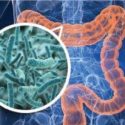
The Human Microbiome - A new frontier in drug discovery By Lee Jones There is a new phenomenon sweeping the globe (or at least sweeping the imagination of people around the globe). It is the human gut microbiome and the role it may play in the future of human health. Read More
By Dr A Roy, Prof B Patwardhan and Dr R Chaguturu Modern drug discovery approaches take too long, are too expensive, have too many clinical failures and uncertain outcomes. There are many reasons for this unsustainable business model, but primarily, the approaches are not comprehensively holistic. Secondly, none of the… Read More
Metabolomics - A Playbook for Functional Genomics By Dr David Ferrick If we have learned anything from scientific research in the last 20 years, it is that finding cures to complex diseases is difficult. Despite the promise of the genomic revolution, disease progression and patient outcomes are still not easily… Read More
With Synthetic Biology, Drug Discovery Is Going Virtual by Christopher Voigt Christopher Voigt is a professor of biological engineering at the Massachusetts Institute of Technology, where his lab focuses on synthetic biology. Two major areas of interest for him are developing a genetic programming language for cells and applying synthetic… Read More
Anti-Infective Immunotherapy For Treating Hospital Acquired Infections By Dr Vu Truong, Dr Nadine Weich, Dr Andreas Loos and Dr Eric Patzer The frequency of nosocomial (acquired in healthcare facility) pneumonia has experienced a steady increase in recent years, and treatment of these infections has become more challenging and expensive due… Read More
New Tools Bring Greater Understanding to Cellular Metabolism Research By Dr John Comley The links between mitochondrial dysfunction and various diseases and pathological conditions are being increasingly revealed, such that mitochondrial analyses have gained renewed interest from both the academic research and drug discovery labs. This revival of interest in… Read More
Exploring The Feasibility of Human Antimicrobial Peptides For New and More Efficient Antibiotics By Dr Max Ryadnov To help combat decades of stagnation in antibiotic development, a team led by the National Physical Laboratory conducted two studies into the antimicrobial peptides that fight infection in our bodies and the feasibility… Read More
Metabolomics: Analytic Methods Driving Exponential Understanding By Dr Ian D. Jardine Metabolomics is distinct from genomics and proteomics in several significant respects. Where genes and proteins are unique to specific organisms, metabolites are ubiquitous throughout the plant and animal kingdoms. Compared with proteomics and genomics, which quantify the building blocks… Read More
Meeting the challenge of healthcare-associated infections with new antimicrobials: with a focus on Clostridium difficile By Professor Peter Hawkey and Dr Katie Hardy Healthcare-associated infections (HCAI), previously known as hospital acquired infections (HAI), are defined as infections resulting from medical care or treatment in hospital. HCAI may be caused by… Read More