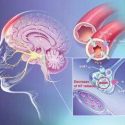
The Evolution of Transdermal Drug Delivery and Treating Migraine By Dr Mahmoud Ameri and Hayley Lewis Transdermal Drug Delivery (TDD) is a promising method for drug application that has major advantages over some of the most common routes of drug administration. In most cases, oral drug delivery is the most… Read More
Systems Pharmacology: When multi-targeting is advantageous By Dr Kirkwood A. Pritchard Jr, Dr Dustin P. Martin and Dr Stephen Naylor The safety and efficacy of therapeutic drugs still requires improvement. In part this is due to the promiscuity of individual drugs, which on average can interact with an estimated 6-28… Read More
The Growth of Organoids in Cancer Drug Discovery By Dr J. Mark Treherne, et al., Will the automated expansion of organoids help improve the productivity of cancer drug discovery? Increasingly, complex cell-based assays and tissues are routinely used as part of cancer drug discovery. However, conventional monolayer or suspension cultures… Read More
Beyond SEND: Leveraging non-clinical data to drive translational research forward By Katherine Briggs, et al., This article will discuss some of the potential use cases that Standard for Exchange of Nonclinical Data (SEND), datasets can support. Both to advance translational research across multiple research sites and also to drive efficiencies… Read More
Increasing Drug Discovery Success With 3D Cell Culture Systems By Dr Richard M. Eglen, Dr Feng Li and Dr Tony Frutos Drug candidates often fail in the clinic for two reasons: they lack efficacy or possess an adverse toxicity profile. These failures can come at a high cost, especially when… Read More
How Advanced Automated Liquid Handling Systems are Reshaping Drug Discovery By Helen Stewart-Miller and Dr Richard Massey Winter 2018/19 Once the domain of high-throughput screening (HTS) applications, automated liquid handling systems are now used ubiquitously in drug discovery and have been fundamental in increasing throughput, driving efficiencies and improving standards… Read More
By Scott Hickman, Dr Brian Ogilvie and Tim Patterson. Good Laboratory Practice (GLP), are federal regulations that require implementation of a robust quality management system to ensure the validity, integrity and reliability of non-clinical safety data submitted for regulatory evaluation and approval. US Food and Drug Administration (FDA) GLP regulations… Read More
3D Cell Culture - Engineering Composable, Disease-Tunable 3D Human Microtissues for Drug Discovery By Dr Patrick Guye, Dr Eva Thoma and Dr Olivier Frey In this article, we will share some of what we have learned over the past 10 years as pioneers in the 3D cell culture space and… Read More
By Dr Phil Jones The mission at The University of Texas MD Anderson Cancer Center is to eradicate cancer, which remains a major cause of mortality worldwide. It is the second leading cause of death in the United States and globally, claiming more lives than malaria, HIV/AIDs and tuberculosis combined… Read More
Genetically-Engineered Models: The Value of Precious GEMs By Dr Megan M. MacBride Genetically-engineered animal models (GEMs) are critical tools for drug discovery and development, but intellectual property (IP) concerns can complicate access. As pharma and biotech increasingly outsource R&D activities to universities, careful scrutiny is required to ensure adherence to… Read More
Current Trends in RNA Therapeutics Development By Dr Xiaoqiu Wu and Dr Andrew P. Turnbull Cellular RNAs play crucial roles during disease progression and represent a diverse and largely untapped class of biomolecules that can be exploited for drug development. RNA species include messenger RNAs (mRNAs) that are translated into… Read More
The Future Of Drug Discovery - Cutting-edge technologies meet traditional paradigms in assay development By Dr Roger Bosse With more than 1,500 drugs approved by the Food and Drug Administration (FDA) on the market, the easiest disease targets are already covered (1). Today’s scientists are challenged to find new compounds,… Read More
Integrated Platform Drug Discovery and Development Companies - Part 1 By Dr Urban A. Kiernan and Dr Stephen Naylor Technology was lauded as the saviour of the drug discovery and development (DDD) process during the late 1990s. A myriad of independent companies developed and offered ‘innovative’ tools, technologies and platforms… Read More
How Phenotypic CRISPR Screening is Revolutionising Drug Discovery By Dr Steffen Lawo and Dr Carlos le Sage Research in drug discovery and biotechnology increasingly exploits gene editing at industrial scale in order to identify and validate new biological targets for precision medicines. The discovery of CRISPR-Cas9 systems has fuelled a… Read More
Induced Pluripotent Stem Cells (iPSCs) - Unlocking their full potential for Drug Discovery By Abby Edwards and Dr Richard Massey Human stem cells were once viewed primarily as regenerative materials for tissue repair through cell therapies. However, advances in technologies and protocols mean that induced pluripotent stem cells (iPSCs) are… Read More
Cell Therapy - Preserving Cell Integrity and Viability To Drive Discovery Mary Kay Bates Cell therapy is poised to play a pivotal role in the development of precision and personalised medicines that will transform healthcare for millions of patients worldwide. Involving the direct use of whole cells or cellular material… Read More