From human genome to global genome - why precision medicine must address genetic diversity By Sumit Jamuar, et al. The publication of the first human genome sequence more than 15 years ago marked the start of a new era in medicine. In the years since then, researchers have greatly expanded… Read More
Application of bioinformatics in support of precision medicine By Mike Furness and John Wise Bioinformatics has played a major role in gene sequencing diagnostics and has been an essential tool to investigate the genetic causes of disease. With the support of new technologies and tools, bioinformatics can play an important… Read More
Cell Therapy - Falling short of its potential? By Pierre-Louis Joffrin Despite major investment in the field, few cell therapies have gained regulatory approval with limited commercial success. The success of therapeutic products is defined by three factors: safety, efficacy and scalability. Achieving these for cell therapy presents new challenges;… Read More
The Reality of Virtual Pharmaceutical Companies By Dr Stephen Naylor and Dr Kirkwood A. Pritchard Jr We discuss the oxymoronic proposition of a Virtual Pharmaceutical Company (VPC) and the typical adopted business model, as well as provide examples of such companies currently trying to undertake this adventurous task. The vagaries… Read More
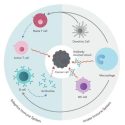
By Dr Mark Chao, et al. New immunotherapies that integrate innate and adaptive immune responses may increase efficacy against many cancers, and have the potential to expand the range of tumours and patients that can be treated with immunotherapy. Over the past decade, insights into the molecular mechanisms that cancer… Read More
How Mergers and Acquisitions Will Drive Oncology Research in 2019 By Dr Michael Seiler 2019 got off to a fast start for oncology drug discovery, with numerous mergers, acquisitions and collaborations announced in quick succession. These ventures provide a window into key trends in oncology research, where investigators are likely… Read More
From Genotype to Phenotype: Leveraging functional genomics in oncology By Dr Menelas Pangalos & Steve Rees et al. A challenge in drug discovery is that, at best, only around one in five drug candidates will lead to the launch of a medicine. In 2011, AstraZeneca initiated a strategic ‘5R Framework’… Read More
Integrated Platform Drug Discovery and Development Companies - Part 2: Comparative analysis By Dr Stephen Naylor and Dr Kirkwood A. Pritchard Jr Spring 2019 Large pharmaceutical companies have struggled to efficiently implement tools, technologies and platforms into their drug discovery and development (DDD) programmes. More recently there have been attempts… Read More
Fostering Multidisciplinary Collaboration in Drug Discovery By Professor Zeynep Erden, et al. Drug discovery teams combine specialists with in-depth knowledge from a variety of scientific disciplines. Such diversity in thought worlds poses a challenging exercise in cross-disciplinary collaboration and project coordination. Based on a longitudinal field study of five projects… Read More
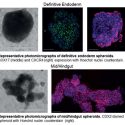
3D Organoid Cell Culture - Optimising disease models for research and drug discovery By Dr Amanda Linkous, Hilary Sherman, Iris Li and Dr Richard M. Eglen The use of human-induced pluripotent stem cells (HiPSCs) continues to grow in three-dimensional (3D) spheroid and organoid culture. Although advances in 3D cell culture… Read More
The Evolution of Transdermal Drug Delivery and Treating Migraine By Dr Mahmoud Ameri and Hayley Lewis Transdermal Drug Delivery (TDD) is a promising method for drug application that has major advantages over some of the most common routes of drug administration. In most cases, oral drug delivery is the most… Read More
Systems Pharmacology: When multi-targeting is advantageous By Dr Kirkwood A. Pritchard Jr, Dr Dustin P. Martin and Dr Stephen Naylor The safety and efficacy of therapeutic drugs still requires improvement. In part this is due to the promiscuity of individual drugs, which on average can interact with an estimated 6-28… Read More
The Growth of Organoids in Cancer Drug Discovery By Dr J. Mark Treherne, et al., Will the automated expansion of organoids help improve the productivity of cancer drug discovery? Increasingly, complex cell-based assays and tissues are routinely used as part of cancer drug discovery. However, conventional monolayer or suspension cultures… Read More
By Scott Hickman, Dr Brian Ogilvie and Tim Patterson. Good Laboratory Practice (GLP), are federal regulations that require implementation of a robust quality management system to ensure the validity, integrity and reliability of non-clinical safety data submitted for regulatory evaluation and approval. US Food and Drug Administration (FDA) GLP regulations… Read More
3D Cell Culture - Engineering Composable, Disease-Tunable 3D Human Microtissues for Drug Discovery By Dr Patrick Guye, Dr Eva Thoma and Dr Olivier Frey In this article, we will share some of what we have learned over the past 10 years as pioneers in the 3D cell culture space and… Read More
By Dr Phil Jones The mission at The University of Texas MD Anderson Cancer Center is to eradicate cancer, which remains a major cause of mortality worldwide. It is the second leading cause of death in the United States and globally, claiming more lives than malaria, HIV/AIDs and tuberculosis combined… Read More