GENE EXPRESSION as a toxicological screening tool By Dr Bruce Seligmann The use of microarray data in drug development and requirements for FDA audit and approval. Toxicological safety testing of compounds has not yet advanced to the point where measurement of gene expression is being incorporated in the internal decision… Read More
Tissue Microarray (TMA) - A step ahead in drug discovery By Dr CR Camozzi Estimation of the clinical importance, market size and therapy-related side-effects are key questions in drug development. The ever-rising costs of drug discovery and development ($800-1,500 million for a successful drug research project) together with demonstrated uncertainty… Read More
The impact of early ADME profiling on drug discovery and development strategy By Dr Jianling Wang and Dr Laszlo Urban The increased costs in the discovery and development of new drugs, due in part to the high attrition rate of drug candidates in development, has led to a new strategy… Read More
Applications of liquid chromatography mass spectrometry By Dr David Kwok Applications of liquid chromatography mass spectrometry in accelerating the pace of lead-drug candidate selection and pre-clinical development. This review discusses how the application and benefits of using LC/MS and LC/MS/MS assays in conjunction with in vivo and in vitro study… Read More
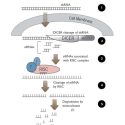
Functional screening of viral siRNA libraries in human primary cells By Dr Kara Bortone, Dr Frits Michiels, Dr Nick Vandeghinste, Dr Peter Tomme and Dr Helmuth van Es One of the major challenges facing the pharmaceutical industry today is the identification and validation of novel, high-quality drugable targets in underserved… Read More
Novel concepts and therapeutic options for the treatment of schizophrenia By Dr Karoly Nikolich and Dr Roman Urfer Schizophrenia affects a large number of individuals irrespective of social status and education. Current treatments of schizophrenia represent the second largest central nervous system (CNS) pharmaceutical market, exceeding $12 billion per year. Read More
Metabonomics - A generic platform for the investigation of drug toxicity, altered gene function and disease processes By Professor Jeremy K. Nicholson Metabonomics can offer one of the most complete solutions to tackling one of the pharmaceutical industry's biggest problems attrition. This article discusses the scope and uses of metabonomics… Read More
By Dr Peter C. Johnson and Dr Alan J. Higgins The pharmaceutical industry has not seen the hoped-for productivity gains from the various omics datastreams over the last decade. This article discusses how systems biology can exploit the natural interlinkages between these datastreams and put in place a powerful system… Read More
Functional cell-based high throughput drug screening By Professor Daniel T. Chiu and Professor Owe Orwar Cell-based assays are poised to assume an increasingly important role in drug screening and discovery. It is becoming apparent that simple binding assays and in vitro experiments are grossly insufficient for extrapolating the efficacy and… Read More
Using RNAi to identify and validate novel drug targets: targeting human kinases with an siRNA library By Andrea Kroenke, Anne Grabner, Dr Michael Hannus, Dr Christoph Sachse, Dr David Dorris and Dr Christophe Echeverri Libraries of siRNAs directed against predefined subsets of genes now offer the capacity to greatly accelerate… Read More
Role of image informatics in accelerating drug discovery and development By Robert Dunkle There is a new category of informatics that is proving itself essential to the acceleration of drug discovery and development. Image informatics is the systematic use of image data as a means to help interpret experiments and… Read More
Protease Inhibitor Therapeutics for Respiratory Disease By Dr Philip J. Barr Disruption of the natural equilibria between proteases and their cognate inhibitors is a common feature of inflammatory disease. When this occurs in the lung, the effects can lead to irreversible impairment of pulmonary function. Although protease inhibition has been… Read More
Accommodating cells in HTS By Sandra Fox High Throughput Screening has become an important and integrated part of drug discovery at most pharmaceutical and many biotechnology companies worldwide, and is now entrenched in the drug discovery process. To produce high quality leads, centralised HTS laboratories are expanding their overall role… Read More
By Tim Ward Cell culture is and has historically been an essential component of the drug discovery toolbox. Cell culture provides the proteins, membrane preparations and other raw materials required for biological research. In recent years, with the emergence of high-throughput screening technology and binding and live, cell-based functional assays,… Read More
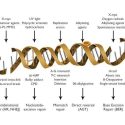
DNA repair inhibition to treat cancer and other serious illnesses By Professor Stephen P. Jackson and Cheryl L. Bishop The stability of an organism's genome is essential for healthy functioning and survival. The information content and integrity of the genome are so important that a range of maintenance and repair… Read More
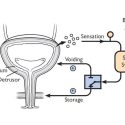
Urinary troubles for more than the ageing By Dr Anthony PDW Ford The needs of younger incontinence sufferers coupled with the ageing of the baby-boomer population portend a big boost in demand for effective and well tolerated new medicines for lower urinary-tract dysfunction. This market is under-served today, presenting a… Read More