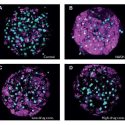
Evolving Models for NASH Drug Discovery: Tools for stemming a silent epidemic By Dr Sue Grepper, Dr Radina Kostadinova, Dr Eva Thoma and Professor Armin Wolf Non-alcoholic fatty liver disease (NAFLD) has quietly become one of the most common causes of chronic liver disease in the modern world. If this… Read More
From human genome to global genome - why precision medicine must address genetic diversity By Sumit Jamuar, et al. The publication of the first human genome sequence more than 15 years ago marked the start of a new era in medicine. In the years since then, researchers have greatly expanded… Read More
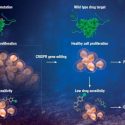
Fail Early, Fail Fast - A phenotypic rescue approach By Dr Anne-Marie Zuurmond, et al. New disease targets frequently emerge in literature, but the thorough target validation required to consider these targets for a drug discovery programme is often lacking. In pharmacological or genetic perturbation studies using complex biological assays,… Read More
Automating Automation - How close are we to Artificial Intelligence impact? By Dr Michael A. Tarselli, Dr Yohann Potier and Dr Alan E. Fletcher In terms of consistency, repeatability, known errors and sheer volume, there exists perhaps no better collection of data for computer learning than that emerging from automated… Read More
Application of bioinformatics in support of precision medicine By Mike Furness and John Wise Bioinformatics has played a major role in gene sequencing diagnostics and has been an essential tool to investigate the genetic causes of disease. With the support of new technologies and tools, bioinformatics can play an important… Read More
Flow Cytometry - The advanced systems overcoming drug discovery pain points By Helen Stewart-Miller and Dr Richard Massey Flow cytometry is an invaluable technique for the characterisation of highly heterogeneous cell populations. Thanks to improvements in throughput, automation and multichannel detection capabilities, recent years have seen its use expand across… Read More
Mining Plant Genomes - A modern approach to herbal healing By Michelle Vierra Plants are stationary soldiers. Rooted to one spot, they are not able to chase nutrients or flee from herbivores and pathogens. So in addition to the basic metabolites they synthesise for their survival, they produce a diverse… Read More
From Genotype to Phenotype: Leveraging functional genomics in oncology By Dr Menelas Pangalos & Steve Rees et al. A challenge in drug discovery is that, at best, only around one in five drug candidates will lead to the launch of a medicine. In 2011, AstraZeneca initiated a strategic ‘5R Framework’… Read More
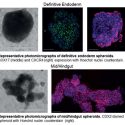
3D Organoid Cell Culture - Optimising disease models for research and drug discovery By Dr Amanda Linkous, Hilary Sherman, Iris Li and Dr Richard M. Eglen The use of human-induced pluripotent stem cells (HiPSCs) continues to grow in three-dimensional (3D) spheroid and organoid culture. Although advances in 3D cell culture… Read More
Systems Pharmacology: When multi-targeting is advantageous By Dr Kirkwood A. Pritchard Jr, Dr Dustin P. Martin and Dr Stephen Naylor The safety and efficacy of therapeutic drugs still requires improvement. In part this is due to the promiscuity of individual drugs, which on average can interact with an estimated 6-28… Read More
The Growth of Organoids in Cancer Drug Discovery By Dr J. Mark Treherne, et al., Will the automated expansion of organoids help improve the productivity of cancer drug discovery? Increasingly, complex cell-based assays and tissues are routinely used as part of cancer drug discovery. However, conventional monolayer or suspension cultures… Read More
Increasing Drug Discovery Success With 3D Cell Culture Systems By Dr Richard M. Eglen, Dr Feng Li and Dr Tony Frutos Drug candidates often fail in the clinic for two reasons: they lack efficacy or possess an adverse toxicity profile. These failures can come at a high cost, especially when… Read More
How Advanced Automated Liquid Handling Systems are Reshaping Drug Discovery By Helen Stewart-Miller and Dr Richard Massey Winter 2018/19 Once the domain of high-throughput screening (HTS) applications, automated liquid handling systems are now used ubiquitously in drug discovery and have been fundamental in increasing throughput, driving efficiencies and improving standards… Read More
3D Cell Culture - Engineering Composable, Disease-Tunable 3D Human Microtissues for Drug Discovery By Dr Patrick Guye, Dr Eva Thoma and Dr Olivier Frey In this article, we will share some of what we have learned over the past 10 years as pioneers in the 3D cell culture space and… Read More
By Dr Phil Jones The mission at The University of Texas MD Anderson Cancer Center is to eradicate cancer, which remains a major cause of mortality worldwide. It is the second leading cause of death in the United States and globally, claiming more lives than malaria, HIV/AIDs and tuberculosis combined… Read More
The Future Of Drug Discovery - Cutting-edge technologies meet traditional paradigms in assay development By Dr Roger Bosse With more than 1,500 drugs approved by the Food and Drug Administration (FDA) on the market, the easiest disease targets are already covered (1). Today’s scientists are challenged to find new compounds,… Read More