AI VIVO, a company combining systems pharmacology and artificial intelligence (AI) to accelerate drug discovery, has announced that its platform identified dexamethasoneas having high potential for the treatment of COVID-19 in April 2020. AI VIVO, a company combining systems pharmacology and artificial intelligence (AI) to accelerate… Read More
Avacta Group, in collaboration with the Centre for Virus Research at the University of Glasgow, has shown that Affimer reagents which bind to the SARS-COV-2 virus spike protein, prevent infection of human cells by a SARS-COV-2 model virus and therefore provide a potential therapy for COVID-19 infection. Avacta… Read More
17 June 2020 This is the second tranche of growth capital loan signed with the European Investment Bank in May 2019. The new funds will be used for the development, manufacture and commercialisation of in vitro diagnostics for infectious diseases Mobidiag, a revenue generating, molecular diagnostics company with… Read More
09 June, 2020 The specialist developer and manufacturer of proteins for stem cell, organoid and regenerative medicine applications announced the successful closure of a £1.5 million (US$1.9 million) series A investment round to accelerate the global scale-up of its commercial operations. According to Cambridge based Qkine, the funding… Read More
The CRISPR revolution arrives in immuno-oncology By Helen Stewart-Miller and Thomas Hope Volume 21 Issue 2 - Spring 2020 CRISPR-cas9 technology is having an exciting impact on drug discovery as a whole, but more specifically CRISPR presents enormous opportunities in targeted screening for immuno-oncology research. Clustered regularly-interspaced short palindromic repeats… Read More
Meeting analytical challenges in a brave new world of next generation biotherapeutics By Mani Krishnan and Susan Darling Volume 21 Issue 2 - Spring 2020 The need for innovative advanced analytical tools to accelerate the development of immunotherapies and other complex biologics that may one day cure genetic diseases and… Read More
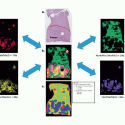
Innovative glycan imaging methods drive cancer biomarker discovery By Dr Richard Drake, Dr Anand Mehta and Dr Peggy Angel Volume 21 Issue 2 - Spring 2020 Glycosylation accounts for the majority of post-translational modifications (PTMs) of proteins, and changes in glycosylation are known to play a key role in disease… Read More
Harnessing the modified proteome for increased diagnostic power By Dr David Bramwell, Dr Steven Laval and Dr Jane McLeod Relevant biomarkers are vitally important in personalised medicine, guiding patient matching to specific therapies for earlier, easier and more effective disease identification and treatment. Here we trace the expectations of ’omicsbased… Read More
Getting a handle on liquids: automation solutions for drug discovery By Helen Stewart-Miller and Thomas Hope The accurate and precise measurement of liquids and the transport of exact volumes between vessels, or from one instrument to another, are processes that constitute the very essence of research. However, while this simple… Read More
Using Live-Cell Imaging Systems to Transform Perspectives in Drug Discovery By Helen Stewart-Miller and Dr Kate Tointon Live-cell imaging has transformed the study of cell behaviour and function. The technique allows researchers to monitor internal cell structures, interactions and processes in real-time, and over time. In drug discovery, understanding the… Read More
Optimising Phenotypic Screening - Single-cell analysis versus 3D multicell analysis By Dr Richard M. Eglen In light of the high failure rate of compounds when they are subjected to clinical testing, we are seeing a renaissance in phenotypic screening in drug discovery. However, most phenotypic screening is based on the… Read More
Evolving Models for NASH Drug Discovery: Tools for stemming a silent epidemic By Dr Sue Grepper, Dr Radina Kostadinova, Dr Eva Thoma and Professor Armin Wolf Non-alcoholic fatty liver disease (NAFLD) has quietly become one of the most common causes of chronic liver disease in the modern world. If this… Read More
Fail Early, Fail Fast - A phenotypic rescue approach By Dr Anne-Marie Zuurmond, et al. New disease targets frequently emerge in literature, but the thorough target validation required to consider these targets for a drug discovery programme is often lacking. In pharmacological or genetic perturbation studies using complex biological assays,… Read More
Automating Automation - How close are we to Artificial Intelligence impact? By Dr Michael A. Tarselli, Dr Yohann Potier and Dr Alan E. Fletcher In terms of consistency, repeatability, known errors and sheer volume, there exists perhaps no better collection of data for computer learning than that emerging from automated… Read More
Automated Cell-based Assays: Novel tools overcome the barriers to drug discovery success By Helen Stewart-Miller and Kate Tointon In this article, we look at how commercial products and services are facilitating the automation of cell-based assays to advance drug discovery and accelerate the delivery of new medicines to patients. Cell-based… Read More
Safety First - Automating cell line development By Jon Newman-Smith Developing and maintaining cell cultures in a stable and sterile environment is of paramount importance to protect samples and increase overall success of drug discovery pipelines. Cell lines are extremely fragile and susceptible to contamination which can be catastrophic in… Read More