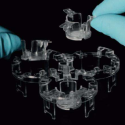
Semarion has raised $3.8 million to scale its next-generation cell assay technology and expand manufacturing of its microcarrier platform. The company, a University of Cambridge spin-out from the Cambridge Laboratory, will use investment to facilitate commercial expansion and scale manufacturing of its SemaCyte platform, which enables adherent cell models to be… Read More
Promega has launched a new live-cell target engagement platform aiming to close a long-standing gap between biochemical and cellular assays for understudied or difficult-to-interrogate proteins. TheTarSeer BRETSA Target Engagement System is a novel bioluminescence resonance energy transfer-based shift assay for detecting ligand-protein interactions in intact cells using protein denaturation. … Read More
SPT Labtech and Semarion, a University of Cambridge spin-out company from the Cavendish Laboratory, have announced a strategic collaboration. The partnership will integrate SPT Labtech’s firefly liquid handling platform with Semarion’s SemaCyte microcarrier technology to develop an automated workflow to simplify and accelerate key stages of adherent… Read More
Semarion was voted one of the SLAS2025 New Product Award winners. DDW’s Diana Spencer catches up with CEO and Co-founder Jeroen Verheyen to find out how the company has bridged the worlds of science and engineering. DS: Congratulations on being one of the SLAS2025 New Product Award winners. Read More
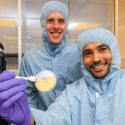
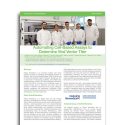
A new Case Study is now available to download from Hamilton. Oxford Biomedica is an innovative leading viral vector specialist focused on delivering life-changing therapies to patients. The company works across key viral vector delivery systems (lentiviral-, adeno-associated viral- and adenoviral-based vector systems), providing innovative solutions to cell and gene… Read More
In this Case Study, Oxford Biomedica, an innovative global gene and cell therapy company, describes: The automated system used for a 10-day cell-based workflow required for an analytical test to determine viral vector titer The advantages of Hamilton’s CECULA Graphical User Interface (GUI) for the planning of long-term cell-based assays… Read More
DDW’s Megan Thomas discusses the value of assays and their influence across the drug discovery sector. Assays are a critical part of drug discovery, providing various means to measure biological or biochemical activity of potential drug compounds. Across the sector, it is evident the impact they have and their inherent… Read More
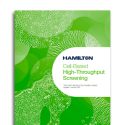
The tenth eBook of the Hamilton series is now available to download, entitled ‘Cell-Based High-Throughput Screening‘. The eBook covers: Cell-based models used in research – pros and cons. Challenges of cell-based high-throughput screening. Hamilton software and hardware tools for cell-based assays. Download now. Read More
In the tenth eBook of the Hamilton series, ‘Cell-Based High-Throughput Screening’, we discuss: Cell-based models used in research – pros and cons. Challenges of cell-based high-throughput screening. Hamilton software and hardware tools for cell-based assays. Read More
The global ADME toxicology testing market is predicted to generate a revenue of $19.21 billion by 2030, with a growth rate of 10.2%. Factors such as an increased need to check late-stage drug failures with the adoption of more appropriate toxicity testing methods by pharmaceutical companies… Read More
Cell migration assays can be time-consuming and challenging, from identifying and ensuring assays are imaged at the appropriate time, to properly measuring wound closure. In this new App Note, discover the benefits of Evident’s CM cell culture monitors, which provide label-free, quantitative results, consistent results throughout your lab, and are… Read More
Cell migration assays can be time-consuming and challenging, from identifying and ensuring assays are imaged at the appropriate time, to properly measuring wound closure. Evident’s CM cell culture monitors provide label-free, quantitative results, consistent results throughout your lab, and are cost-effective. Researchers at ACEL simplified the cell migration process by… Read More
By DDW Editor Reece Armstrong A lot has already been said about the US Food and Drug Administration’s (FDA) Modernization Act 2.0 and for good reason. The decision by the Biden administration to end the federal requirement for drugs under development to be tested on animals represents a significant step forward for the… Read More
By Dr Karin Bottcher High content screening (HCS) has played a significant role in infectious disease research and drug discovery to date and can be a strong tool in the age of COVID-19 and beyond. With a focus on viral diseases, this article… Read More
The COVID-19 antiviral race: we’re all in this together By Uduak Grace Thomas In response to the COVID-19 pandemic, international scientists from academia and industry have pooled their expertise and resources to identify candidate compounds that inhibit the activity of the SARS-CoV-2 main protease, in order to develop… Read More
The CELL CULTURE innovations increasing drug discovery success By Helen Stewart-Miller and Abby George Volume 21 Issue 3 – Summer 2020 ‘Fail early, fail fast’ has been a mantra in the pharmaceutical industry for several years and directly impacts the overall strategy of many drug discovery and development… Read More