
Turning science into business: A step-change in adherent cell-based assays
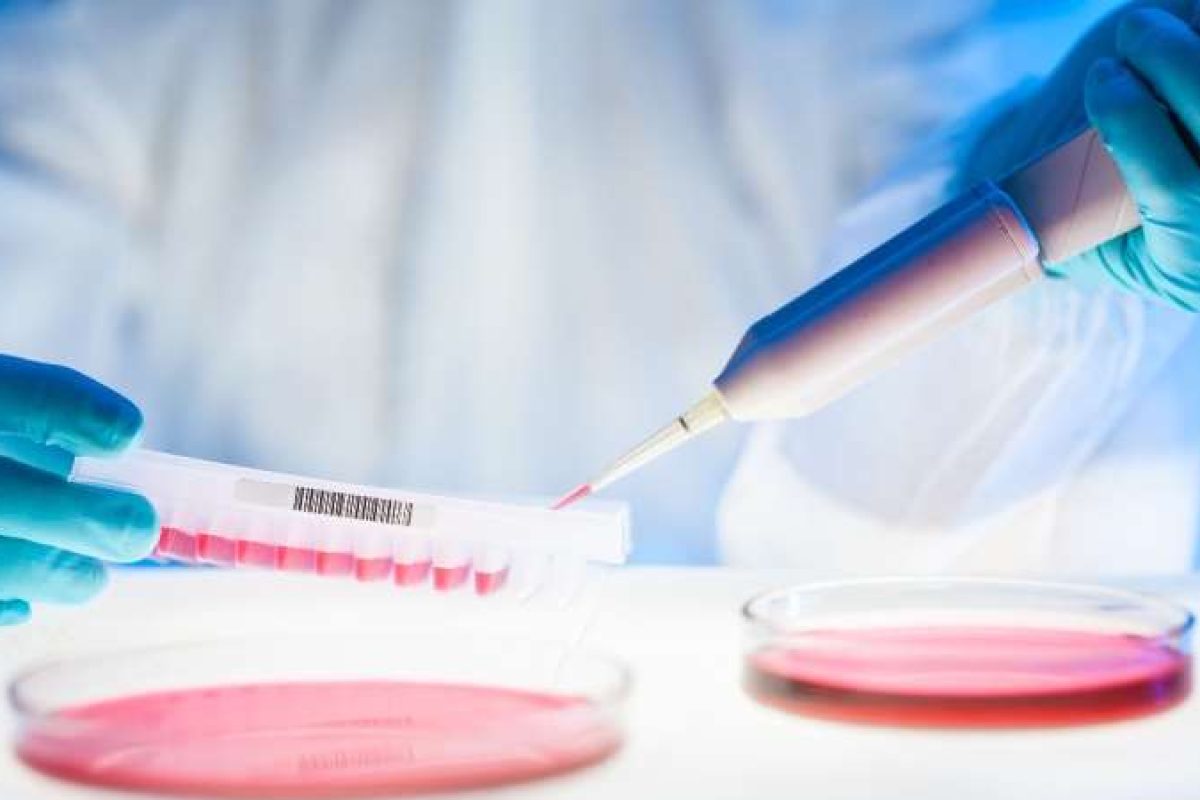
Semarion was voted one of the SLAS2025 New Product Award winners. DDW’s Diana Spencer catches up with CEO and Co-founder Jeroen Verheyen to find out how the company has bridged the worlds of science and engineering.
DS: Congratulations on being one of the SLAS2025 New Product Award winners. How did it feel to be recognised at such a well-respected industry event?
JV: It was an incredibly exciting and validating moment for our team. SLAS is the world’s largest community focused on life sciences tools and technologies, and the 2025 meeting in San Diego brought together over 6,700 attendees and more than 400 exhibitors—ranging from innovative start-ups to major industry incumbents. To stand out in that environment, and to be selected by a judging panel that included senior pharmaceutical executives and key opinion leaders in drug discovery, was a real honour.
This recognition reflects a growing awareness across the industry that cell-based assays—particularly those involving adherent cells—are overdue for a step-change. These workflows still rely heavily on manual, time-consuming processes that are difficult to automate or scale. With our SemaCyte Microcarrier Platform, we’re reimagining how adherent cells are handled, enabling the next generation of integratable, automatable, and scalable assay solutions. Being acknowledged by SLAS confirms that we’re tackling a problem the industry is ready to solve.
DS: Semarion was also named a Rising Biotech Star at Genesis 2021, one of Business Weekly’s Killer50 Life Sciences Companies, and one of the Top 5 Most Exciting Emerging Solutions at Future Lab Live 2023 – what’s so unique about your offering?
JV: Semarion is an advanced materials company spun out of the Cavendish Laboratory at the University of Cambridge, and our mission is to transform how adherent cells—used in 80–90% of all in vitro drug discovery assays—are handled, stored, and assayed.
Traditional adherent cell workflows are slow, manual, and difficult to automate. Cells must be cultured, plated, attached, and only then can assays begin. In contrast, our SemaCyte microcarriers turn adherent cells into assay-ready, barcoded reagents. These are microfabricated, ultra-miniaturised, magnetic flat surfaces—essentially microscopic petri dishes with optical barcodes—that support 2D cell growth and can be frozen, stored, and later dispensed directly into standard 384-well plates.
SemaCytes can be moved using liquid handlers, guided magnetically, and seamlessly integrated into existing automation systems.
It’s that rare intersection of deep tech innovation and practical usability that makes our platform unique. We’ve designed something novel, but also immediately adoptable—and that’s a combination the industry is actively seeking.
DS: How do you envisage SemaCyte Microcarriers will accelerate the pace of drug discovery? In which therapeutic areas could they have the greatest impact?
JV: Early-stage drug discovery depends on fast, reproducible, and scalable assays—especially when working with complex cell models. SemaCytes fundamentally improve how adherent cells are prepared, stored, and used. Cells can be grown on SemaCyte microcarriers, frozen, and later dispensed directly into standard 384-well plates. This reduces setup time from days to hours and ensures batch-controlled consistency, improving data reliability.
We see strong interest across oncology, immunology, and neuroscience—areas heavily reliant on adherent models. There’s growing demand from groups focused on functional and phenotypic assays, including cell painting, biologics, targeted protein degradation, and arrayed CRISPR screening.
DS: What technical challenges have you had to overcome to get to where you are now? What challenges do you foresee in the future and how are you preparing for these?
JV: The biggest technical challenge was bridging two worlds: translating a materials science innovation into a biological tool that integrates seamlessly with real-world drug discovery workflows. As a biologist, I partnered with Tarun Vemulkar, a materials scientist, and we had to learn to speak each other’s technical language. The real innovation happened at that interface—understanding the physical constraints of microfabrication while preserving cell viability, morphology, and assay compatibility.
That interdisciplinary mindset is now embedded in our company: Semarion is 50% biologists and 50% engineers, and that blend allows us to keep pushing the boundaries of how semiconductor technologies and materials can transform cell-based assays.
We’re now in a scale-up phase. Demand is growing, and we’re expanding both our manufacturing capabilities and assay breadth. SemaCytes are already compatible with standard 384-well plate workflows, but our roadmap includes new use cases like imaging flow cytometry, optical pooled CRISPR, organoid and spheroid cultures, and cell therapy screening.
A unique challenge we face is that our customers are inventive—they keep imagining new ways to use the platform. It’s an exciting position to be in, and we’re adapting fast to support that creativity with robust, scalable solutions.
DS: You started out on a NanoDoctoral Training Center (NanoDTC) Translational Research Fellowship at the University of Cambridge. How did you move from academic research into a viable commercial proposition? Are there benefits to being based in the ‘Golden Triangle’?
JV: The NanoDTC Fellowship was instrumental in launching Semarion. It provided the funding, structure, and translational focus we needed to move from academic research to a commercially viable concept. During that time, Tarun and I developed early prototypes of the SemaCyte platform, validated them with industry users, and filed two foundational patent families. It gave us a clear mandate: build something scientifically robust but commercially relevant.
One key lesson we learned early on was to avoid building niche tools that required dedicated infrastructure. The strongest demand came from pharma scientists who wanted a plug-and-play solution—something that integrated directly into existing workflows with minimal disruption. That feedback shaped our entire product strategy.
Being based in Cambridge, at the heart of the UK’s Golden Triangle, has also been a huge advantage. The region gives us direct access to world-class talent, early adopters, and top-tier pharma and biotech partners. Proximity matters—it’s made it easier to run pilots, secure feedback loops, and iterate quickly.
Cambridge also attracts a significant share of the UK’s life sciences investment—roughly 30–35% of national VC funding—due to the University’s strong spin-out ecosystem and the presence of companies like Abcam and AstraZeneca. Combined with London and Oxford, the Golden Triangle receives the vast majority of UK life sciences capital. That access to funding, combined with a vibrant translational community, has played a key role in getting Semarion off the ground.
DS: Semarion raised seed funding of £2.14m in 2022 and have built on that since. How have you navigated a difficult investment climate?
JV: The past few years have been challenging for biotech: IPOs have slowed, VC fundraising has tightened, and Series A rounds have become harder to close. There’s been a clear derisking trend, with fewer deals and a stronger focus on traction and capital efficiency.
We’ve responded by staying lean and execution focused. We haven’t taken non-dilutive grants—instead, we’ve built the business through commercial proof. Our focus has been on working with top-tier pharma, delivering real-world use cases, and securing repeat pilot projects. While adoption cycles in pharma are inherently long, there’s been strong and growing interest in what we offer.
One major trend has played in our favour: the push for process efficiencies. Pharma wants to reduce cost and increase data output per experiment—and SemaCytes are ideally positioned to deliver on that promise. We also see growing interest in tools that can feed large, high-quality datasets into AI platforms. Those two trends—efficiency and data quality—are major drivers behind the current excitement about our platform.
DS: What advice do you have for other start-ups hoping to launch in a similar field?
JV: First, listen to your users early and often. If you’re building a deep tech product, make sure you’re solving a real-world problem—not just a technically interesting one. That alignment is what drives adoption.
Second, design for broad applicability without losing focus. Especially in pharma, niche solutions often fail to scale. Budget holders and operational teams want technologies that integrate easily with existing workflows and infrastructure. Ensure you identify a few high-impact applications where you can demonstrate clear value and drive early adoption.
Third, engage stakeholders at every level. You’ll need champions both at the bench and in leadership roles to drive adoption. Pharma is notoriously change-resistant, so creating internal momentum is key.
Lastly, surround yourself with the right people. Building the right team early on—people who share your vision and have the drive to push it forward—makes all the difference. Much like your first customers, they become your internal advocates, helping you weather the ups and downs of the journey.
DS: What do you hope to achieve in the next five to ten years?
JV: Our vision is for SemaCytes to become the new standard for working with adherent cells in drug discovery—enabling faster, more scalable, and more reproducible biology across the industry.
Over the next five years, we’ll expand into the US and EU markets, scale our manufacturing operations, and deepen adoption in high-content screening workflows. At the same time, we’re developing the next generation of SemaCyte-enabled solutions, including imaging flow cytometry and 3D cell systems such as organoids and spheroids.
Our broader ambition is to become a foundational technology for modern, automated biology. We want SemaCytes to power the labs of the future—enabling multiplexed, miniaturised, and machine-readable experiments that feed directly into AI platforms and self-driving lab systems.
Ultimately, we’re solving a long-standing bottleneck in life sciences: making adherent cells easy to use, scalable, and automation ready. By doing that, we aim to accelerate discovery and unlock the full potential of next-generation drug development.
Biography:
 Jeroen Verheyen is the Co-founder and CEO of Semarion, where he leads the development of transformative technologies at the intersection of life sciences and materials physics. With advanced degrees in Biomedical Sciences and Nanotechnology, Verheyen’s research experience spans drug delivery systems at MIT, neuroinflammation models at the University of Cambridge, and product development in both biotech and medical devices.