Human ES Cell Derived Functional Cells as Tools in Drug Discovery By Dr Petter Bjorquist, Dr Peter Sartipy, Dr Raimund Strehl and Dr Johan Hyllner The drug discovery process is extremely-time consuming and expensive. Consequently, novel approaches for these processes and for reducing late-stage attrition are of great value for… Read More
Perspectives for ADMET Integration in the Discovery Process By Dr Constance Hofer ADMET (ADME/Tox), is a relatively new symbiotic acronym for the investigation of basic compound behaviour in terms of absorption, distribution, metabolism and excretion, combined with assessments of toxicity. The emergence of ADMET instead of ADME reflects the growing… Read More
Compound Storage Evolution: Unlocking the right combination By Husam Fayez, Dr John Morin and Dr Jeff Paslay Delivering the correct compound, at the right concentration, to the correct place, at the expected time across different facilities, should be the aim of all liquid sample management teams. This article discusses how… Read More
William Downey and Dr Shauna Farr-Jones GPCRs are the most studied drug target class and have a proven record as valuable drug targets, with 40-50% of marketed drugs being modulators of GPCR function. Despite the intense effort focused on these targets by the pharmaceutical industry over many years, numerous challenges… Read More
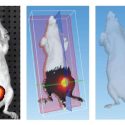
How Non-invasive Visible Light Imaging Can Change Drug Discovery Dr Peter Lassota and Dr Anjani Shah In the past decade, non-invasive visible light imaging gained acceptance not only as a valuable research tool, but also as a means of evaluating new compounds for efficacy and pharmacodynamic properties in drug discovery. Read More
Challenges and opportunities for the greening of separation science in the pharmaceutical industry Dr Christopher J. Welch Opportunities for reducing solvent consumption and waste generation in separation sciences used to support industrial pharmaceutical discovery and development are presented and discussed in this article. Several approaches are considered for ‘greening’ analytical… Read More
Monochromator vs Filter-based Plate Readers By Dr John Comley This article is based around feedback obtained in HTStec's recent Multi-Mode Microplate Reader Trends 2007 Report. It highlights findings on what influences reader choice, current use of different plate reader detection modalities, main target types/classes investigated using plate readers, sources of… Read More
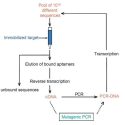
The Power of APTAMERS in the Drug Discovery Process Professor Michael Famulok Methods of combinatorial biochemistry allow the identification of nucleic acid sequences, or aptamers, which can bind their target molecules with high affinity and specificity and are able to efficiently inhibit their biological function. Macugen, the first aptamer-based drug… Read More
Designing animal models for evaluation of therapeutic and vaccine candidates for emerging and biodefence-related pathogens By Dr Colleen Jonsson and Dr Peter Silvera While a number of promising drug therapies and vaccines have been identified for safeguarding bioterrorism organisms and diseases, further development requires well characterised animal models for testing… Read More
Automated Biobanking - The next big step for biorespositories By Dr John Comley As a significant proportion of the many newly established national, regional and disease-specific biobanks or biorespositories contemplate how they will enable enhanced sample integrity, tracking and audit trail, there has never been a more opportune time to… Read More
Tools for Target Identification, Validation and Biomarker Discovery By Dr Paul Denny-Gouldson As automation in the drug discovery arena increases then so does the amount and complexity of the data. We discuss an emerging solution that now integrates various technologies to provide a scientific data intelligence tool giving scientists increasing… Read More
Personalised Medicine - Technological innovation and patient empowerment or exuberant hyperbole? By Adam W. Culbertson, Dr Stephen J. Valentine and Dr Stephen Naylor The current paradigm of modern healthcare focuses on patient symptoms, subsequent diagnosis and corresponding treatment of the specific disease(s). Escalating healthcare costs and a trial and error… Read More
Establishment of an open access compound management facility By David Camp This article covers the establishment of an open access compound management facility in Australia to stimulate applied, basic and translational biomedical research. The paradigm for probing biological processes and drug discovery via small molecules has changed significantly over the… Read More
Serial vs Direct Dilution - Time to apply new thinking to IC50 determination and dose-response analysis? By Dr John Comley The serial dilution method is standard practice in the preparation of doseresponse series for IC50 determination. However, it is well recognised that inadequacies in the liquid handling or mixing technique… Read More
Lean Thinking for Drug Discovery – Better Productivity for Pharma By Dr Edward W. Petrillo Success in drug discovery controls the success of the pharmaceutical enterprise. The molecular structure of every drug candidate, and the body of knowledge that will guide its use in the treatment of disease, are established… Read More
Sharing Risks and Rewards - Basis for a turnkey pharma-biotech alliance in osteoarthritis Dr Andre Hoekema In June 2006, Galapagos and GlaxoSmithKline’s Center of Excellence for External Drug Discovery (CEEDD) formed a multi-year worldwide alliance to discover and develop novel drugs for osteoarthritis. The focus of the alliance will be… Read More