Cell culture

Brain inflammation
#Cell culture #Drug discovery #High throughput screening #In vitro #Neuroscience

Balancing in vitro models of neuroinflammation

Dr Gareth Edwards, Senior Bioassay Scientist at Cellomatics Biosciences, explores how modern techniques and high-throughput screening can enhance workflows in neuroinflammation.  Inflammation occurs when specific stimuli induce phenotypic changes by activating signalling cascades that amplify downstream responses. It plays vital roles in both disease progression and tissue repair; in other words,… Read More

#Exclusive Content

Precision medicine
#Cell culture #Drug targets #Heart disease #Precision medicine

Partners explore precision medicine approach to heart disease  

PlaqueTec and the Welch research group at the Babraham Institute have announced the completion of their collaboration to evaluate lead compounds predicted to bind a pro-inflammatory protein discovered by PlaqueTec.  The project was funded by the UKRI-BBSRC Campus Innovation Award (CIA), via the Babraham Research Campus Collaboration… Read More

#News

#Cell culture #Cell Science #Nanomedicine / nanotechnology #Organoids #The University of Manchester

Lung organoids provide animal alternative for nanomaterial testing

Lung organoids grown by University of Manchester scientists have been shown to mimic the response of animals when exposed to certain nanomaterials. The study at the University’s NanoCell Biology Lab at the Centre for Nanotechnology in Medicine is published in the journal Nano Today. Read More

#Editor's Choice #News

Scientist using a well plate
#Automated workflows #Cell culture #Drug discovery #In vitro assays #minit #Semarion

Early adopters get access to new microcarrier platform

Semarion, a University of Cambridge spin-out company from the Cavendish Laboratory, has opened the Early Adopter Programme for its SemaCyte Microcarrier Platform. The platform aims to overcome the limitations associated with adherent cell culture and assaying workflows by enabling small colonies of cells to be moved… Read More

#News

Two scientists in a research laboratory
#App note #Artificial intelligence (AI) #Assays #Cell culture #Cellular assays #Cellular imaging

Discover how to streamline migration assays with in-incubator monitoring

Cell migration assays can be time-consuming and challenging, from identifying and ensuring assays are imaged at the appropriate time, to properly measuring wound closure. In this new App Note, discover the benefits of Evident’s CM cell culture monitors, which provide label-free, quantitative results, consistent results throughout your lab, and are… Read More

#News

#Artificial intelligence (AI) #Assays #Cell culture #Cellular assays #Cellular imaging

Streamline migration assays with in-incubator monitoring

Cell migration assays can be time-consuming and challenging, from identifying and ensuring assays are imaged at the appropriate time, to properly measuring wound closure. Evident’s CM cell culture monitors provide label-free, quantitative results, consistent results throughout your lab, and are cost-effective. Researchers at ACEL simplified the cell migration process by… Read More

#Resources

Neurons
#App note #Cell culture #Human disease models #In vivo #Live cell analysis #Sartorius

App Note: Kinetically quantify neuronal outgrowth

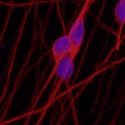
Monitoring neuronal morphology in long-term in vitro cell cultures is critical for characterisation and evaluation of disease models and to understand neuronal development. Ideally, approaches to track neurite dynamics would allow continuous automated measurements of structural parameters, including neurite length and number of branch points. These methods should be non-perturbing… Read More

#News

#App note #Cell culture #Human disease models #In vivo #Live cell analysis #Sartorius

Kinetically quantify neuronal outgrowth using live-cell analysis

Monitoring neuronal morphology in long-term in vitro cell cultures is critical for characterisation and evaluation of disease models and to understand neuronal development. Ideally, approaches to track neurite dynamics would allow continuous automated measurements of structural parameters, including neurite length and number of branch points. These methods should be non-perturbing… Read More

#App Notes #Intelligence #Resources

#Cell culture #Drug development #Drug discovery #Guide #iPSC

New Guide: How to get the best out of your neurons

A new Guide is now available entitled ‘Four cell culture hacks to get the best out of your neurons’, sponsored by bit.bio. Make your iPSC-derived glutamatergic neuron cultures a success every time with these tips from a neuronal cell culture expert. Download the Guide to learn: How to prevent glutamatergic… Read More

#News

#Cell culture #Drug development #Drug discovery #Guide #iPSC

Four cell culture hacks to get the best out of your neurons

Make your iPSC-derived glutamatergic neuron cultures a success every time with these tips from a neuronal cell culture expert. In this Guide, you will learn: How to prevent glutamatergic neurons from detaching from culture surfaces How to formulate extracellular matrix coatings to promote cell adherence The best timings for media… Read More

#Intelligence #Resources

#Advanced Therapies #Cell and gene therapy #Cell culture #Drug development #Drug discovery #Whitepaper

Whitepaper: From bench to billions in cell and gene therapy

Download our new whitepaper ‘From bench to billions: A guide to facilitating scale-up of adherent cultures for cell and gene therapies’, brought you by Corning. Given the potential of emerging advanced therapies, market demand is likely to continue to grow. Generating the required quantity of cells efficiently becomes even more… Read More

#News

#Advanced Therapies #Cell and gene therapy #Cell culture #Drug development #Drug discovery

From bench to billions: A guide to facilitating scale-up of adherent cultures for cell and gene therapies

Given the potential of emerging advanced therapies, market demand is likely to continue to grow. Generating the required quantity of cells efficiently becomes even more challenging when the cells of interest are attachment-dependent, such as induced pluripotent stem cells (iPSCs). The choice of cell culture platform will have significant operational… Read More

#Resources

#Cell culture #Droplet-array sandwiching technology #Screening

Droplet-array sandwiching: Biochemical tools from droplets

Scientists showcase how the concentration of chemicals in droplets can be efficiently controlled by running experiments in the tiniest of cell cultures. These findings could be useful for more effective drug screening and cell-based analysis. Droplet-array sandwiching technology (DAST) lets one use droplets as tiny reaction chambers or cell culture… Read More

#Exclusive Content #News

#3D modelling #Cell culture #Organoids

3D Model Systems ebook out now – Spheroids, Organoids, and Tissue Models

Culturing cells in 3D is simply a more realistic way to model how cells move and function in vitro. Spheroids, organoids, and more complex 3D systems have been invaluable to research, drug discovery, and personalised medicine. This e-book, sponsored by Corning, offers a practical guide for demystifying spheroids and organoids… Read More

#DDW eBooks

#3D imaging #Cell culture #Organoids

New eBook: Spheroids, Organoids, and Tissue Models

Culturing cells in 3D is simply a more realistic way to model how cells move and function in vitro. Spheroids, organoids, and more complex 3D systems have been invaluable to research, drug discovery, and personalised medicine. This ebook, sponsored by Corning, offers a practical guide for demystifying spheroids and… Read More

#News

#Cell culture #High throughput screening #Pharma #SLAS Europe

Anticipating SLAS Europe 2022: Reflections and expectations

Jeremy Simpson is a keynote speaker for SLAS Europe 2022 and shares with Megan Thomas what excites him about this year’s programme and what he hopes the conference will cover, including approaches for standardisation in 3D cell models and new applications of data science. The day-to-day Simpson describes his set… Read More

#Exclusive Content