Predictive tests and personalised medicine By Dr Eddie Blair Acceptance of the personalised medicines paradigm is strictly dependent on this approach clearly benefiting patients with minimal effects on the actual delivery of healthcare. The use of molecular diagnostics to predict how an individual will respond to a particular medicine, in… Read More
Multiplexing for biological relevance in high throughput screening By William P. Downey, Dr Jennifer Hartigan and Cindy Liu The multiplexed assay is a technique used increasingly in high throughput screening (HTS) labs to study the complex environment of a target, according to HighTech Business Decisions’ (HTBD) industry report High Throughput… Read More
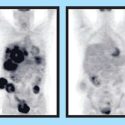
By Dr Susanta K. Sarkar The current challenges facing drug discovery and development in terms of attrition are well documented. This article discusses how molecular imaging approaches from bench to bedside can not only streamline drug development, but also open up new opportunities in the treatment management of targeted therapies. Read More
Share Share Tweet Email Stem Cell Therapies: Assessing the commercial opportunity Stem Cell Therapies: Assessing the commercial opportunity By Su Webber, Andrew Millest and Mark Williams Restructuring and reorganisation is routine and relentless in the pharmaceutical industry, with a future focus essential for effective strategic decision making. In recent years,… Read More
Restructuring Proteomics to Enable Personalised Cancer Care By Dr Henry Rodriguez The genomics community has made great strides in our understanding of the molecular basis of cancer and these advances are slowly beginning to change the way we diagnose and treat patients. But genomic studies alone cannot capture the complete… Read More
The Benefits of Biological Modelling By Gordon Webster The enormous challenge posed by the complexity of biological systems represents a potential intellectual impasse to researchers and threatens to stall future progress in basic biology and healthcare. In recent years, increasing reliance on correlative approaches to biology has failed to resolve… Read More
Generation II DNA Sequencing Technologies By Dr Stephen F. Kingsmore, Dr Jenny C. van Velkinburgh, Dr Joann Mudge, and Dr Gregory D. May Generation II DNA sequencing has been widely heralded as a disruptive technology, generating tens of millions of random short sequences at efficiencies up to 20,000-fold greater than… Read More
Biomarker Signal Definition By Dr Gordon F. Kapke and Dr Nigel Brown Due to the numerous challenges in the industry, pharmaceutical companies are examining all aspects of the drug development process and rebuilding their associated business models as necessary. Companies need to improve success in late stage development, but what… Read More
qPCR Assays - End user practices and latest vendor offerings By Dr John Comley This review provides an insight into real-time quantitative PCR (qPCR) assays today. Using end-user feedback it investigates interest in the targets for qPCR applications; primary application areas for qPCR analyses; the importance of emerging applications; how… Read More
Next Generation Immunoassay Systems and the Revival of Protein Biomarkers By Dr John Todd and Dr Sara J. Agee Proteins are the machinery that drive most biological processes; however, measuring their concentrations at low levels has been historically impeded by a lack of appropriately sensitive technology. Advances in immunoassay technology,… Read More
Challenges in Transferring Bioanalytical Methods By Dr Chris Beaver Drug development is arduous and expensive with any delay to market resulting in significant financial impact. Delays at any stage of the process cause challenges to programmes, however, some are easier to predict and plan for than others. Development of bioanalytical… Read More
Progress in the Implementation of Label-Free Detection - Cell-based assays By Dr John Comley Progress made in the use of impedance and optical grating technologies for label-free detection of cell-based assays where examined in HTStec's recent Cell-Based Label-Free Detection Trends report. Uniquely all of these label-free offerings are plate-based and… Read More
Emerging Real-time PCR Applications Dr Mikael Kubista Since its introduction on the commercial market little more than 10 years ago, real-time PCR has become the main technical platform for nucleic acid detection in research and development, as well as in routine diagnostics. In 2007 the real-time PCR market revenue in… Read More
Data Overflow Progress in Automating and Streamlining Data By Peer Staehler The genomic world moves faster and faster. The pool of data has exploded exponentially in the past few years due to the growing knowledge about the relevance of genomic findings for medicine and the environment. Like all other developing… Read More
The Potential of Molecular Imaging for Drug Discovery & Development By Dr Ken Rubenstein By combining cutting-edge biomedical research with the time-proven ability to visualise the unseen, the rapidly emerging field of molecular imaging promises to open new vistas for a wide range of individuals, from basic researchers to scientists… Read More
Trends in the microRNA Marketplace By Kathy Gray and Dr Enal Razvi In this article, a recent market analysis is discussed aimed at understanding the market landscape, trends and opportunity in the rapidly-expanding microRNA marketplace. These market analyses are presented in detail in a recently published MicroRNA 2008 market report. Read More