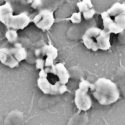
Exploring The Feasibility of Human Antimicrobial Peptides For New and More Efficient Antibiotics By Dr Max Ryadnov To help combat decades of stagnation in antibiotic development, a team led by the National Physical Laboratory conducted two studies into the antimicrobial peptides that fight infection in our bodies and the feasibility… Read More
The Drug Repositioning Revolution: Rescuing & Repurposing Drugs By Dr Monika Green and Dr Kate Hudson-Farmer Cost containment and improving ways of treating people are key drivers for healthcare systems. Unfortunately, these do not often go hand in hand. Finding novel therapeutics with enhanced efficacy is both time consuming and… Read More
Biomarker Discovery: The Need For New Generation Peptide-Protein Microarrays By Dr Nikolai Schwabe and Katherine Catchpole The progression from health to disease is marked by significant biological changes within an individual (1). Clinically presenting symptoms, however, can be non-specific and variable enough to hinder diagnosis, and may appear only after… Read More
The Great Neuro-Pipeline Brain Drain - Why Big Pharma Hasn't Given Up On CNS Disorders By Julia Skripka-Serry Central Nervous System (CNS) disorders bear an economic burden of more than $2 trillion in the US and EU and rake in upwards of $80 billion a year for the pharmaceutical industry. Read More
Partnering with the right CRO is a winning strategy for companies big and small By Dr Davide Molho The Bio-Pharma business model is undergoing radical changes. Over the last two decades, we have seen the biopharmaceutical industry gradually become more willing to look externally and embrace the concept of outsourcing… Read More
Unrevealing Biological Secrets By Single Cell Expression Profiling By Dr Mikael Kubista and Dr Anders Ståhlberg During the last 30 years exceedingly sensitive and accurate technologies have been developed to measure and quantify amounts of nucleic acids and proteins. With techniques such as quantitative real-time PCR (qPCR) and nextgeneration sequencing… Read More
A Decade of RNAi Screening: Too much hay and very few needles By Bhavneet Bhinder and Dr Hakim Djaballah RNAi screening is arguably the fastest growing field with the premise to better understand gene function at the genome level. It has been hailed as the second genomics wave, and in… Read More
Stem Cells Rapidly Gaining Traction in Research and Drug Discovery By Dr John Comley A recent market survey on stem cells in research and drug discovery showed that despite a significant amount of hype and hope around stem cells, most drug discovery-related efforts today still fall into the category of… Read More
Laboratory Automation Advances High Throughput Bio-Inspired Research Into Personalised Medicine By Dr Joshua LaBaer The Biodesign Institute at Arizona State University plays an important role in addressing global healthcare challenges by developing bio-inspired solutions that can be translated into commercially viable products and clinical practices. With 11 different research centres,… Read More
Academic Ingenuity and Corporate Partnerships: New models in human health ventures bring value to all By Professor Paul Agris Many disapprove of science faculty at American universities procuring corporate ventures that support research, instead of primarily functioning as an instructor, mentor and basic researcher. This perception is most evident surrounding… Read More
Multi-Parameter Flow Cytometry Technology Advances for Rare Cell Analysis and Sorting By David Gebhard and Dr Diether Recktenwald The study of rare cell populations is important to advance medical diagnostics and therapeutics. For many clinical studies, rare cell counts promise to provide valuable alternate end points; examples are circulating tumour… Read More
There are approximately 7,000 rare diseases, which from a regulatory perspective are defined as those diseases where there are less than 200,000 patients in the US or that affect no more than five in 10,000 of the general population in the EU. Such diseases usually have a genetic basis, often… Read More
Realising The Genome's Potential In The Context Of The Living Cell By Dr Amr Abid A decade ago, with the completion of the Human Genome Project (HGP), scientists had the long-awaited sequence of the human genome in hand. Once decoded, this invaluable source of data was anticipated to reveal the… Read More
Adoption Of High Content Screening At High Throughput Screening Laboratories By William Downey and Dr Jennifer Hartigan Over the past five years, a majority of HTS laboratories have adopted high content screening (HCS) in their operations. As HTS laboratories have sought more biologically-relevant assays, cell-based assays and high content screening… Read More
Evolution Of Flow Cytometry As A Drug Screening Platform By Dr Rob Jepras and Dr Steve Ludbrook Flow cytometry is an established technology used in many research and clinical laboratories. The largest users are immunologists and haematologists who use it for cell sorting and analysis. Increasing requirements for processing larger… Read More
DNA Sequencing: Latest Developments In Next-Generation Sequencing By Andrew Szopa-Comley Next-generation sequencing has expanded the frontiers of genomic research, opening up new avenues of enquiry and offering insights into diverse areas of biology. Rapid developments in this field are dramatically lowering costs and increasing speeds. With the arrival… Read More