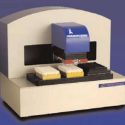
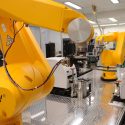
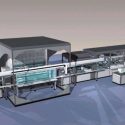
Secondary Screening Workstations - The emergence of compact turnkey solutions that work By Dr John Comley With the launch of new workstations focused on secondary screening applications not only are we witnessing the shrinkage of laboratory automation but we are seeing the emergence of true walk-away solutions, ie set up… Read More
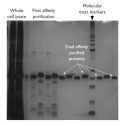
Protein Arrays for Assessment of Target Selectivity By Professor Ian Humphery-Smith, Dr Erik Wischerhoff and Dr Ryuji Hashimoto Transforming knowledge of the human genome into a lead optimisation tool. Genomics activity has been criticised for having elucidated a plethora of potentially interesting drug targets, each awaiting further validation, but having… Read More
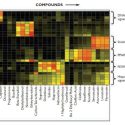
Better drugs by MICROARRAY By Dr Mark Schena Microarray analysis allows the elucidation of biological processes and pathways on a genomic scale. This revolutionary technology promises an unprecedented view of drug action and side reaction, the ability to identify drug targets and optimise lead compounds, the capacity to predict patient… Read More
Predictive chemoinformatics applications to the pharmaceutical industry By Dr Leslie J. Browne and Laurie L.Taylor While significant advances in chemoinformatics present tremendous opportunities to improve human health, the future of chemoinformatics in the pharmaceutical industry is not without significant challenges. Chemoinformatics is the result of collective advances in chemistry, biology,… Read More
Fine-tuning the technology strategies for lead finding By Sandra Fox, Dr Shauna Farr-Jones, Dr Lynne Sopchak and Dr Helen Wang HTS has become the workhorse of pharmaceutical and biotechnology companies' drug discovery efforts, with expanding responsibilities and increasing pressures to screen more targets with better compound libraries to find high-quality… Read More
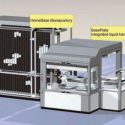
Nanolitre Dispensing - On the point of delivery By Dr John Comley Precise low-volume liquid handling methodologies are still sought after by those interested in enabling miniaturised HTS. This article reviews the need for nanolitre dispensing and provides a current perspective on those emerging technologies that have the potential to… Read More
High throughput genomics and drug discovery - parallel universes or a continuum? By Dr Mark Beggs and Audrey Long HTS has been in place for approximately 10-12 years and has achieved a threeorder of magnitude scale up. Genomics has been in a 'high throughput' mode for approximately four years for… Read More
Lead Generation and Lead Optimisation: the value of linking HT co-structure analysis and HT chemistry By Dr David U Prichard The coupling of High Throughput co-structure analysis with focused library generation is not only proving a powerful general tool in lead optimisation but also increasing the probability of successful discovery… Read More
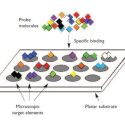
Chemical microarrays - The drug discovery superhighway By Elaine Seeskin While producing targets was once the bottleneck in the drug discovery process, in the post-genomic era this has been superseded by the requirement for high-quality lead structures. As a result of the pool of genomic data and countless unvalidated targets… Read More
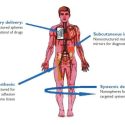
Silicon Technology and Pharmaceutics by Professor Leigh T. Canham, Dr Roghieh S. Saffie, Stephen E. Connor and Dr Roger Aston The recent discovery that, following nanostructuring, silicon can be rendered biocompatible and biodegradable has far reaching and profound long-term implications for the pharmaceutical industry and, indeed, medicine as a whole. Read More
Chemogenomics - A gene family approach to parallel drug discovery By Dr Paul R. Caron, Dr Michael D. Mullican, Dr Robert D. Mashal, Dr Keith P. Wilson, Dr Michael S. Su and Dr Mark A. Murcko Currently available drugs only target around 500 different proteins (4). Recent reports from efforts… Read More
The lab on a chip and its impact on drug discovery by Dr Simon Cowen and Dr Coulton Legge Few technology developments have had as profound an effect on society as the invention of the microchip integrated circuit in the 1960s. Since then, the power of electronic circuits has increased… Read More
Increasing the chances of lead discovery By Sandra Fox, MBA, Dr Helen Wang, Dr Lynne Sopchak and Dr Richard Khoury For HTS laboratories worldwide, the mission is to supply therapeutic groups in the shortest time possible with high quality hits and leads that will become drug candidates. Mounting pressure to… Read More
High Throughput Screening (HTS) - Where next? By Dr Mark Beggs After approximately a decade of maturation and a three orders of magnitude increase in capabilities, High Throughput Screening (HTS) is now an established discipline within pharmaceutical discovery. But opposing stresses exist within the screening world; the resolution of which… Read More
The Industrialisation of Bioinformatics By Dr Alex Titomirov With the completion of the ‘draft’ sequence of the human genome predicting an estimate of 40,000-120,000 genes that describe us, the real work begins. The problem now is not lack of data but lack of tools to thoroughly analyse what we already… Read More
By Dr David C. U’Prichard It is almost axiomatic that the pharmaceutical R&D industry has not achieved in the last decade an increase in productivity (measured as high value NCEs) commensurate with the explosion of new biological information, chemistry techniques and information storage/retrieval/examination systems, let alone the real increase in… Read More