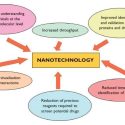
By Dr Amarpreet S Dhiman In terms of drug discovery and development, the role of nanotechnology currently lies in improving diagnostic methods, developing improved drug formulations and drug delivery systems for disease therapy. The breakthrough format of nanotechnology offers innovative solutions, giving researchers greater analytical capacity, improved data quality and… Read More
The Time is Right for Labs to Embrace the principles of Industrial Automation By John Dulchinos and Peter Massaro The pharmaceutical industry has never been a harbinger to change and modernisation, indeed, it is readily accepted that it is a good decade behind other industries in terms of its adoption… Read More
Development of an HTS FabD inhibition assay using a new 384-well filter plate to screen novel antibiotics by Dr Gatan Touyer, Dr Christine Miossec, and Dr Irvin Winkler Several enzymes are involved in the fatty acid biosynthesis (Fab) system of bacterial organisms. Unlike the mammalian FAS enzyme system in which… Read More
Building a uHTS laboratory communications from the frontier By Dr Peter Hodder Through sheer commercial need to conduct HTS reliably, rapidly and economically, science and technology have partnered to move laboratories from semi-automated craft guilds to industrialised uHTS research operations. To the benefit of both the pharmaceutical and HTS technology… Read More
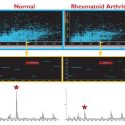
Advances in the imaging of biomolecules: the label-free intrinsic imaging approach By Dr Stuart Hassard, Dr Anthony D. Baxter and Dr John Hassard Many stages in the process of drug discovery require the separation, identification and analysis of biomolecules such as proteins, peptides and nucleic acids. Such analyses have traditionally… Read More
Creating a productive R&D culture By Janet White Increasing R&D productivity is the current mantra of pharmaceutical industry executives. The promise of new technologies and process improvements has been extensively discussed. However, fundamental culture change within research organisations remains the final unexplored frontier to increased productivity. This article introduces the… Read More
Compound Management - In pursuit of sample integrity By Dr John Comley In December 2004 HTStec published its report on Compound Management Trends. This market report summarises the results of a global benchmarking study on pharmaceutical compound management (CM), documenting current practices, issues and future trends in CM, with a… Read More
The Use and Usefulness of Transgenic Systems in the Discovery of New Medicines By Professor Jan Tornell The pharmaceutical industry is faced with the challenge to deliver truly novel medicines to a market under financial pressure when pharmaceutical R&D becomes increasingly difficult and complex. This review will mainly focus on… Read More
The impact of early ADME profiling on drug discovery and development strategy By Dr Jianling Wang and Dr Laszlo Urban The increased costs in the discovery and development of new drugs, due in part to the high attrition rate of drug candidates in development, has led to a new strategy… Read More
Continued miniaturisation of assay technologies drives market for nanolitre dispensing By Dr John Comley The continued miniaturisation of assay technologies in high throughput screening, compound management and protein crystallisation has created a pressing need for improved nanolitre liquid handling systems. A recent industry market survey suggests that although the total… Read More
The Current Bioinformatics Analytical Software Landscape By Charles Chang With the vast amount of biochemical data generated from experiments conducted by research laboratories around the globe, there is strong demand for software to analyse and manage the data effectively. Analytical software can be utilised to analyse virtually every single experiment,… Read More
New Flash Imagers: Facilitating higher throughput functional GPCR assays By Dr John Comley The recent availability of tailored automation solutions that combine liquid handling at the reading position with the latest innovations in low light imaging technology are providing screeners with new tools for the measurement of high throughput flash… Read More
PATCHERS vs SCREENERS: divergent opinion on high throughput electro-physiology By Dr John Comley The prospect of enabling higher throughput electro-physiology (patch-clamping) has created much expectation from scientists within the ion channel community. Yet there are opposing views among traditional electro-physiologists and screeners as to the needed specification and the preferred… Read More
By Dr Steven Bodovitz and Dr Scott D. Patterson The potential for parallel protein-based analyses to define a new era in diagnostics and drug development is generating considerable excitement in the field of proteomics. However, the discovery of differentially expressed proteins that correlate with a disease state or a drug… Read More
ASSAY INTERFERENCE - A limiting factor in HTS? By Dr John Comley With current HTS focused on better quality hits, the necessity to differentiate between true and false results puts increasing emphasis on the robustness of the assay technology. This article explores the common causes of assay interference, the effect… Read More
The cost and value of three-dimensional protein structure By Professor Raymond C. Stevens During the past few years we have seen the cost of protein three-dimensional structure determination begin to converge by protein family type, there has been a commoditisation of high-throughput structure based drug discovery technology components, and the… Read More