
Shining a light on the surfaceome – the new frontier in cancer drug discovery
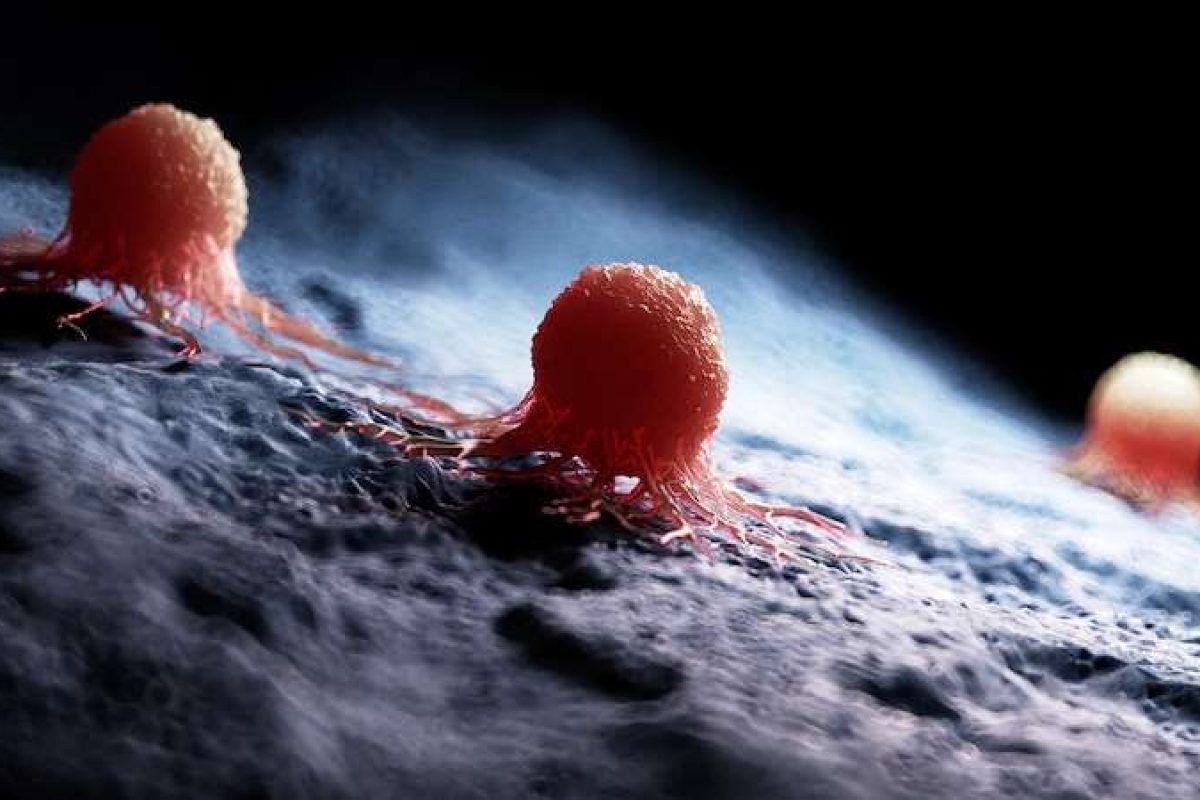
Reece Armstrong examines the advances being made in identifying cell surface proteins and what this means for cancer drug discovery.
There have been some landmark FDA approvals in recent years – but not everyone has picked up on the significance of its decision to green-light Merus’ lung and pancreatic cancer drug Bizengri (zenocutuzumab). Approved for advanced or unresectable NRG1-positive pancreatic adenocarcinoma and non-small cell lung cancer, the magnitude of the decision lies in Bizengri’s novel mechanism of action.
It’s arguably one of the first drugs approved that works by exploiting a protein community on the surface of a cancer cell, rather than a single target.
Exploiting protein communities is an important concept as the pharma industry searches for ways to make drugs that are more targeted at cancer cells, reducing the likelihood of off-target events and side effects where healthy tissues are targeted.
Cell surface proteins are rich sources of targets for cancer drugs and many of the advances in cancer research in recent years are based on binding to antigens commonly found on the surface of cancer cells but are less common in healthy tissue.Nevertheless, there are off-target effects, as throughout the trillions of cells in the human body, it’s not unlikely that the antigen will be expressed somewhere and therefore also targeted by the drug, an effect termed on-target, off-tissue toxicity.
While there are many targets still left unexploited that could lead to new novel therapies, some researchers believe that the pool of suitable single targets might not be endless and could still lead to side-effects.
Fewer than 30 known surface proteins form the basis of all approved cancer-targeted therapies of all modalities, including antibody-drug conjugates (ADCs), T-cell engagers, CAR-T cells and radiopharmaceuticals.
Scientists think that by looking at the entire surface of a cancer cell and its antigens, it could be possible to target groups of proteins that are more likely to be found on tumour cells, and less likely to occur on healthy tissue.
By looking at the map of proteins on the surface of a cancer cell, known as a surfaceome, it could be possible to exploit these unique features known as protein communities for new therapies.
This is what Bizengri does – a bispecific antibody, the drug binds to HER2 with one branch of its “Y”-shaped structure, while the other branch binds to the HER3 protein that is commonly found nearby. This in turn blocks HER3 signalling, and with it a common resistance mechanism caused by dimerisation of HER2 and HER3.
This blocks the action of the mutated NRG1 gene that is implicated in several solid tumour types. It also recruits cancer-killing white blood cells, further enhancing the response.
But, getting an accurate picture of what is happening on the surface of a cancer cell is a challenge, despite the recent advances in scientific research and technology. Established technologies used to identify new cancer targets are limited and may be overlooking potential new cancer-specific surface targets.
RNA sequencing is an established approach, in which mRNA transcripts within the cell are used to produce a readout of the proteins they code for on the cell surface. However, this method is not without issues.
Internal mRNA levels don’t correspond to protein levels on the cell surface, and there’s a lack of information about how proteins are organised on the cell surface.
The readout of the cell’s surface is limited to certain structural features such as transmembrane (TM) domains.
Proteomics is another method currently being used to identify cancer targets. Yet, this method misses proteins that are not covered with chains of sugar molecules (N-glycosylated) and is unable to identify information about the organisation of proteins on the cell surface.
There is a need to develop novel technologies to identify targets on the surface of cancer cells, to create targeted treatments. Increasingly, scientists, biotechs and pharma companies hope to create a more detailed map of the surfaceome.
Surfaceome research has been described in academic papers for more than a decade, but according to Germany’s DISCO Pharmaceuticals, a new approach is needed to maximise its potential.
Based on technology developed at ETH Zurich, DISCO’s technology works by shining a special light onto cell surfaces to map the surfaceome in microscopic detail.
There’s also a direct link between DISCO’s expertise and the Bizengri approval – the NRG1 rearrangements it exploits were originally discovered in lung adenocarcinoma by Lynette Fernandez-Cuesta, then a postdoc in the lab at the University of Cologne where Thomas – founder and CEO of DISCO – and his team worked on the discovery of new targets in lung cancer.
The mechanism was functionally tested and initially confirmed by Dennis Plenker, who then was a PhD student in the lab. The mechanism was subsequently confirmed in vivo by Lisa Werr, a medical student at the time in the lab. The rearrangements were then confirmed by other labs to occur in other cancers, including pancreatic cancer.
Detailed knowledge of the surface of cancer cells, and the arrangements of different antigens on their surface, could lead to new approaches that don’t just key in on a target, but interact with an entire protein community on the cell surface. While the NRG1 rearrangements were identified using other, genomics-based technologies, it took technology developed originally by Bernd Wollscheid at the ETH in Zürich to take the next step and provide a more scalable way for surfaceome discovery, thus paving the way for the launch of DISCO.
Based on this prototype technology, DISCO has successfully built the platform for scalable surfaceome mapping and already identified large numbers of novel candidate targets as well as protein communities on the surface of small cell lung cancer (SCLC) and has since launched three therapeutic programmes in this cancer type.
The surfaceome of microsatellite colorectal cancer (CRC) has recently also been mapped in shorter time, following the experience from the first production data generation process around SCLC.
According to DISCO CEO Roman Thomas, surfaceome technology builds on the progress made in personalised medicine, which began around the turn of the century with the first approval of tyrosine kinase inhibitors, considered to be the first targeted cancer therapies. It also feeds into immuno-oncology built on this progress, where patients responded very well to drugs that enlist the help of the immune system to fight cancer.
Thomas adds that T-cell engagers, such as Amgen’s Imdelltra (tarlatamab), have exploited new targets on the surface of SCLC cells, bringing together delta-like ligand 3 (DLL3) on the tumour surface with CD3 on T-cells.
“Surfaceome technology allows us to identify cell surface proteins at scale, but not only that it can identify proteins that are in close proximity to each other. They form what we call nano-scale organisations, or protein communities.
“We can use the knowledge of all these newly identified proteins as well as the protein communities to address tumour cells more specifically, more selectively, with antibodies that either target one novel target or two proteins or even more.”
This technology overcomes the issue with previous generations of antibodies, and antibody-drug conjugates, which are held back by off-target interactions leading to side-effects. Better targeted drugs can be dosed better because there is greater confidence that they will select cancer cells to destroy rather than healthy ones.
If you look at cell surface protein numbers, very few of them are so clean that they lack expression on normal cells.
“By identifying large numbers of novel proteins on the cell surface we have a massive increase in the pool of potential targets and we can be much more selective in choosing only the best and most suitable ones. Furthermore, by expanding the target space into more dimensions, targeting two antigens that are in physical proximity to one another will give us a leap at least tenfold, or even more, in selectivity to spare normal cells with that same approach,” says Thomas.
According to Thomas, others could also be instructed to target protein communities, leading to better targeted and more effective cancer cell therapies, for example.
He concluded: “We believe we could expand the target space for all cytotoxic surface directed therapeutics of all types of modalities. We believe this has the possibility of dramatically increasing the armamentarium of therapeutics for all advanced solid tumours.”
 About the author
Reece Armstrong is Editor of DDW. He has worked in life sciences and pharmaceutical B2B publishing for seven years and was previously Editor of European Pharmaceutical Manufacturer. He has a master’s degree in Journalism from Newcastle University.