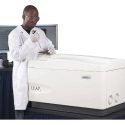
By Dr John Comley Laser scanning cytometers have matured over the past decade to meet the needs of end-users for higher throughput cell analysis, to access to previously difficult applications and to keep pace with the diversity of new fluorophores, validated high content screening (HCS) assay kits and reagents now… Read More
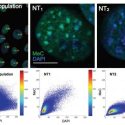
Utilising 3D nuclear DNA methylation patterns in cell-based assays for epigenetic drug screening By Professor Jian Tajbakhsh, Professor Arkadiusz Gertych and Professor Daniel L Farkas Since epigenetic changes are thought to underlie a wide range of complex diseases, the scope of epigenetic drug therapy is likely to expand, as epigenetic… Read More
The Healthcare Industry's Evolving Role in Translational Research an Opportunity for Competitive Advantage By Gregory Venters During the 20th century, medical research has observed enormous advances in basic science discovery, highlighted by the sequencing of the human genome. However, we have not witnessed a corresponding success in the widespread application… Read More
By Dr Stephen Naylor and Toby Cole In this article we describe the current state of Companion Diagnostics and its impact on the pharmaceutical sector, and the need for Companion Diagnostics in the drug discovery and development process. This perspective is augmented by a consideration of the development of Companion… Read More
Design Of Experiments: Useful statistical tool in assay development or vendor disconnect By Dr John Comley The use of design of experiments (DOE) in assay development (AD) has the potential to speed up assay optimisation (ie reduce assay development bottlenecks) and to facilitate a more thorough evaluation of assay variables. Read More
Free Online Resources Enabling Crowd-Sourced Drug Discovery By Dr Antony J. Williams, Valery Tkachenko, Dr Chris Lipinski, Professor Alexander Tropsha and Dr Sean Ekins The availability of freely accessible online resources to enable and support drug discovery has blossomed in recent years. The PubChem platform is now accompanied by a… Read More
Current and Emerging Trends in Cell-Based Assays - Roundtable In 2009 Drug Discovery World hosted a collegial-style roundtable discussion on the present and emerging developments in this exciting and now, fundamental area of drug discovery. The participants are recognised to be thought leaders in this field and represent the pharma,… Read More
Innovations In Drug Discovery Technology By Dr Al Kolb Technology has been a major driver of advances in drug discovery. Automation, nanofluidics, imaging, software and assay technologies have played a major role in getting better data, faster. Is drug discovery at such an advanced state that further improvements are no… Read More
Maximising the impact of technologies on drug discovery through portfolio management By Charles S. Dormer, Dr Mark Beggs, Dr Lynn Brennan and Roanna London The opportunities to invest in new technologies in drug discovery are broad and extensive. Knowing where to place your investment and ensuring return on these investments… Read More
Multiplexing for biological relevance in high throughput screening By William P. Downey, Dr Jennifer Hartigan and Cindy Liu The multiplexed assay is a technique used increasingly in high throughput screening (HTS) labs to study the complex environment of a target, according to HighTech Business Decisions’ (HTBD) industry report High Throughput… Read More
Structure-Based Drug Design - Will crystallisation 'chaperones' make all proteins crystallisable? By Dr Chun-wa Chung Macromolecular x-ray crystallography is usually an integral part of small molecule drug discovery for soluble targets. Recent advances in the crystallography of membrane proteins, such as ion channels and G-protein-coupled receptors, have opened up the… Read More
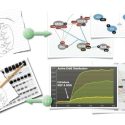
By Dr Susanta K. Sarkar The current challenges facing drug discovery and development in terms of attrition are well documented. This article discusses how molecular imaging approaches from bench to bedside can not only streamline drug development, but also open up new opportunities in the treatment management of targeted therapies. Read More
Automation Of Solid/Powder Dispensing: Much needed, but cautiously used! By Dr John Comley This article investigates solid/powder dispensing in pharma and biotech, examines where it is most used, whether there exists a need to apply automation and what is motivating its wider use today. It reveals how concerns over problematic… Read More
LIMS vs ELNs - Arch enemies or best of friends? By David Morris Since the first appearance of laboratory information management systems (LIMS) in the late 1960s, this technology has become commonplace in many, if not most, research and commercial laboratories. This considerable development in LIMS is in response to… Read More
The Benefits of Biological Modelling By Gordon Webster The enormous challenge posed by the complexity of biological systems represents a potential intellectual impasse to researchers and threatens to stall future progress in basic biology and healthcare. In recent years, increasing reliance on correlative approaches to biology has failed to resolve… Read More
Generation II DNA Sequencing Technologies By Dr Stephen F. Kingsmore, Dr Jenny C. van Velkinburgh, Dr Joann Mudge, and Dr Gregory D. May Generation II DNA sequencing has been widely heralded as a disruptive technology, generating tens of millions of random short sequences at efficiencies up to 20,000-fold greater than… Read More