Preclinical investigations

Respiratory system
#AI #Anima Biotech #Idiopathic pulmonary fibrosis #Lung disease #mRNA #Preclinical investigations

AI mRNA candidate shows early promise in lung fibrosis

A therapeutic candidate which operates through a novel mRNA biology mechanism of action could open new avenues for treating idiopathic pulmonary fibrosis (IPF) patients. Anima Biotech has identified a preclinical candidate, effectively disrupting the transformation of fibroblasts into fully differentiated myofibroblasts. By inhibiting myofibroblasts’… Read More


#News

Stomach pain
#Cancer treatment #Chemotherapy #Napo Pharmaceuticals #Oncology #Preclinical investigations #Puma Biotechnology

Prescription drug could prevent cancer therapy-related diarrhoea

A study in dogs has shown that crofelemer can provide symptomatic relief of diarrhoea associated with the irreversible pan-human epidermal growth factor receptor (HER) tyrosine kinase inhibitor (TKI) neratinib (Nerlynx). Puma Biotechnology’s Nerlynx is a pan HER TKI indicated for the extended adjuvant treatment of adult… Read More

#Cancer Research #News

#Drug discovery #iPSC #Neurology #Preclinical development #Preclinical investigations

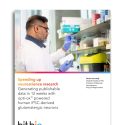
Case Study: How to generate publishable data in just 12 weeks

A new resource is now available to download for free from sponsors Bit Bio: ‘Speeding up neuroscience research: Generating publishable data in 12 weeks‘. In this Case Study you will learn: How Professor Deepak Srivastava’s lab at King’s College London are working to unpick the complex… Read More

#News

#Drug discovery #iPSC #Neurology #Preclinical development #Preclinical investigations

Speeding up neuroscience research: Generating publishable data in 12 weeks

In this Case Study you will learn: How Professor Deepak Srivastava’s lab at King’s College London are working to unpick the complex biology of neuronal synapses to help us better understand neurological disorders like schizophrenia. How the researchers in Professor Srivastava’s lab have been able to generate publishable data… Read More

#Resources

MRI of the brain
#epilepsy #Gene therapy #Mouse models #Preclinical investigations #University College London

Gene therapy could reduce seizures in childhood epilepsy

University College London (UCL) researchers have developed a new gene therapy to cure focal cortical dysplasia, which a new study shows can significantly reduce seizures in mice. Focal cortical dysplasia is caused by areas of the brain that have developed abnormally and is among the most… Read More

#Editor's Choice #News

Organ-on-a-chip
#CN Bio #Inipharm #Liver disease #Organ-on-a-chip #Phase I trial #Preclinical investigations

Organ-on-a-chip data supports progression of liver disease drug

Inipharm has initiated Phase I dosing of its lead candidate, INI-822, which is a small-molecule inhibitor for HSD17B13, a gene implicated in nonalcoholic steatohepatitis (NASH). Loss-of-function variants of HSD17B13 are known to be associated with reduced incidence risk and severity of multiple liver diseases. Read More

#News

Child having ultrasound on knee
#Arthritis #Australia #Osteoarthritis #Preclinical investigations #Stem cells #University of Adelaide

Study shows osteoarthritis could be reversible

Osteoarthritis may be treatable and reversible, according to a new University of Adelaide study. The researchers have discovered a novel population of stem cells – marked by the Gremlin 1 gene – responsible for the progression of osteoarthritis. Treatment with fibroblast growth factor 18… Read More

#Editor's Choice #News

Predicting analgesic compounds based on a two amino acids peptide to treat chronic pain.
#Chronic pain #New York University #Painkillers #Preclinical investigations #Small molecules

NYU scientists discover promising new candidate for pain treatment

A new compound reversed four types of chronic pain in animal studies, according to research led by New York University (NYU) College of Dentistry’s Pain Research Center. The small molecule, which binds to an inner region of a calcium channel to indirectly regulate it, outperformed gabapentin… Read More

#News

Hepatitis B
#Gilead Sciences #hepatitis #HOOKIPA Pharma #Immunology / Virology & Vaccines #Preclinical investigations

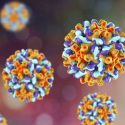
Preclinical data supports arenaviral therapeutic vaccine for hepatitis B

HB-400, a novel arenaviral therapeutic vaccine developed by HOOKIPA Pharma and Gilead Sciences, has been shown to generate robust T cell responses specific to hepatitis B virus with high antibody levels in a preclinical setting. A Phase I clinical trial to evaluate the safety and tolerability… Read More

#News

Organ-on-a-chip
#Cancer research #Emulate #Gene therapy #Organ-on-a-chip #Preclinical investigations

Are organ-chips the future of preclinical research?

Listen to this article on the DDW Podcast: Diana Spencer catches up with Lorna Ewart, PhD, Chief Scientific Officer of Emulate, about the rise of organ-on-a-chip technology. Organ-chips combine cell culture with microfluidics to emulate the biological forces of different organ tissues and/or disease states, allowing pharmaceutical researchers to determine a… Read More

#Exclusive Content

Saline intravenous (iv) drip in a child's hand
#Charles River #Human disease models #Oncology #Paediatrics #Preclinical investigations

Paediatric models for preclinical testing of oncology drugs

The US Food and Drug Administration’s (FDA) Research to Accelerate Cures and Equity (RACE) for Children Act now requires all oncology drugs to be tested for paediatric indications ahead of approval. The EU regulation of the European Medicines Agency (EMA) is also being adapted to mirror… Read More

#Cancer Research #News

Stem cells
#Human disease models #iPSC #Liver disease #Preclinical investigations #Stem cells #Webinar

Last chance: Discover how iPSC derived cells support drug development

A considerable roadblock in the successful triaging of new therapeutics for liver and metabolic related diseases is the reliability and effectiveness of pre-clinical disease models. Methods employing animal models may have limited success in replicating liver diseases, primarily because of species-specific differences, furthermore, the utilisation of animal models… Read More

Webinar date:
Supported by DefiniGEN
#News

siRNA
#Bone disease #Preclinical investigations #RNA #siRNA #SiSaf

Positive preclinical data for siRNA therapy for osteopetrosis

RNA therapeutics company SiSaf has published positive safety and efficacy data for its siRNA therapy for Autosomal Dominant Osteopetrosis 2 (ADO2). The data demonstrate that siRNA complexed with SiSaf’s silicon stabilised hybrid lipid nanoparticles (sshLNP) was able to significantly downregulate expression of an ADO2-specific mutant gene. Read More

#News

Pluripotent stem cells
#Human disease models #iPSC #Liver disease #Preclinical investigations #Stem cells #Webinar

Register now to discover how iPSC derived cells support gene therapy development

A considerable roadblock in the successful triaging of new therapeutics for liver and metabolic related diseases is the reliability and effectiveness of pre-clinical disease models. Methods employing animal models may have limited success in replicating liver diseases, primarily because of species-specific differences, furthermore, the utilisation of animal models… Read More

Webinar date:
Supported by DefiniGEN
#News

Pluripotent stem cells
#Human disease models #iPSC #Liver disease #Preclinical investigations #Stem cells #Webinar

iPSC derived cells for developing drug and gene therapies

A considerable roadblock in the successful triaging of new therapeutics for liver and metabolic related diseases is the reliability and effectiveness of pre-clinical disease models. Methods employing animal models may have limited success in replicating liver diseases, primarily because of species-specific differences, furthermore, the utilisation of animal models… Read More

Webinar date:
Supported by DefiniGEN
#News

Stem cells
#Human disease models #iPSC #Liver disease #Preclinical investigations #Stem cells #Webinar

How can iPSC derived cells can be used to support drug development?

A considerable roadblock in the successful triaging of new therapeutics for liver and metabolic related diseases is the reliability and effectiveness of pre-clinical disease models. Methods employing animal models may have limited success in replicating liver diseases, primarily because of species-specific differences, furthermore, the utilisation of animal models… Read More

Webinar date:
Supported by DefiniGEN
#News