In Vivo Imaging In Drug Development: Gamma Scintigraphy By Dr Alyson Connor Gamma scintigraphy is a non-invasive technique with applications in the development of drug products and the assessment of pharmacodynamic effects in humans. It enables the assessment of critical performance parameters that in vitro techniques attempt, but often fail,… Read More
From Outsourced To Open: The continuing evolution of the drug discovery business model Dr Mary Canady One doesn't have to look far to find that the large pharmaceutical business model has many market forces working against it, such as patent expirations, dwindling pipelines, and reduced R&D productivity. However, these factors… Read More
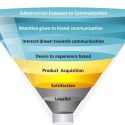
Simultaneous Visualisation of Attrition and Timelines: Funnel Diagrams. By Dr Linda Hirons, Dr Craig Johnstone and Colin Sambrook-Smith In drug discovery both attrition and timelines are important factors to consider when applying process improvement to lead optimisation. In our attempts to improve the visualisation of both of these factors simultaneously,… Read More
When High Content Screening Meets High Throughput By Dr Vincent Unterreiner and Dr Daniela Gabriel The terms High Content Imaging (HCI) and High Throughput Screening (HTS) were introduced more than a decade ago (1) and are defining the use of automated microscopy and automated image analysis in the context of… Read More
The Apocalyptic Horsemen of Drug Discovery and Development By Dr Gary J. Keil The pharmaceutical industry should consider an evolutionary disease management approach based on homeostasis, irreversibility, biological alinearity, pseudo-N-of-1 health and disease states and narrative medicine best practices in order to help secure a successful drug development future. The… Read More
A roadmap for achieving self-sustainability of academic high throughput screening core facilities By Dr Peter R. McDonald, Dr Anuradha Roy and Dr Rathnam Chaguturu Many academic HTS centres, faced with the high costs of drug discovery and decreasing federal funding, are struggling to survive. Just as with any small business,… Read More
SMAC Mimetics: a new class of targeted agents that activate apoptotic cell death and block pro-survival signalling in cancer cells By Dr Mark A. McKinlay SMAC mimetics are a new class of targeted drugs being developed for the treatment of solid tumours and hematologic cancers. SMAC mimetics specifically induce apoptotic… Read More
8 Years of Surveying Ion Channel Screening - Has anything changed? By Dr John Comley No review of ion channel screening over the past decade can avoid discussing the pivotal role played by automated electrophysiology. Arguably this technology, more than any other, has opened up the field to wider investigation,… Read More
Early Patient Stratification is Critical to Enable Effective and Personalised Drug Discovery and Development By Dr David A Fryburg, Dr Diane H Song and Dr David de Graaf With the current chances of an efficacious outcome in Phase II for novel mechanisms being in the region of 1 in 5,… Read More
In Vivo Preclinical Imaging - An Essential Tool in Translational Research By Dr John Comley In vivo imaging of small animals (mainly mice) is increasingly being deployed across the drug development process, particularly in the oncology/cancer therapeutic area. One of the main applications is monitoring the treatment response for early… Read More
Protein Biomarker Immunoassays: Opportunities and Challenges By Dr M. Walid Qoronfleh and Dr Klaus Lindpaintner With the biopharma industry under heavy pressure, transforming the scientific interchange between the laboratory and the clinic is exceedingly critical. Realising the costly toll of drug attrition in late-stage development, many companies are turning to… Read More
Moving Forward With Label-Free Technology By Dr Jennifer Hartigan, Cindy Liu and William Downey Label-free technology is gaining acceptance and opening doors for new drug discovery. Relatively new in the well-established world of high throughput screening (HTS), label-free technology provides opportunities for probing biomolecular interactions without spatial-interference, auto-fluorescent or quenching… Read More
Neutron Scattering Provides Unique Insights for Drug R&D By Dr Martyn Bull Drug discovery and development is a long and expensive process. Techniques, such as computer modelling, that make the search for promising candidates easier are usually taken up enthusiastically. Neutron scattering, an emerging technique in this field, can provide… Read More
Current Trends in Label-Free Drug Discovery Technologies By Philip Rawlins Drug Discovery Label-free technologies have been used throughout drug discovery for the detection and characterisation of molecular interactions. The implementation of automated systems, increased sensitivity and the development of new technologies have recently broadened the use of label-free methods from… Read More
Overcoming Bottlenecks in Drug Discovery By Dr Trevor Perrior Developing a new drug is an expensive and time-consuming process. The best current estimate puts the cost of developing a single new drug at close to $1 billion. After a drug candidate has entered the clinical trial process it takes, on… Read More
High Throughput Flow Cytometry for Discovery at UNMCMD and the NIH Molecular Libraries Initiative By Dr Larry A. Sklar and Dr Bruce S. Edwards Commercial flow cytometers became widely established in research and clinical laboratories in the 1980s. Once the domain of immunologists and hematologists for cell sorting and analysis,… Read More