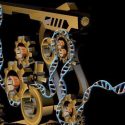
Epigenetic Modulators of Histone Methylation By Dr Michael Thomenius and William P. Janzen Drug Discovery Epigenetics is a term that refers to the durable and context-specific regulation of transcription processes. The majority of epigenetics involves a complex system of enzymes, binding proteins and accessory proteins that control access to the… Read More
Metabolomics - A Playbook for Functional Genomics By Dr David Ferrick If we have learned anything from scientific research in the last 20 years, it is that finding cures to complex diseases is difficult. Despite the promise of the genomic revolution, disease progression and patient outcomes are still not easily… Read More
By Dr James Lim and Dr Fred Aswad While the use of human cell lines has become a permanent fixture in drug discovery and development, the lingering issue has been in their inconsistent results. This article discusses current attempts to make results from cell culture systems more biologically relevant which,… Read More
Preclinical Imaging: Improving Translational Power In Oncology By Dr Todd Sasser Imaging has long been indispensable in clinical practice, and researchers have for many years used the same toolbox of imaging modalities as a component of their preclinical and drug development work. Imaging continues to provide crucial datasets to scientists… Read More
The Coming Age Of Mass Spectrometry Imaging By Dr Peter J.H. Webborn and Dr Richard J.A. Goodwin Mapping complex drug distribution/retention in tissues, aligned with efficacy and safety biomarker localisation is now possible using label-free mass spectrometry imaging technologies. While there remain challenges to be overcome, these molecular imaging techniques… Read More
Synthetic Lethality and Anti Cancer Drug Discovery By Jonathan D Moore Classically-activated oncogene targets have been a mainstay of cancer drug discovery for the past 15 years, but the druggable targets in this category have been largely mined out. Future efforts to drug the cancer genome must take synthetic lethal… Read More
The Role Of Immunodeficient Animal Models In Advancing Immuno-Oncology Research By Dr Michael Seiler From inbred wild-type to more advanced genetically-engineered strains, mouse models enable researchers to gain important insights into the complex biological underpinnings of human cancer. Among those, spontaneous and genetically engineered immunodeficient strains can be administered in… Read More
Magnetic Resonance Imaging (MRI) In Drug Development By Dr Geoff J.M. Parker Magnetic Resonance Imaging (MRI) can be used to provide quantitative measurements in the form of imaging biomarkers. These measurements have a number of attractive characteristics: They are non-invasive, can provide organ and lesion localisation of morphology, physiology and… Read More
Chimeric Antigen Receptor T-cells (CAR-T): Looking beyond the hype By Christoph Oldenburg, Dr Markus Thunecke and Dr John Herrmann While Chimeric Antigen Receptor T-cells (CAR-T), have already demonstrated convincing efficacy in a specific setting, the jury is still out on whether they are a ‘game-changer’ for oncology as a whole… Read More
By Dr Jean- Pierre Wery Optimal treatment for any disease is one that can cure or prevent spreading with minimal impact on the patient’s quality of life. In the case of cancer, therapeutic agents were initially designed to kill rapidly dividing cells. These traditional treatments, namely chemotherapy and radiotherapy, remain… Read More
Valuation In Pharma Portfolio Management By Dr Michel Azoulay Throughout the course of my career, I have been involved in a wide range of portfolio decisions and continue to be involved in them today. Over the years, it has been observed that despite cultural differences, pharma teams face similar problems. Read More
Phenotypic Drug Discovery: Striving towards the highest level of biological relevance By Dr John Comley Phenotypic drug discovery (PDD) implies screening where the molecular mechanism of action is not assumed and does not require knowledge of the molecular target. As such phenotypic drug discovery is comparable to empirical screening, which… Read More
The Increasing Impact of Precision Research Models on Drug Discovery and Development Dr Amar Thyagarajan Animal models are the standard by which we gain insight into the complex biological processes that underlie normal human physiology and disease states. Rodent models such as rats and mice have been used to understand… Read More
mRNA Will Revolutionise the Biopharmaceutical Industry By Dr Ingmar Hoerr Messenger RNA (mRNA) - the naturally occurring molecule honed over thousands of years of evolution to translate accurately and efficiently the information encoded in a cell's DNA into the proteins essential for maintaining cell function and ensuring an organism’s survival,… Read More
New Developments in Single Cell Separation and Analysis Technologies By Dr John Comley Drug Discovery Recent advances of single cell technologies are facilitating the opportunity to discern biological insights within individual cells and providing a means to reveal previously hidden relationships between individual cells within a population. Single cell technologies… Read More
Therapeutic Drug Repurposing, Repositioning and Rescue Part III: Market exclusivity using Intellectual Property and regulatory pathways By Dr Stephen Naylor, David M. Kauppi and Judge M. Schonfeld There is a growing consensus that Drug Repurposing, Repositioning and Rescue (DRPx) can impact the prescription drug industry for all concerned stakeholders. In… Read More