Pharmaceutical & biomedical research likely to use $1 billion worth of microfluidics devices by 2016 By Frédéric Breussin The proliferation of lower cost genomics tools, and the maturing of microfluidics lab equipment into more robust tools that better interface with established research flows, could drive microfluidics devices for pharmaceutical and… Read More
DNA Diagnostics Gets Digitised - Quantitative real-time PCR By Dr Mikael Kubista and Dr Anders Stahlberg Quantitative real-time PCR (qPCR) has during the last two decades emerged as the preferred technology for nucleic acid analysis in routine as well as in research. qPCR has the sensitivity to detect a single… Read More
8 Years of Surveying Ion Channel Screening - Has anything changed? By Dr John Comley No review of ion channel screening over the past decade can avoid discussing the pivotal role played by automated electrophysiology. Arguably this technology, more than any other, has opened up the field to wider investigation,… Read More
Dr Wilma Keighley Generally kinetics are only investigated late in a programme by which time many compounds, slightly less potent but with a much better kinetic profile, have already been discarded. This paper argues that having kinetic information at the early stages of drug discovery can bring numerous benefits to… Read More
Next Generation Flow Chemistry and Biology Platforms: The Impact on Small Molecule Drug Discovery By Dr J Mark Treherne, Dr David M Parry and Christopher N Selway Can the next generation of flow chemistry and biology platforms be fully integrated to transform the efficiency of small-molecule drug discovery for pharmaceutical… Read More
Assessing the Value of R&D Partnerships By Dr David A Pardoe, Dr Jackie Hunter MBE, Dr Robert M Cooke and Dr Paul Barrett In response to the need to increase the return on investment in R&D, many large Pharma companies are shifting from an internal fixed resource model to more… Read More
Overcoming Bottlenecks in Drug Discovery By Dr Trevor Perrior Developing a new drug is an expensive and time-consuming process. The best current estimate puts the cost of developing a single new drug at close to $1 billion. After a drug candidate has entered the clinical trial process it takes, on… Read More
3D Cell Culture: Easier said than done By Dr John Comley The transition from cell culture on the flat surface of a conventional two-dimensional (2D) culture vessel to a three-dimensional (3D) environment, matrix or scaffold with 3D architecture has begun, and is providing much needed support for emerging applications in… Read More
By Dr Mikael Kubista Quantitative real-time PCR is becoming mature technology for the quantification of nucleic acids. It is spreading wide outside its original use in the research laboratories, becoming preferred technology for a range of applications, many that require specialised so lutions and adaptations. Integration with pre-analytical steps and… Read More
Data Overflow Progress in Automating and Streamlining Data By Peer Staehler The genomic world moves faster and faster. The pool of data has exploded exponentially in the past few years due to the growing knowledge about the relevance of genomic findings for medicine and the environment. Like all other developing… Read More
Needs and challenges in High Throughput Screening By William Downey, Dr Helen Nicely and Dr Lynne Sopchak High throughput screening (HTS) groups face similar challenges as the pharmaceutical and biotechnology industry as a whole faces. HTS groups are looking for ways to improve effectiveness in lead discovery, increase their productivity… Read More
Microplate Mixing - Bioassay panacea or of unproven distraction? By Dr John Comley Despite general awareness of the significance of microplate mixing, it is still a relatively low priority in most laboratories. Microplate mixing has largely been ignored as a serious problem, although potentially it could undermine the generation of… Read More
Nanotechnology in High Throughput Screening By Dr Bobak Azamian and Flora Tang Nanotechnology has touched many scientific disciplines, from its roots in chemistry and physics to applications in biology and engineering (1). A nanotechnology industry has developed, offering at present a new iteration of established technologies such as composite materials… Read More
Current Biosensor Technologies in Drug Discovery By Dr Matthew A. Cooper Over the past two decades the benefits of biosensor analysis have begun to make an impact in the market, and systems are beginning to be used as mainstream research tools in many laboratories. Biosensors are devices that use biological… Read More
Advances in laboratory automation for drug discovery By Charanya Ramachandran Laboratory automation has metamorphosed the realm of drug discovery over the years through two of major influential factors – cost benefit and error reduction. Automation has reframed the traditional drug discovery process by making feasible the identification of many targets… Read More
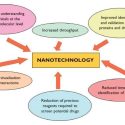
By Dr Amarpreet S Dhiman In terms of drug discovery and development, the role of nanotechnology currently lies in improving diagnostic methods, developing improved drug formulations and drug delivery systems for disease therapy. The breakthrough format of nanotechnology offers innovative solutions, giving researchers greater analytical capacity, improved data quality and… Read More