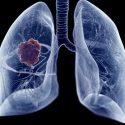
Lung cancer

#Antimicrobial resistance (AMR) #Bacteria #Cancer research #CAR T-cell therapy #GSK #Gut microbiome #Lung cancer #Nuclear medicine #Oncology #Osteosarcoma #UK government

This week in Drug Discovery (17 – 21 November) 

News round-up for 17 – 21 November by Bruno Quinney, Content Team at DDW.  This week in DDW, research into bacterial species and diseases gets top billing. Elsewhere, vaccines could offer groundbreaking solutions to cervical and lung cancer.  The top stories:    Medication detrimental to gut microbiome,… Read More

#News

Lung cancer
#BioNTech #Bristol Myers Squibb #Lung cancer #Oncology #Phase II trial

Bispecific antibody trial shows encouraging antitumour activity

BioNTech and Bristol Myers Squibb have revealed global interim Phase II data for their PD-L1xVEGF-A bispecific antibody pumitamig in patients with extensive-stage small cell lung cancer (ES-SCLC) which shows encouraging antitumour activity.  The data for pumitamig plus chemotherapy showed a 76.3% confirmed objective response rate (cORR), 100%… Read More

#Cancer Research #News

Non-small cell lung cancer
#BeOne Medicines #CHMP #European Medicines Agency #Lung cancer #Non-small cell lung cancer (NSCLC) #Oncology

Positive CHMP opinion for Tevimbra in neoadjuvant/adjuvant NSCLC

The Committee for Medicinal Products for Human Use (CHMP) of the European Medicines Agency has recommended approval of Tevimbra (tislelizumab) for resectable non-small cell lung cancer (NSCLC).  It is recommended in combination with platinum-containing chemotherapy as neoadjuvant treatment and then continued as monotherapy as adjuvant treatment, for adult patients at… Read More

#News #Regulatory

Lungs
#Antibody drug conjugate (ADC) #AstraZeneca #Daiichi Sankyo #FDA #Lung cancer #Oncology

First TROP2-directed therapy approved in the US for lung cancer

Datroway (datopotamab deruxtecan or Dato-DXd) has been approved in the US for the treatment of adult patients with locally advanced or metastatic EGFR-mutated non-small cell lung cancer (NSCLC).  It is approved in patients who have received prior EGFR-directed therapy and platinum-based chemotherapy.  The indication was approved under accelerated approval based… Read More

#News #Regulatory #Trending News

Lung cancer
#European Commission #Lung cancer #Monoclonal antibodies #Oncology

European Commission approves Tevimbra for small cell lung cancer

The European Commission has approved Tevimbra (tislelizumab), in combination with etoposide and platinum chemotherapy, as a first-line treatment for adult patients with extensive-stage small cell lung cancer (ES-SCLC).  The new indication is based on results of RATIONALE-312 study, which demonstrated statistically significant overall survival benefit for patients treated with Tevimbra… Read More

#News #Regulatory

Non-small cell lung cancer
#Candel Therapeutics #Immunotherapy #Lung cancer #Oncology #Phase II trial

Unique immunotherapy extends survival in advanced NSCLC

Candel Therapeutics’ CAN-2409 has demonstrated a median overall survival (mOS) of 24.5 months in a Phase IIa clinical trial in patients with stage III/IV non-small cell lung cancer (NSCLC).  The 46 evaluable patients, who are nonresponsive to immune checkpoint inhibitor (ICI) treatment, received two courses of CAN-2409. Read More

#Cancer Research #Editor's Choice #News

#Cancer Research Manchester Institute #Cell Science #Lung cancer #Non-animal model (NAM) #Oncology

Cell-based lung cancer model could unlock targeted treatments

Scientists at the Cancer Research Manchester Institute have created a new model of Lung Squamous Cell Carcinoma (LUSC) to study the development, activity, and vulnerabilities of the disease.   In the UK, around 80 to 85% of lung cancers are non-small cell lung cancer, of which squamous cell… Read More

#Cancer Research #News

Lung cancer
#Clinical trial #Johnson & Johnson #Lung cancer #Non-small cell lung cancer (NSCLC) #Oncology

Rybrevant and Lazcluze extend survival in NSCLC

Results from its first-line MARIPOSA trial show that Rybrevant (amivantamab) plus Lazcluze (lazertinib) significantly extended overall survival (OS) versus osimertinib in the first-line treatment of patients with locally advanced or metastatic non-small cell lung cancer (NSCLC).  The patients have NSCLC with epidermal growth factor receptor (EGFR)… Read More

#News

Neurons
#Lung cancer #Oncology #Small cell lung cancer #The Francis Crick Institute

Lung cancer cells build their own electrical network 

Researchers from the Francis Crick Institute have found that aggressive lung cancer cells can develop their own electric network, like that seen in the nervous system.  This unique property could make them less dependent on the environment surrounding the tumour and even spread more easily, say the… Read More

#Cancer Research #News #Trending News

Telomeres on chromosomes
#DNA #Lung cancer #MAIA Biotechnology #Oncology #Phase II trial

Positive efficacy updates for Phase II trial in non-small cell lung cancer

MAIA Biotechnology has shared positive updated data from its THIO-101 Phase II clinical trial evaluating its lead candidate, THIO, in patients with advanced non-small cell lung cancer (NSCLC) who failed two or more standard-of-care therapy regimens.  In the trial, THIO was sequenced with Regeneron’s immune checkpoint inhibitor… Read More

#Cancer Research #News

Small cell lung cancer
#Ariceum Therapeutics #FDA #Lung cancer #Oncology #Orphan drugs #Radiopharmaceuticals

Radiopharmaceutical cancer therapy granted orphan drug status

The US Food and Drug Administration (FDA) has granted Orphan Drug Designation (ODD) to Ariceum Therapeutics’ 225Ac-SSO110 (satoreotide) for the treatment of patients with small cell lung cancer (SCLC).  Ariceum has announced plans to commence Phase I/II human clinical development of 225Ac-satoreotide under the trial name, SANTANA-225 in Q1 2025. … Read More

#News #Regulatory

Antibody drug conjugate
#Antibody drug conjugate (ADC) #Collaboration #Innovent #Lung cancer #Oncology #Roche #Small cell lung cancer

Roche pays $80 million for Innovent’s lung cancer ADC

Roche and Innovent Biologics have agreed a collaboration and exclusive license agreement to develop antibody drug conjugate (ADC) IBI3009 for advanced small cell lung cancer.  Under the agreement, the two parties will jointly focus on the early-stage development of the ADC candidate, after which Roche will take over full development.  … Read More

#Business & Investment #News

Lung cancer
#European Commission #Johnson & Johnson #Lung cancer #Non-small cell lung cancer (NSCLC)

EC approves chemo-free combination for mutated NSCLC 

The European Commission (EC) has extended the approval for Rybrevant (amivantamab), in combination with Lazcluze (lazertinib), to the first-line treatment of adult patients with advanced non-small cell lung cancer (NSCLC).  It is specifically approved for use in patients with epidermal growth factor receptor (EGFR) exon 19 deletions (ex19del) or exon… Read More

#News #Regulatory

Treg cells
#Amsterdam University Medical Centre #KRAS #Lung cancer #Oncology #The Francis Crick Institute #Tregs

Tregs block immune response in lung cancer, study finds

Researchers at the Francis Crick Institute, working with the Amsterdam University Medical Centre, have found that immune cells are held back from fighting lung tumours by another type of cell. Drugs that block a cancer-causing protein called KRAS-G12C are approved for use in lung cancer but… Read More

#Cancer Research #News

Non-small cell lung cancer
#Lung cancer #Monoclonal antibodies #Oncology #Phase I trial #Pierre Fabre

Trial assesses new approach to NSCLC with MET alterations

The first patient has been dosed with PFL-002/VERT-002 in a Phase I/II first-in-human trial for patients with non-small cell lung cancer (NSCLC) with MET alterations. PFL-002/VERT-002 is a monoclonal antibody acting as a degrader of c-MET. MET, also known as hepatocyte growth factor receptor… Read More

#Cancer Research #News