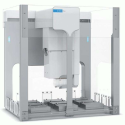
Getting a handle on liquids: automation solutions for drug discovery By Helen Stewart-Miller and Thomas Hope The accurate and precise measurement of liquids and the transport of exact volumes between vessels, or from one instrument to another, are processes that constitute the very essence of research. Read More
Reducing the PAINS in High Throughput Screening: Assay design as a tool for maximising efficiency By Dr Philip S. Jones and Dr Stuart P. McElroy While the quality of the compound collection is frequently described as a key determinant of the success of a high throughput screening… Read More
How Artificial Intelligence is Transforming Drug Design By Dr Mark Roberts and Dr Sam Genway AI could create a streamlined, automated approach to drug discovery, trawling vast datasets to identify targets, find candidate molecules and predict synthesis routes. Getting there will require significant vision, but we are… Read More
Optimising Phenotypic Screening – Single-cell analysis versus 3D multicell analysis By Dr Richard M. Eglen In light of the high failure rate of compounds when they are subjected to clinical testing, we are seeing a renaissance in phenotypic screening in drug discovery. However, most phenotypic screening is… Read More
2030 Life Sciences and Health in the Digital Age (Part 1) By Dr Steve Arlington and John Wise One of the key ways in which The Pistoia Alliance works with its members is to help them not just deal with the problems of today, but also to… Read More
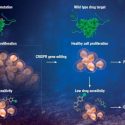
Fail Early, Fail Fast – A phenotypic rescue approach By Dr Anne-Marie Zuurmond, et al. New disease targets frequently emerge in literature, but the thorough target validation required to consider these targets for a drug discovery programme is often lacking. In pharmacological or genetic perturbation studies… Read More
Application of bioinformatics in support of precision medicine By Mike Furness and John Wise Bioinformatics has played a major role in gene sequencing diagnostics and has been an essential tool to investigate the genetic causes of disease. With the support of new technologies and tools, bioinformatics can play… Read More
The Reality of Virtual Pharmaceutical Companies By Dr Stephen Naylor and Dr Kirkwood A. Pritchard Jr We discuss the oxymoronic proposition of a Virtual Pharmaceutical Company (VPC) and the typical adopted business model, as well as provide examples of such companies currently trying to undertake this adventurous… Read More
Safety First – Automating cell line development By Jon Newman-Smith Developing and maintaining cell cultures in a stable and sterile environment is of paramount importance to protect samples and increase overall success of drug discovery pipelines. Cell lines are extremely fragile and susceptible to contamination which can be… Read More
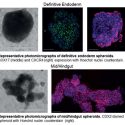
3D Organoid Cell Culture – Optimising disease models for research and drug discovery By Dr Amanda Linkous, Hilary Sherman, Iris Li and Dr Richard M. Eglen The use of human-induced pluripotent stem cells (HiPSCs) continues to grow in three-dimensional (3D) spheroid and organoid culture. Although advances… Read More
Systems Pharmacology: When multi-targeting is advantageous By Dr Kirkwood A. Pritchard Jr, Dr Dustin P. Martin and Dr Stephen Naylor The safety and efficacy of therapeutic drugs still requires improvement. In part this is due to the promiscuity of individual drugs, which on average can interact with an… Read More
The Growth of Organoids in Cancer Drug Discovery By Dr J. Mark Treherne, et al., Will the automated expansion of organoids help improve the productivity of cancer drug discovery? Increasingly, complex cell-based assays and tissues are routinely used as part of cancer drug discovery. However, conventional… Read More
Increasing Drug Discovery Success With 3D Cell Culture Systems By Dr Richard M. Eglen, Dr Feng Li and Dr Tony Frutos Drug candidates often fail in the clinic for two reasons: they lack efficacy or possess an adverse toxicity profile. These failures can come at a high… Read More
How Advanced Automated Liquid Handling Systems are Reshaping Drug Discovery By Helen Stewart-Miller and Dr Richard Massey Winter 2018/19 Once the domain of high-throughput screening (HTS) applications, automated liquid handling systems are now used ubiquitously in drug discovery and have been fundamental in increasing throughput, driving efficiencies… Read More
3D Cell Culture – Engineering Composable, Disease-Tunable 3D Human Microtissues for Drug Discovery By Dr Patrick Guye, Dr Eva Thoma and Dr Olivier Frey In this article, we will share some of what we have learned over the past 10 years as pioneers in the 3D cell culture… Read More
By Dr Phil Jones The mission at The University of Texas MD Anderson Cancer Center is to eradicate cancer, which remains a major cause of mortality worldwide. It is the second leading cause of death in the United States and globally, claiming more lives than malaria,… Read More