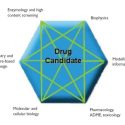
Balancing Quantity and Quality in Drug Discovery By Eva-Lotta Allan There is a need to innovate in order to stay ahead, a need to maximise the value of the R&D engine by increasing the flow of novel drug candidates and yet, reduce the time to market. Does access to more… Read More
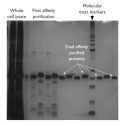
Protein Arrays for Assessment of Target Selectivity By Professor Ian Humphery-Smith, Dr Erik Wischerhoff and Dr Ryuji Hashimoto Transforming knowledge of the human genome into a lead optimisation tool. Genomics activity has been criticised for having elucidated a plethora of potentially interesting drug targets, each awaiting further validation, but having… Read More
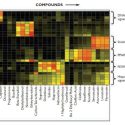
Predictive chemoinformatics applications to the pharmaceutical industry By Dr Leslie J. Browne and Laurie L.Taylor While significant advances in chemoinformatics present tremendous opportunities to improve human health, the future of chemoinformatics in the pharmaceutical industry is not without significant challenges. Chemoinformatics is the result of collective advances in chemistry, biology,… Read More
By Dr Roger A. Edwards, Dr Kai Zhang and Louise Firth Different companies have employed various techniques and strategies for addressing productivity issues in the chemistry functions within pharmaceutical discovery and preclinical development. We benchmarked lead optimisation, clinical candidate selection, and chemistry support for preclinical development before IND filing in… Read More
Chemical microarrays - The drug discovery superhighway By Elaine Seeskin While producing targets was once the bottleneck in the drug discovery process, in the post-genomic era this has been superseded by the requirement for high-quality lead structures. As a result of the pool of genomic data and countless unvalidated targets… Read More
Key R&D informatics challenges facing small/medium-sized pharmaceutical and biotech companies By John Wise The ability of R&D informatics to deliver real benefit to the SME pharmaceutical company is constrained by the increasing burden of non-discretionary computer systems combined with the lack of opportunity to leverage the economies of scale enjoyed… Read More
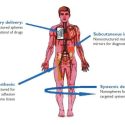
Silicon Technology and Pharmaceutics by Professor Leigh T. Canham, Dr Roghieh S. Saffie, Stephen E. Connor and Dr Roger Aston The recent discovery that, following nanostructuring, silicon can be rendered biocompatible and biodegradable has far reaching and profound long-term implications for the pharmaceutical industry and, indeed, medicine as a whole. Read More
The genomics revolution is poised to sweep aside the old economics of pharmaceutical R&D. The biotechnology and pharmaceutical industries; and perhaps healthcare delivery in general; are on the brink of transformation, and companies that embrace the revolution in the right way stand to reap enormous benefits. Developing a new drug… Read More
Surrogate Endpoints In Cancer Trials By Professor Karol Sikora Over the next 20 years systematic programmes of cancer risk assessment will be established and cancer-preventive drugs will be developed. The ability to prevent cancer will dramatically increase the number of people who will need to regularly attend clinics. This article… Read More
The Industrialisation of Bioinformatics By Dr Alex Titomirov With the completion of the ‘draft’ sequence of the human genome predicting an estimate of 40,000-120,000 genes that describe us, the real work begins. The problem now is not lack of data but lack of tools to thoroughly analyse what we already… Read More
By Dr David C. U’Prichard It is almost axiomatic that the pharmaceutical R&D industry has not achieved in the last decade an increase in productivity (measured as high value NCEs) commensurate with the explosion of new biological information, chemistry techniques and information storage/retrieval/examination systems, let alone the real increase in… Read More
By Professor Ken Powell, Deputy Director, Wolfson Institute for Biomedical Research Pharmaceutical research and development is changing. The old model of drug discovery, based on a combination of imprecise candidate generation and broad physiological screens, has given way to more specific and intelligent approaches to target identification and drug design. Read More